


CEP活動紹介
2021/03/31 08:00:00 メディア掲載情報: CEP滋賀大津(廣岡裕一先生)
 CEP活動紹介
 GT Faculty
2021/03/29 10:00:00 晴明神社でのフィールドワーク (CEP京都スピリチュアルツーリズム )
- CEP活動紹介
- Student Reporter
こんにちは!CEPスピリチュアルツーリズムで活動をしているグローバル観光学科2年次生の梛木絢芽です。3月15日からCEPスピリチュアルツーリズムも活動が始まりました!初日の実習では晴明神社に訪問しました。晴明神社は平安時代中期の有名な陰陽師であった安倍晴明を祀っています。清明神社では山口宮司にお話をお伺いしました。その際に安倍晴明の絵が描かれた掛け軸を特別に見せていただきました。複製品ではありますが、ほとんど見せることがなく9月のお祭の時に飾られるもので信仰の対象であるのでとても貴重なものです。
そのお話の中で私が一番興味深いと思ったのは晴明神社の神紋である五芒星のマークの意味です。陰陽道の基本概念である五行説というものがあります。これは5つの自然物の循環によって自然界が構成されているという考えです。その5つの自然物とは木・火・土・金・水であり、木が燃えて灰になり土となり、土の中から金属が生まれ、金属がやがてとけて水になり水が木を育てる。この循環を相生と言います。しかし、この中に互いに争い相手に勝つ関係もあります。木が土の養分を吸い取り、土が水をせき止め、水が火を消し、火が金属を溶かし、金属が木を切るというものです。この関係を表したのが五芒星の神紋につながります。私は今までこの神紋にこんな意味があることを知らなかったのでとても興味深く、また神社の神紋一つにも深い歴史や思想が関わってくることが面白いと感じました。
最後に晴明神社の魅力をいくつかご紹介します。神社の中にある御神木は樹齢推定300年の楠で触れると、大きな力を感じられます。他にも厄除けの果物と言われる桃の形をした像があります。この桃をなでると自分の厄を吸い取ってくれるようです。6月には約2000株の桔梗の花を見ることができ、その時期限定のききょう守というお守りも発売されます。桔梗の開花はホームページで確認することができるので要チェックです!
宮司からお話を聞き知識を得たうえでお参りすると、普段よりいろんなことに興味が沸いてより神社を楽しめました。晴明神社に限らず神社に訪れる際は少し調べてから行くのがおすすめです!
Hello! My name is Ayame Nagi and I am a sophomore at the Department of Global Tourism Studies. The CEP Kyoto Spiritual Tourism module began on March 15th. On the first day of the program we visited Seimei Shrine. This shrine is dedicated to Abe no Seimei, a famous astronomer in the Heian period (794-1185).
The chief priest Mr.Yamaguchi told us the history of the shrine and Abe no Seimei. Then he showed us a hanging scroll written by Abe no Seimei, which is not usually shown to the public. Despite being a replica this scroll is very precious because it is displayed only during festivals in September and it is an object of faith for shrine devotees.
The most interesting story we heard that day was about the meaning of the pentagram motif, which is the crest of the shrine. This motif refers to the five elements from Chinese philosophy. This posits that the natural world is made up by a cycle of five natural elements: wood, fire, earth, metal and water, represented by the points of the pentagram. In the cycle, wood burns and becomes ash. Ash transforms into earth and metals are generated in the earth. Metals then generate water and water helps wood grow.
However, there are lateral connections across the pentagram that are also interesting. Wood absorbs nutrition from the earth and the earth – in the form of a dam – can stop the flow of water. Water can extinguish fire and fire melts metal. Metal can be sharpened to cut down wood. These relationships are told in the design of the pentagram. I did not know that crest motif had such a meaning and it was interesting to learn about the history of this concept.
Lastly, I want to introduce something I found fascinating at the shrine. In the compound, there is a sacred tree – a camphor tree that is about 300 years-old that is known as a power spot. When you touch the tree, you can feel its energy.
Next to the tree is a peach-shaped statue. According to Chinese folklore, peaches have the power of getting rid of bad luck. When you stroke the bronze peach, it is said that your bad luck will be absorbed.
In June, you can see around 2,000 kikyo (Chinese bellflowers) bloom with their distinct, vivid purple color. A special omamori protective amulet is sold only when the kikyo blooms. The shrine announces updates on the status of the kikyo on their website, so be sure to keep an eye out for this!
I got a lot more out of my visit after getting some information about the shrine. I was intrigued by so many things and enjoyed the experience more than usual. I recommend researching about the shrine prior to your visit.
-
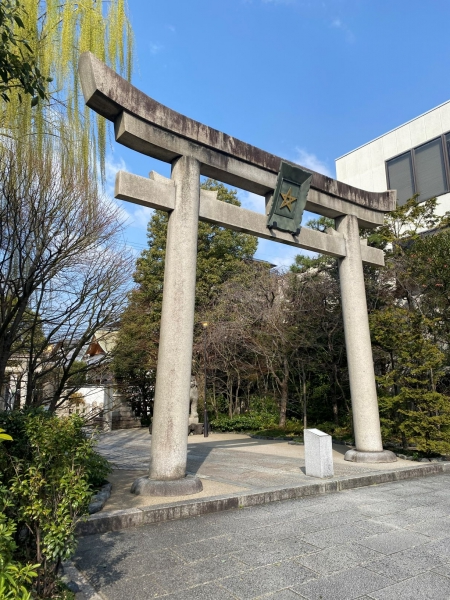 晴明神社 Seimei Shrine
-
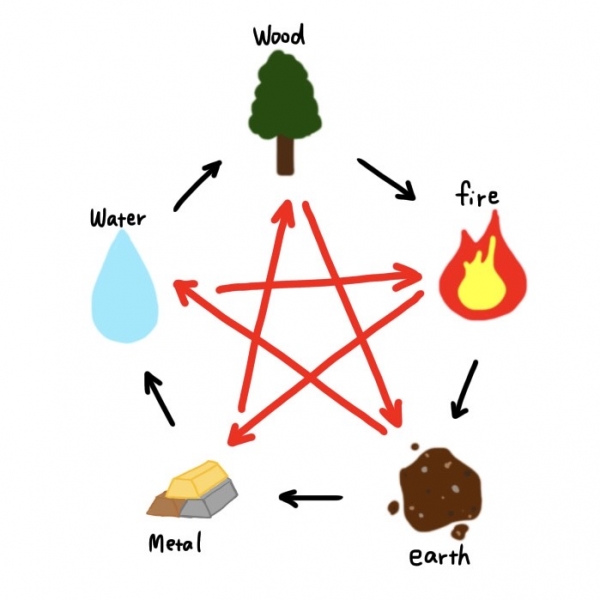 五行説 Five Chinese Element
-
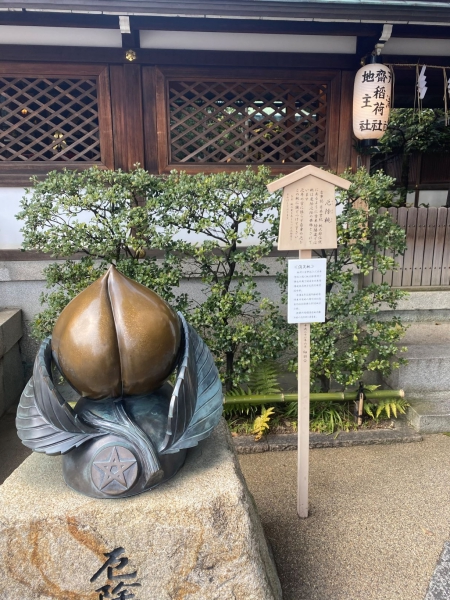 厄除桃 peach-shape statue
2021/03/11 23:50:00 【CEP越前】4:活動を振り返って
- CEP活動紹介
- Student Reporter
こんにちは!CEP越前で活動をしているグローバル観光学科2年次生の下川紗良です。集大成である成果発表はオンラインという形になりましたが、メンバーそれぞれが工夫してなんとか無事に終えることができました。今まで活動を応援してくださった先生方、CECの方々、そして何より越前熊谷の皆様にお礼申し上げます。
CEP越前熊谷で行ったフィールドワーク草木染めブログに続いて、今回はCEP越前の活動の振り返りについて報告します。CEP越前チームは三回にわたって越前熊谷でフィールドワークをおこなってきました。主な活動内容としては、道場として使われているせせらぎ会館※、熊カフェプラス※※で宿泊しながら、地元の方々に食についてのインタビューを行いました。
食のインタビューでは、地元の方が育てている野菜などの調理法や保存方法などを聞き取り、のちに収穫時期別にグラフ化をしました。その際、冬瓜、柿などたくさんの美味しい野菜や果物を頂きました。インタビューの中では、熊谷の歴史やせせらぎ会館の浄土真宗とのつながりなどたくさんの貴重なお話を教えて頂きました。なかでも印象に残ったのが、むかしは育てた米を背負い、山を越えて海まで歩いて降り、カニなどの魚介類と物々交換をしていて、カニが定番のおやつであったことです。カニをおやつに食べていたことに驚きましたし、なにより重い米俵を背負い、現代のように整備されていない危険な山を越えていたことに先人の暮らしが山と共にあったことが感じられました。
インタビューの他にも、大きな精米機のある農舎やシイタケ栽培の榾場(榾木の置かれている場所)の見学、越前焼のライトアップ、地区総会やせせらぎ会館での“お磨き”など貴重な体験ができて、活動の新しいアイデアが浮かんだメンバーや将来の夢が広がったメンバーもいました。
越前熊谷での活動以外にも、学内で越前焼の体験やセイタカアワダチソウの草木染めなどそれぞれの関心に基づいて実験をしました。困難な状況下で四苦八苦ありましたが、多くの方々の協力があり、なんとか発表に繋げることができました。活動開始が他のプログラムよりも早く秋学期から始まったこともあり、メンバーの多くは様々な形で今後も活動に関わっていきたいと考えています。越前熊谷の皆様、今後ともよろしくお願いいたします。
注釈:
※おもに北陸地方を中心に、集落の中に設けられた浄土真宗の施設。仏像が安置されており、地区住民の宗教行事の場として共同で御守している。
※※南先生が代表するNPOが借用している民家。越前フィールドミュージアム活動の拠点。
これまでのCEP越前2020に関するブログ一覧
【CEP越前】1:報告会
【CEP越前】2:草木染めに挑戦!
【CEP越前】3:越前焼に挑戦~作陶~
Hello, everyone! My name is Sara Shimokawa and I am a sophomore at the Department of Global Tourism Studies (DGT). I am a member of CEP Echizen study group. This is my final report and here I will summarize our activities as part of CEP Echizen.
Our fieldwork included studying Echizen food culture. The region is home to much delicious produce, such as kaki persimmons and vegetables such as winter gourd, etc. in addition to being renowned for outstanding seafood, especially crab. Through our interviews, we discovered traditional Echizen recipes like rice bran pickles (i.e. vegetables preserved in rice bran) as well as a deep connection within the region with the Jodo-shu Pure Land sect of Buddhism. I will remember the image of carrying heavy bundles of rice – tawara – in order to transport the rice harvest – it must have been such hard work.
In addition to our interviews, we experienced pottery and plant dyeing, as well as visiting a rice mill, regions known for their fishing industry as well as areas where they grow shiitake mushrooms. Through these activities, some members of the CEP Echizen team hit on good ideas for study as well as broadening their horizons.
We are all really eager to continue our activities in Echizen going forwards.
-
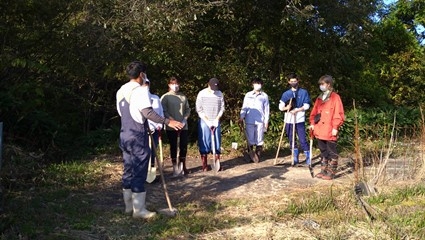 稲田の水路清掃 Cleaning a waterway in a rice patch
-
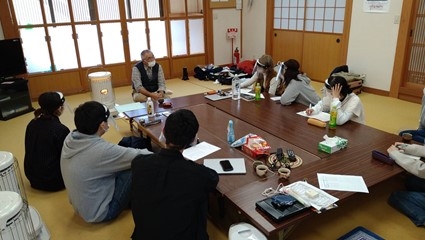 インタビューの様子 interviews regarding Echizen food culture
-
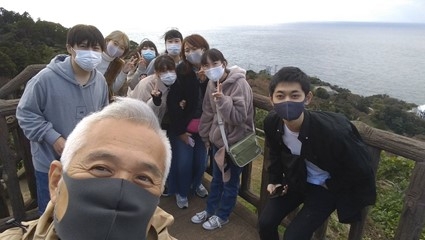 水仙ランドでの集合写真 group photograph in the Narcissi Gardens
2021/03/01 01:50:00 【CEP越前】3:越前焼に挑戦~作陶~
- CEP活動紹介
- Student Reporter
こんにちは。グローバル観光学科の2年次生の八島美奈です。私たちのCEP越前の活動をご紹介します。私たちは活動の一貫として陶芸作りを行います。活動の中で焼き物作りを行う理由として、伝統工芸である六古窯の1つである「越前焼」の再生復興が挙げられます。12月の現地での活動の前段階として越前陶土を使用し手捏ねで焼き物作りを行いました。そして今回、社会福祉法人なづな学園の渡邉さんと中村さんにご協力していただきました。
実際行った焼き物作りの工程を紹介します。まず、陶土を柔らかくなるまで手でならします。次に、ろくろに陶器の底の部分になる陶土をドーナツ状に置きます。そのあと、ドーナツ状の陶土をその上に次々とのせていき内側と外側の繋ぎ目を手で丁寧に慣らします。自分の作りたい陶器をイメージして形を決めて作ります。コップやお椀などみんな好きなものを作って陶芸を楽しみました。陶土と陶土をならす際に力加減などが難しく、薄すぎると割れてしまったりする可能性があるので、厚さを調節するのに苦労しました。
12月4日には、現地で私たちの作った焼き物を野焼きする予定でしたが、あいにく雨のためできませんでした。続く1月熊谷は雪に覆われ、またコロナもあって野焼きはできないままです。野焼きはとても珍しいことなのですごく楽しみでしたが、暖かくなってから再挑戦できればと思います。
Hello everyone! My name is Mina Yashima, and I am a sophomore in the Department of Global Tourism Studies(DGT). Here I will introduce some of the activities we partake in as part of our Community Engagement Program (CEP) in the Echizen region.
One activity was pottery, and one of the reasons for this was to reconstruct and revitalize a traditional craft, Echizen-ware is known as one of the six ancient pottery traditions of Japan. As a preliminary step back in December, we were lucky enough to obtain some clay sourced from Echizen and practiced kneading it by hand. On this occasion, we learned how to make it from Mr. Watanabe and Mr. Nakamura, who work at Nazuna Gakuen, which is a social welfare corporation.
Let me introduce the actual process of making pottery. First, we work the clay by hand to make it smooth and soft. Next, put some clay on a potter's wheel – this will become the base of the vessel. After that, place a long coil of clay on the clay base and build up the walls of the vessel by wrapping the coil on top of the previously layer, smoothing out the seams both inside and outside by hand.
We were free to decide any shape we wanted to make. Everyone enjoyed making pottery such as cups and bowls. It was hard for me to adjust the thickness of the coil walls because it was difficult to adjust the force I applied when smoothing the clay. If I made the walls too thin, it might crack in the kiln.
On December 4th, we were planning to fire the pottery we made using the noyaki style of firing, which means we would fire our pieces uncovered in the ground, but unfortunately it was not possible due to rain. The following January, Kumadan was covered with snow and also due to COVID 19 we were again unable to fire the pieces in the noyaki tradition. I was really looking forward to it because it is very rare experience to create pottery this way, but I hope we can try again after it gets warm.
-
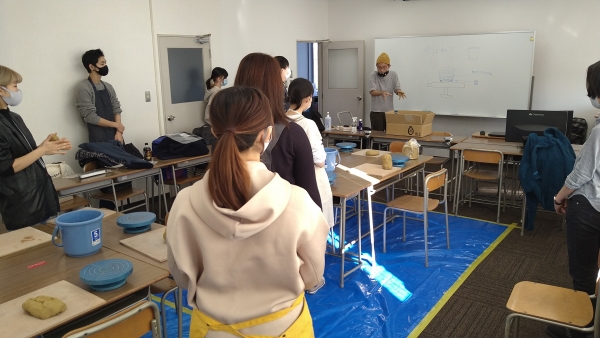 この3枚の写真は、南が撮影しました。まず、なづな学園の渡邉さんから作陶の基本を学びます。
-
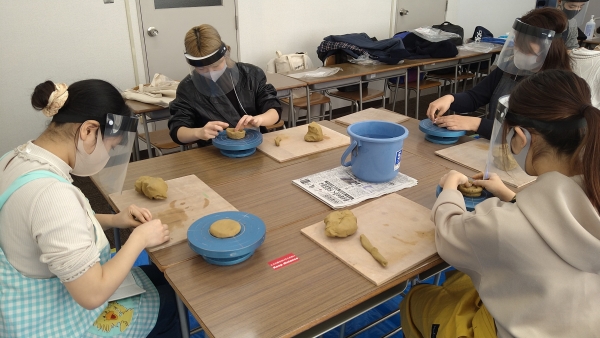 作り方はわかっても実際にやってみるとこれがなかなか難しい。悪戦苦闘・・・しかし、だんだん慣れてくると、それぞれの個性が出ます。中にはヘビとか鼻とか・・・ちょっと方向が違いますよね~。
-
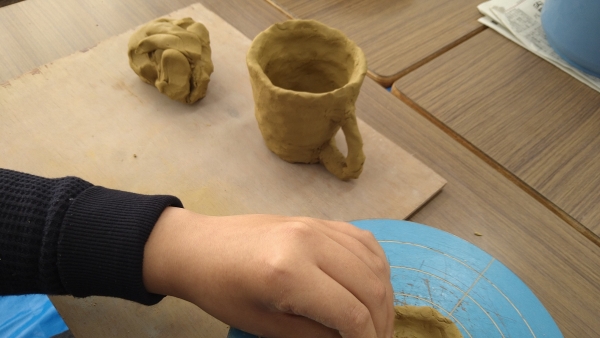 ブログを書いた八島さんの作品です。
2021/02/20 19:30:00 【CEP越前】2:草木染めに挑戦!
- CEP活動紹介
- Student Reporter
こんにちは!CEP越前で活動をしているグローバル観光学科2年次生の下川紗良です。春休みに入り、春を近く感じるようになりました。昨年は慣れないことばかりで、あっという間でした。まだまだ見通しのつかない状況ですが、勉学を怠らず、できることをコツコツ積み上げていきましょう!
さて、CEP越前最終報告会ブログに続いて、今回は越前熊谷で行ったフィールドワーク草木染めについて報告します。セイタカアワダチソウという黄色い花を使って草木染めに挑戦しました!セイタカアワダチソウは、北アメリカに生息していて、戦後に鑑賞用・蜜源植物として日本各地に拡大しました。現在では、外来生物法で要注意外来生物に指定されています。8~11月頃に京都の河川敷にも見られます。ぜひ探してみてくださいね!
本来は、コスモスを使って草木染めをする予定でしたが、寒波が原因でほとんどが枯れてしまいました。どうしても、植物を食に繋げたいと思い、水仙やタンポポなどを提案しました。しかし、時期が悪く、草花はほとんど咲いておらず、自然に咲いている野草を使うことは絶望的でした。そこでふっと、外来種であるセイタカアワダチソウが田畑に侵食して、越前の方々が非常に困っているというお話を聞いたことを思い出しました。そこで、刈られても廃棄されるだけのセイタカアワダチソウを活用するために、考えたのが野草の草木染めでした。
幸い、寒い11月にもかかわらずたくさんのセイタカアワダチソウを採取できました。越前・熊谷の川辺に咲いているセイタカアワダチソウを鎌で刈り取り、花が枯れてしまわないように水の浸み込んだキッチンペーパーとサランラップで包んで持ち帰りました。
その後、京都外大西高等学校の家庭科室をお借りして、8人分のハンカチと毛糸を染めてみました。予想していたよりも鮮やかな黄色に染まり、輪ゴムで絞ったハンカチはそれぞれ個性ある模様になりました。はじめての草木染めで、セイタカアワダチソウも一回分しかなく、失敗したらどうしようと不安で夜も眠れませんでしたが、無事に成功させることができてほっとしました。今後、越前でのフィールドミュージアム活動にかかわる機会があれば、コスモスや藤の花で草木染めをしたいと思います。
Hello, everyone! My name is Sara Shimokawa and I am a second-year student at the Department of Global Tourism Studies (DGT). I am a member of CEP Echizen study group. Last year was over all too soon, it’s almost spring! We are trying to make efforts - step by step - due to the difficult situation we find ourselves in.
Today, as part of our Community Engagement Program (CEP) in Echizen, we tried natural plant dyeing using tall goldenrods. This flower, native to North America, spread across Japan after WWII as an attractive plant enjoyed for its appearance as well as its important role in beekeeping. In accordance with the Invasive Alien Species Act of 2004, the Goldenrod has been designated as a non-native species requiring special attention for its invasive properties. You can see its yellow flowers from August to November.
We have initially planned to make natural dye using cosmos, however, our cosmos died due to a cold snap. Quite by chance, we recalled a conversation about using goldenrods for natural dyeing. This flower propagates in the fields, but as a potentially invasive species in the Echizen region it needs to be removed. Therefore, we suggested natural plant dyeing with tall goldenrods.
Despite the cold and rainy weather, we were fortunately able to pick all the tall goldenrods we would need. Then we tried to dye cloth and we are pleased to say they became a brilliant yellow color with a unique design. I was relieved that we were able to succeed in using plant material as a natural dye. Now I want to try using other plant materials as natural dyes, such as cosmos and wisteria!
-
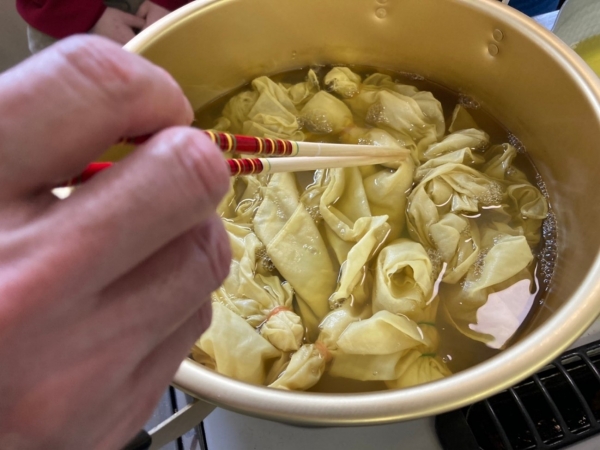 草木染め natural plant dyeing
-
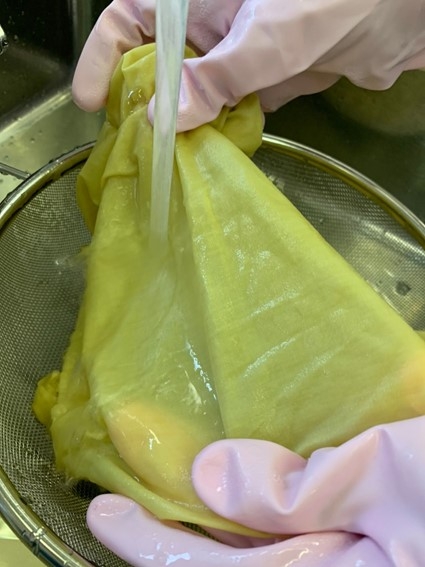 鮮やかな黄色に染まった布 dyed cloths
-
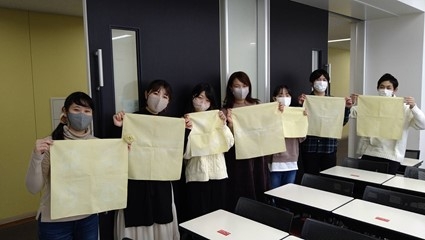 完成品 completed work


