


2021/03/29 10:00:00 晴明神社でのフィールドワーク (CEP京都スピリチュアルツーリズム )
 CEP活動紹介
 Student Reporter
こんにちは!CEPスピリチュアルツーリズムで活動をしているグローバル観光学科2年次生の梛木絢芽です。3月15日からCEPスピリチュアルツーリズムも活動が始まりました!初日の実習では晴明神社に訪問しました。晴明神社は平安時代中期の有名な陰陽師であった安倍晴明を祀っています。清明神社では山口宮司にお話をお伺いしました。その際に安倍晴明の絵が描かれた掛け軸を特別に見せていただきました。複製品ではありますが、ほとんど見せることがなく9月のお祭の時に飾られるもので信仰の対象であるのでとても貴重なものです。
そのお話の中で私が一番興味深いと思ったのは晴明神社の神紋である五芒星のマークの意味です。陰陽道の基本概念である五行説というものがあります。これは5つの自然物の循環によって自然界が構成されているという考えです。その5つの自然物とは木・火・土・金・水であり、木が燃えて灰になり土となり、土の中から金属が生まれ、金属がやがてとけて水になり水が木を育てる。この循環を相生と言います。しかし、この中に互いに争い相手に勝つ関係もあります。木が土の養分を吸い取り、土が水をせき止め、水が火を消し、火が金属を溶かし、金属が木を切るというものです。この関係を表したのが五芒星の神紋につながります。私は今までこの神紋にこんな意味があることを知らなかったのでとても興味深く、また神社の神紋一つにも深い歴史や思想が関わってくることが面白いと感じました。
最後に晴明神社の魅力をいくつかご紹介します。神社の中にある御神木は樹齢推定300年の楠で触れると、大きな力を感じられます。他にも厄除けの果物と言われる桃の形をした像があります。この桃をなでると自分の厄を吸い取ってくれるようです。6月には約2000株の桔梗の花を見ることができ、その時期限定のききょう守というお守りも発売されます。桔梗の開花はホームページで確認することができるので要チェックです!
宮司からお話を聞き知識を得たうえでお参りすると、普段よりいろんなことに興味が沸いてより神社を楽しめました。晴明神社に限らず神社に訪れる際は少し調べてから行くのがおすすめです!
Hello! My name is Ayame Nagi and I am a sophomore at the Department of Global Tourism Studies. The CEP Kyoto Spiritual Tourism module began on March 15th. On the first day of the program we visited Seimei Shrine. This shrine is dedicated to Abe no Seimei, a famous astronomer in the Heian period (794-1185).
The chief priest Mr.Yamaguchi told us the history of the shrine and Abe no Seimei. Then he showed us a hanging scroll written by Abe no Seimei, which is not usually shown to the public. Despite being a replica this scroll is very precious because it is displayed only during festivals in September and it is an object of faith for shrine devotees.
The most interesting story we heard that day was about the meaning of the pentagram motif, which is the crest of the shrine. This motif refers to the five elements from Chinese philosophy. This posits that the natural world is made up by a cycle of five natural elements: wood, fire, earth, metal and water, represented by the points of the pentagram. In the cycle, wood burns and becomes ash. Ash transforms into earth and metals are generated in the earth. Metals then generate water and water helps wood grow.
However, there are lateral connections across the pentagram that are also interesting. Wood absorbs nutrition from the earth and the earth – in the form of a dam – can stop the flow of water. Water can extinguish fire and fire melts metal. Metal can be sharpened to cut down wood. These relationships are told in the design of the pentagram. I did not know that crest motif had such a meaning and it was interesting to learn about the history of this concept.
Lastly, I want to introduce something I found fascinating at the shrine. In the compound, there is a sacred tree – a camphor tree that is about 300 years-old that is known as a power spot. When you touch the tree, you can feel its energy.
Next to the tree is a peach-shaped statue. According to Chinese folklore, peaches have the power of getting rid of bad luck. When you stroke the bronze peach, it is said that your bad luck will be absorbed.
In June, you can see around 2,000 kikyo (Chinese bellflowers) bloom with their distinct, vivid purple color. A special omamori protective amulet is sold only when the kikyo blooms. The shrine announces updates on the status of the kikyo on their website, so be sure to keep an eye out for this!
I got a lot more out of my visit after getting some information about the shrine. I was intrigued by so many things and enjoyed the experience more than usual. I recommend researching about the shrine prior to your visit.
-
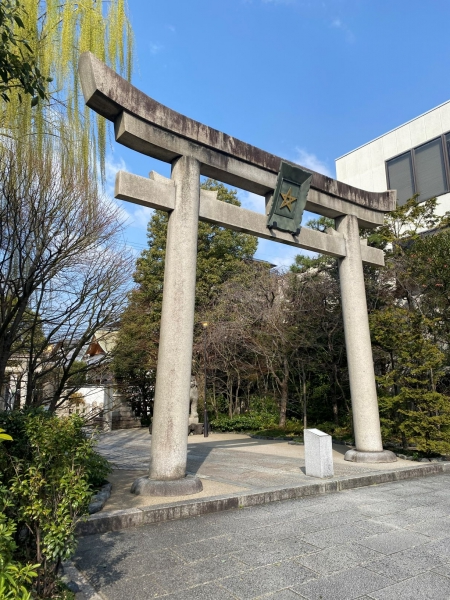 晴明神社 Seimei Shrine
-
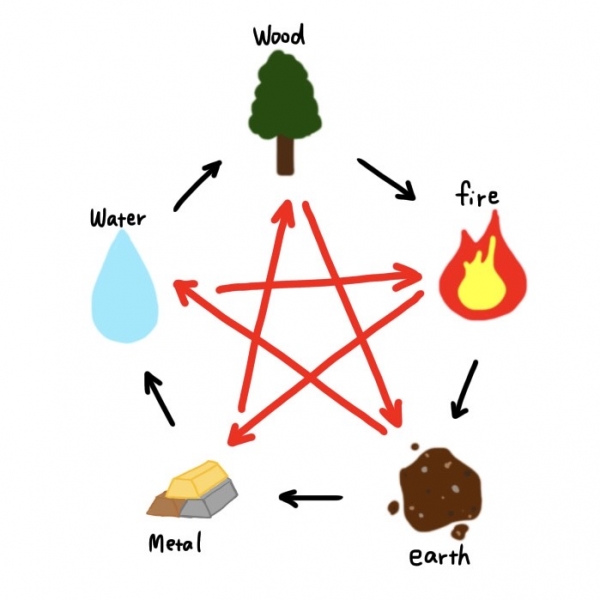 五行説 Five Chinese Element
-
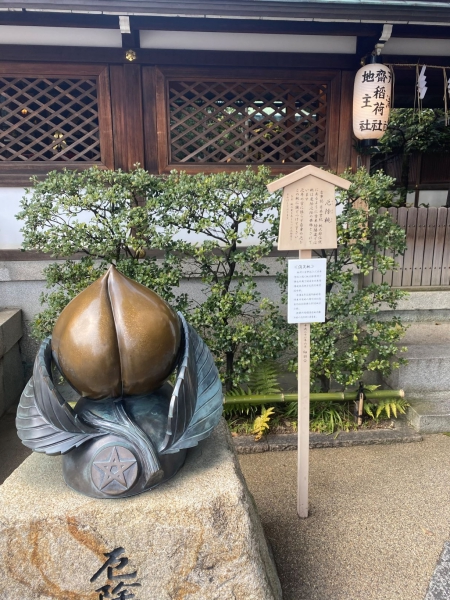 厄除桃 peach-shape statue


