


2021/02/20 19:30:00 【CEP越前】2:草木染めに挑戦!
 CEP活動紹介
 Student Reporter
こんにちは!CEP越前で活動をしているグローバル観光学科2年次生の下川紗良です。春休みに入り、春を近く感じるようになりました。昨年は慣れないことばかりで、あっという間でした。まだまだ見通しのつかない状況ですが、勉学を怠らず、できることをコツコツ積み上げていきましょう!
さて、CEP越前最終報告会ブログに続いて、今回は越前熊谷で行ったフィールドワーク草木染めについて報告します。セイタカアワダチソウという黄色い花を使って草木染めに挑戦しました!セイタカアワダチソウは、北アメリカに生息していて、戦後に鑑賞用・蜜源植物として日本各地に拡大しました。現在では、外来生物法で要注意外来生物に指定されています。8~11月頃に京都の河川敷にも見られます。ぜひ探してみてくださいね!
本来は、コスモスを使って草木染めをする予定でしたが、寒波が原因でほとんどが枯れてしまいました。どうしても、植物を食に繋げたいと思い、水仙やタンポポなどを提案しました。しかし、時期が悪く、草花はほとんど咲いておらず、自然に咲いている野草を使うことは絶望的でした。そこでふっと、外来種であるセイタカアワダチソウが田畑に侵食して、越前の方々が非常に困っているというお話を聞いたことを思い出しました。そこで、刈られても廃棄されるだけのセイタカアワダチソウを活用するために、考えたのが野草の草木染めでした。
幸い、寒い11月にもかかわらずたくさんのセイタカアワダチソウを採取できました。越前・熊谷の川辺に咲いているセイタカアワダチソウを鎌で刈り取り、花が枯れてしまわないように水の浸み込んだキッチンペーパーとサランラップで包んで持ち帰りました。
その後、京都外大西高等学校の家庭科室をお借りして、8人分のハンカチと毛糸を染めてみました。予想していたよりも鮮やかな黄色に染まり、輪ゴムで絞ったハンカチはそれぞれ個性ある模様になりました。はじめての草木染めで、セイタカアワダチソウも一回分しかなく、失敗したらどうしようと不安で夜も眠れませんでしたが、無事に成功させることができてほっとしました。今後、越前でのフィールドミュージアム活動にかかわる機会があれば、コスモスや藤の花で草木染めをしたいと思います。
Hello, everyone! My name is Sara Shimokawa and I am a second-year student at the Department of Global Tourism Studies (DGT). I am a member of CEP Echizen study group. Last year was over all too soon, it’s almost spring! We are trying to make efforts - step by step - due to the difficult situation we find ourselves in.
Today, as part of our Community Engagement Program (CEP) in Echizen, we tried natural plant dyeing using tall goldenrods. This flower, native to North America, spread across Japan after WWII as an attractive plant enjoyed for its appearance as well as its important role in beekeeping. In accordance with the Invasive Alien Species Act of 2004, the Goldenrod has been designated as a non-native species requiring special attention for its invasive properties. You can see its yellow flowers from August to November.
We have initially planned to make natural dye using cosmos, however, our cosmos died due to a cold snap. Quite by chance, we recalled a conversation about using goldenrods for natural dyeing. This flower propagates in the fields, but as a potentially invasive species in the Echizen region it needs to be removed. Therefore, we suggested natural plant dyeing with tall goldenrods.
Despite the cold and rainy weather, we were fortunately able to pick all the tall goldenrods we would need. Then we tried to dye cloth and we are pleased to say they became a brilliant yellow color with a unique design. I was relieved that we were able to succeed in using plant material as a natural dye. Now I want to try using other plant materials as natural dyes, such as cosmos and wisteria!
-
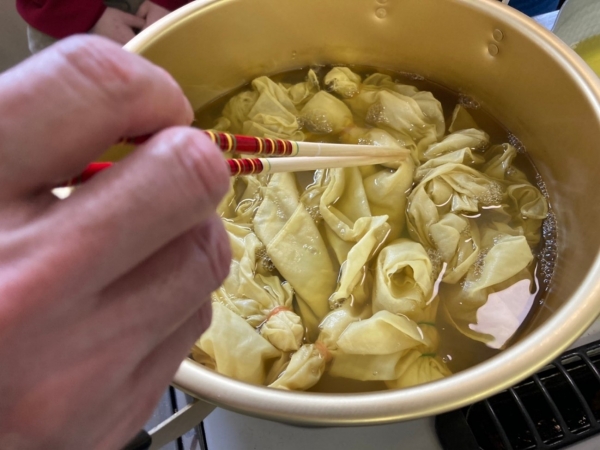 草木染め natural plant dyeing
-
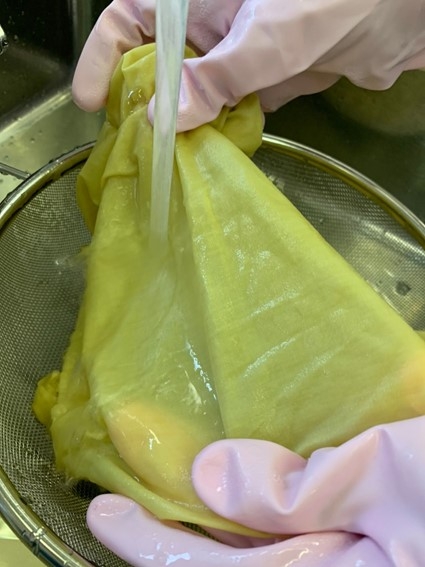 鮮やかな黄色に染まった布 dyed cloths
-
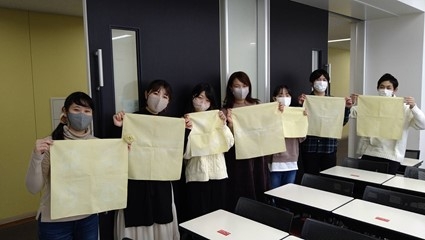 完成品 completed work


