


学生生活
2022/08/05 17:40:00 第2回野菜無料配布実施!
 学生生活
 広報隊藤松
みなさん、こんにちは。グローバル観光学科4年次生の藤松桃葉です。今回は、6月28日に実施した第2回野菜無料配布について書きたいと思います。
第1回野菜無料配布は今年1月に実施し、わくわくする畑で収穫した白菜16玉と大根 42本を配布しました。このとき非常に好評で、朝配布を開始して午前中の内にほとんどがなくなりました。そして、今回は第2回として、わくわくする畑で収穫した玉ねぎを配布しました。今年は、全国的に玉ねぎが不作で、価格が高騰していることもあり、みなさん嬉しそうに持って帰ってくださいました。
わくわくする畑の玉ねぎも小さなものが多く、数も少なかったため30袋しかできませんでした。しかし、小さな玉ねぎが調理しやすいと人気で、玉ねぎを見て可愛いとおっしゃる方が多かったです。愛情を込めて昨年11月から仲間と育ててきた玉ねぎを喜んでいただけて私も嬉しかったです。今回もおかげさまで好評で、配布開始から約1時間20分で全てなくなりました。
さらに、前回と同様、今回も私が作成した大原わくわくする畑プロジェクトの紹介パネルを展示しました。今回の展示では、今年の春に活動を開始したわくわくする農業とまちづくりを支援する中間支援任意団体、わくわくする農とまちづくり「にじいろファーム」も紹介しました。にじいろファームは大原だけでなく、嵐山や福井県越前町などもフィールドに活動しています。この無料配布が、わくわくする畑やにじいろファームを知っていただくきっかけになっていたら嬉しいです。
最後に、今回玉ねぎをお持ち帰りいただいたみなさんありがとうございました。玉ねぎを食べた感想を送ってくれた方がいたことが嬉しかったです。袋の中に玉ねぎと一緒に入れたチラシにアンケートがありますので、ご回答をよろしくお願いします。また、畑に行ってみたいという方は下記のインスタグラムアカウントのDMにぜひご連絡ください!お待ちしています。
大原わくわくする畑プロジェクトの活動の様子はこちらから!
Instagram:@fuji_momo_
わくわくする農とまちづくり「にじいろファーム」のアカウントはこちら!
Instagram:@nijiiro_farm_
Twitter:@nijiiro_farm_
Facebook:@nijiiro.farm.2022
Hello! My name is Momoha Fujimatsu and I am in my senior year at the Department of Global Tourism Studies. For this blog post I would like to tell you all about how we distributed vegetables on June 28th.
You may recall I wrote a post about distributing vegetables in January this year when I was able to give away 16 Chinese cabbages and 42 daikon radishes. It was very popular and most of all vegetables were distributed in the morning of the first day.
This time, we had onions harvested from the WakuWaku-Suru-Hatake in Ohara. People who got our onions looked so happy because the onion harvest has been extremely challenging throughout Japan and prices are rising this year.
Many of the onions in WakuWaku-Suru-Hatake were small, and the number we were able to harvest was quite modest, so I could only fill 30 bags. However, small onions are easy to cook, which makes them popular and many people said that they were cute. I was also happy because they were pleased with the onions that I have lovingly raised with my friends since November. All the onions were distributed after about 1 hour and 20 minutes.
Like last time, I exhibited the panels introducing the Ohara WakuWaku-Suru-Hatake project. We also introduced Nijiiro Farm, an exciting agriculture and town planning project run by an intermediate support voluntary organization that we started this spring. Nijiiro Farm is active not only in Ohara but also in Arashiyama and Echizen Town, Fukui Prefecture. I hope you have an opportunity to get to know WakuWaku-Suru-Hatake and Nijiiro Farm through our activities, such as distributing produce.
Finally, thank you to everyone who brought the onions home. I was glad that there were people who were kind enough to let me know how good they tasted. We popped a questionnaire in the bag with the onions, so please send in your replies. Also, if you would like to work in the fields with us on this project, please send us a DM via the Instagram account below! We look forward to hearing from you!
Please check out the “Ohara WakuWaku-Suru-Hatake” project!
Instagram:@fuji_momo_
SNS accounts of Exciting Agriculture and Town Planning “Nijiiro Farm”
Instagram:@nijiiro_farm_
Twitter:@nijiiro_farm_
Facebook:@nijiiro.farm.2022
-
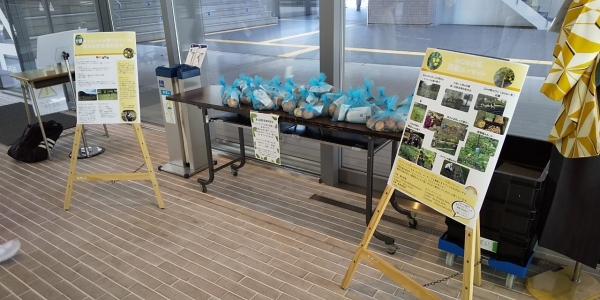 第2回野菜無料配布の様子 Distributing Vegetables: Phase 2
-
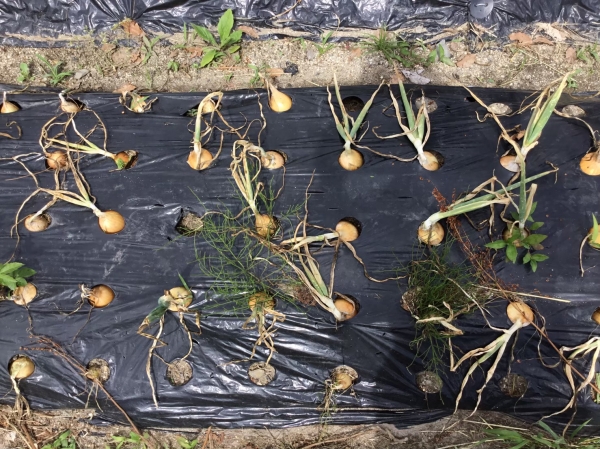 収穫直前の玉ねぎたち Onions before harvesting (撮影:2022年5月30日)
-
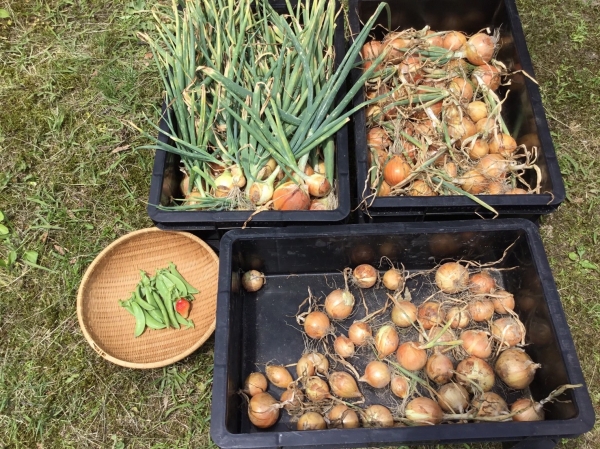 収穫! We harvested vegetables! (撮影:2022年5月30日)
2022/05/13 19:50:00 春到来!大原わくわくする畑プロジェクト2021年度の活動の振り返り(後編)
- 学生生活
- 広報隊藤松
みなさん、こんにちは。グローバル観光学科4年次生の藤松桃葉です。今回は、前回の続きということで、大原わくわくする畑プロジェクトで作った花壇をご紹介したいと思います。
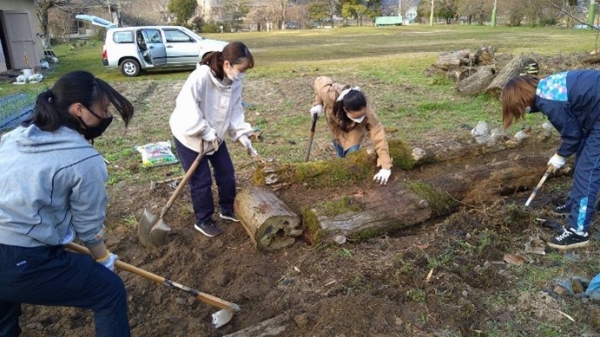
花壇は、もともと畑にあった倒木や丸太を活用して作りました。このアイデアは昨年5月に畑に来てくれたメンバーから出ていたものでついに実現しました。今回はグローバル観光学科新2年次生の木幡美月さんと花田朋実さん、京都外大大学院生の宮田怜奈さんが参加しました。まず、倒木に絡みついたビニールシートを取り除くことから始めました。農業ではマルチやビニールシートなど様々なプラスチック製品を使います。そのプラスチックが土中に残っているのをよく見かけますし、農業に限らず海洋プラスチックなどが問題になっています。そんなことを話しあいながら、できるだけきれいにしました。予想以上に大変な作業でした。
ごみを取り除いたら、倒木と倒木の間に土を入れて花を植えました。植えた花は、京小花、ももいろハート、フォーエバー、ナスタチューム、ミリオンベル、タピアンです。私が一番気に入っている花は、花びらのハート柄が可愛らしいももいろハートです。学舎周辺を散策する方へのアピールを目的として、あえて学舎の外の通路側を正面にしました。倒木や丸太を活用したことで予想以上に可愛らしくなったので、ぜひ多くの方に見ていただきたいです。
大原わくわくする畑プロジェクトを始めて約1年、大変なこともありましたが、学部学科、学年をこえた様々な学生や、地域の方々と一緒に大原学舎と畑を舞台に活動できたこと、たくさんの作物を植え、育て、収穫できたことに対する喜びの方が大きかったです。活動を続けてこられたのも地域の方々、参加してくださったみなさん、応援してくださったみなさんのおかげです。2022年度もたくさんの人と一緒に楽しく活動できたら嬉しいです。
Hello! My name is Momoha Fujimatsu and I am in my senior year at the Department of Global Tourism at KUFS. This blog is part two following on from my last post and I’d like to introduce the flower beds which were made by the Ohara-WakuWaku-Suru-Hatake project.
We made some flower beds using fallen trees which were there already. This idea was proposed by member of our project team who came to Waku-Waku-Suru-Hatake in May last year. This time, Mizuki Kobata and Tomomi Hanada, both in their sophomore year at the Department of Global Tourism Studies and Reina Miyata, a postgraduate student at KUFS, participated in the program. At first, we started by removing plastic sheeting from the fallen trees. In agriculture, plastic goods such as mulching sheets are used. We could see the plastic in the soil and the ocean plastic is also a big issue, so we cleaned up as much plastic as possible. This work was harder than I expected.
After removing the trash, we put soil into the space between the fallen trees and planted flowers. We planted Kyo-Kobana, Momoiro-Heart, Forever, Nasturtium, Petunia and Tapian. My favorite flower is Momoiro-Heart because the heart-shaped patterns of the petals are so cute. We turned the front of our flower bed to face the path that led out from the Ohara School because we want to beautify the area around the school for the local community. We were able to make a cute flower bed by using logs and fallen trees, so I’d like to show off our flower bed to as many people as possible.
About a year passed since we started the Ohara-WakuWaku-Suru-Hatake project. Although it has been hard sometimes, we have been able to work near the Ohara School with various students from different departments and grades, as well as local people, and we could plant, grow, and harvest a lot of crops. The happiness was greater than the hardship. Thanks to the local people, everyone who participated, and everyone who supported us, we were able to continue our activities. I hope I can enjoy working with many more people in 2022 as well.
-
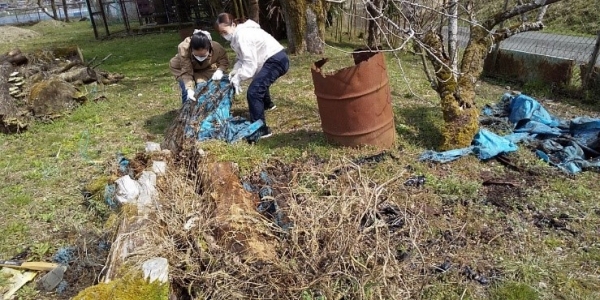 倒木にまとわりついたビニールシートを取り除いている様子 removing plastic sheeting from the fallen trees (撮影:2022年3月24日)
-
 花壇周辺から土を集めて花壇に土を入れている様子 gathering soil around the flower bed and putting the soil into the flower bed (撮影:2022年3月24日)
-
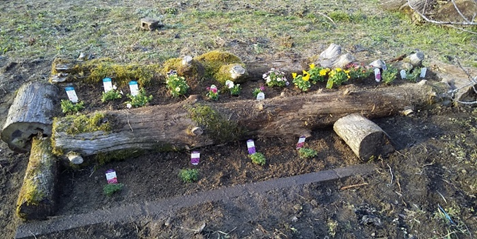 花壇 our flower bed is complete! (撮影:2022年3月24日)
2022/05/06 21:20:00 春到来!大原わくわくする畑プロジェクト2021年度の活動の振り返り(前編)
- 学生生活
- 広報隊藤松
みなさん、こんにちは。グローバル観光学科4年次生の藤松桃葉です。前回わくわくする畑をご紹介してから半年以上が経過してしまいました。そこで、昨年8月から3月までの活動を振り返ってみたいと思います。
8月:大原特産の紫蘇を収穫し、地域の方に教えていただいて紫蘇ジュースを作りました。鮮やかで見た目も美しく美味しいジュースができました。
9月:インゲンマメもたくさん実を付け、合計1,089個収穫できました。白菜の苗を植え、大根の種を蒔きました。
10月:秋の収穫祭と題して芋掘りをしました。学生5名のほか、地域の方も参加してくださいました。大きくて立派なサツマイモも数多くあり、合計82個収穫できました。
11月:玉ねぎの植え付けを、大原学舎で南先生の卒論合宿ゼミを行った先輩方が手伝ってくださいました。
12月:白菜16玉、大根42本を収穫し、大学内で無料配布会を開きました。おかげさまで配布開始日の午前中にはほぼ全てお持ち帰りいただき嬉しかったです。特に白菜は地域の方にも褒めていただけるくらい大きなものができました。
今、畑には玉ねぎ、スナップエンドウ、イチゴが植わっています。そして、3月には花壇作りと、大原わくわくする畑プロジェクトでも使わせていただいている畑横の倉庫の片付け・掃除を行いました。花壇作りについてはブログの後半でご紹介するので楽しみにしていていただけると嬉しいです。
倉庫の掃除・片付けは、ボーイスカウト京都連盟洛桜地区のみなさんと京都外大のスカウト部の学生と一緒に行いました。わくわくする畑がある大原学舎はボーイスカウト京都連盟のみなさんが活動に利用されており、今回倉庫の片付け・掃除にお誘いいただきました。また、京都連盟から声をかけていただいたことをきっかけに、スカウト部も連盟の活動(大学ローバー隊)に参加しはじめているということで声をかけました。本学のスカウト部は、市内の大学スカウト部の中でも歴史のある部だそうです。近年、ボーイスカウトとしての活動は停滞気味だったそうですが、昨年来、次第に大学ローバー同士の情報交換もはじまっているようです。これからが楽しみですね。
そして、みんなで協力して行なった結果、2時間ほどでとてもきれいになりました。ありがたいことに倉庫の約3分の1ものスペースをわくわくする畑プロジェクトが使わせていただけることになったので、これからさらに作業がしやすくなりそうです。また、今回ボーイスカウトやスカウト部との繋がりができたように、大原学舎で一緒に活動できる仲間が今後も増えていくと嬉しいです。
本プロジェクトに関する過去ブログはこちらから!
わくわくする畑プロジェクト始動! 2021/07/16
わくわくする畑の野菜・花たちの紹介! 2021/08/20
Hello! My name is Momoha Fujimatsu and I am in my senior year at the Department of Global Tourism Studies. Half a year has passed since I wrote my blog about the WakuWaku-Suru-Hatake project, so today I'd like to reflect on our activities from last August to March 2022.
August:We harvested perilla leaves (shiso) and made perilla juice with the local people teaching us how. Perilla is a specialty of Ohara. The juice was vivid, beautiful to look at and delicious.
September:We were able to harvest 1,089 beans in total. We planted Chinese cabbage and sowed daikon radish seeds.
October:I dug up sweet potatoes for the autumn harvest festival. In addition to five students, some of the local people also participated. There were many large and splendid potatoes, and we were able to harvest 82 potatoes in total.
November:Students who graduated in March came to visit Tatsuike Ohara School and to write their graduation thesis. They also helped me plant onions.
December:We harvested 16 Chinese cabbages and 42 daikon radishes, and we distributed them at KUFS. I was glad that almost everything was taken home. The Chinese cabbages were so big that the local people praised them.
Now, onions, snap peas and strawberries are planted in the fields. In March, we cleaned and tidied up the warehouse next to the field, which we were using. Moreover, we made a flower bed. I’ll write a separate blog about the flower bed, so I would be happy if you could look forward to my next blog post!
The cleaning and tidying up of the warehouse was carried out with the Rakuo Federation of the Boy Scouts of Kyoto and the students of the Scout Club of KUFS. The Kyoto Federation of Boy Scouts uses the Ohara School, the site of the WakuWaku-Suru-Hatake project, for its activities, and this time they invited us to clean and tidy up the warehouse. In addition, the Kyoto Federation approached the students of the Scout Club at KUFS, and after that, the Scout Club members started to participate in the Kyoto Federation as the University Rover Corps and were consequently invited to join in their activities. This is one of the oldest-established scout clubs in Kyoto City. In recent years, it seems that Boy Scout activities have stagnated, but since last year information exchange between University Rovers Corps has gradually begun to increase. I'm looking forward to seeing what the future holds for them.
After about two hours of working together, the warehouse looked completely different. Going forward, we will use about one-third of the space in the warehouse, so it will be easier for us to work in the future. In addition, I am glad that the number of people working together at the Ohara School will increase, as we were able to connect with the Boy Scouts and the Scout Club for future endeavors.
-
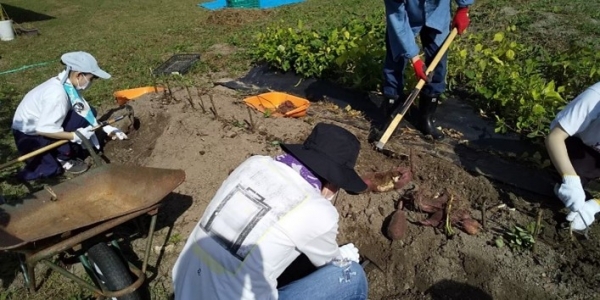 秋の大収穫祭(サツマイモ掘り)autumn harvest festival (digging up sweet potatoes) (撮影:2021年10月10日)
-
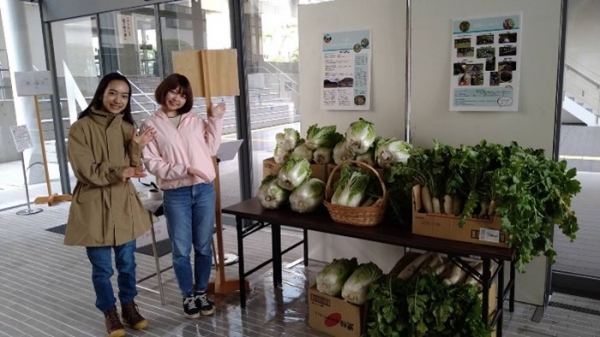 大学内での白菜・大根無料配布会の様子distributing Chinese cabbages and daikon radishes at the KUFS (撮影:2022年1月16日)
-
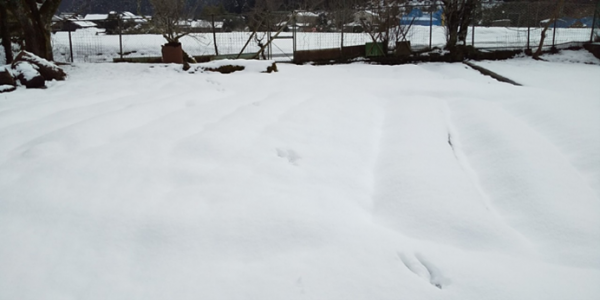 冬のわくわくする畑 WakuWaku-Suru-Hatake in winter (撮影:2022年1月22日)
2022/01/14 00:00:00 スキーリゾートでのアルバイト
- 学生生活
- 広報隊江良
こんにちは!グローバル観光学科2年次生の江良みゆきです。2022年が始まり、秋学期も残りわずかのとなりました。短い冬休みではありましたが、みなさんはどのように過ごしていましたか?私は、ウィンターシーズンのリゾート地として知られる、長野県白馬村 にあるスキー場で住み込みアルバイトをしていました。今回は、その経験とスキーリゾートでのアルバイトの魅力についてお伝えしたいと思います。
長野県白馬村は、日本アルプスの山間地にある村で、富山県と新潟県に隣接しています。国際的な山岳観光地である白馬村は、夏には登山観光客、冬にはスキー観光客で賑わい、村の主要産業は宿泊業やツアーガイドなどの観光業となっています。また、温泉もあるため、アフタースキースポットも充実しています。私がアルバイトをしていたのは、ゲレンデ沿いにあるペンション兼レストランです。個人経営の小さな施設ですが、毎年たくさんのお客さまで賑わいます。
仕事内容の割合としては、ペンション業務が5割、レストラン業務が5割となります。国際的なリゾート地、ということもあり、レストランのお客さんは、家族連れ、学生、外国人在住者、外国人観光客など様々です。昨シーズンからは、新型コロナウイルスの影響もあり、全体的に観光客数は少ないですが、外国語での対応が求められる場合も頻繁にあります。日本語で書かれたメニューや料理に含まれている食材について説明したり、ベジタリアン・ビーガンの方におすすめのメニューを紹介したりします。あるときは、近くにある温泉やお土産を購入できる場所まで案内したりもしました。
一方で、朝や夜の自由時間にスキーやスノーボードをすることが、スキーリゾートでのアルバイトの醍醐味です!スキー場の従業員割引として、リフト券が無料になるため、少しでも自由時間ができるとゲレンデに向かいます。特に夜には、私と同じように日中はアルバイトをしている人たちがゲレンデにやって来るので、初対面でも自然と「バイト仲間」になり、待ち合わせをして一緒にスキーやスノーボードを楽しんでいます。
私は、高校生の頃に初めて、このスキーリゾートでの住み込みアルバイトを始めてから、毎年のように行っています。馴染みのない土地での初めて出会うご家族との共同生活にはじめは不安もありましたが、自分がその空間に馴染んできたと実感できたときはとても嬉しかったです!
生活圏外で働いてみたい人、趣味友達を作りたい人、また、様々な人と出会い自分の視野を広げたいと考えている人、リゾート地でのアルバイトに挑戦してみてはどうでしょう?
Hello! I'm Miyuki Era, a second-year student in the Department of Global Tourism. 2022 has begun, and the fall semester is almost over. How did you spend your short winter vacation? I worked part-time as a live-in employee at a ski resort in Hakuba Village, Nagano Prefecture, which is known as a resort area during the winter season. In this article, I would like to tell you about my experience of working part-time at a ski resort.
Hakuba Village in Nagano Prefecture is located in the mountainous region of the Japanese Alps, adjacent to Toyama and Niigata Prefectures. As an international tourist destination, Hakuba Village is crowded with mountaineering tourists in the summer and skiing/snowboarding tourists in the winter. The village's main industry is tourism, including accommodation and tour guiding. Hakuba also has hot springs, so there are plenty of apres-ski spots. I was working part-time at a pension (informal lodging) and restaurant located along the slopes. It is a small, privately owned facility, but it attracts a lot of visitors every year.
The ratio of work was 50% accommodation work and 50% restaurant work. As it is an international resort, the customers at the restaurant vary from families, students, foreign residents, and foreign tourists. Since last season, due to the effects of the pandemic, the number of tourists is generally low, but there are still frequent occasions when we are required to respond in foreign languages. We explain ingredients contained in the food as well as the dishes written in Japanese, and we also are there to explain and recommend vegetarian and vegan options. On occasion, I took visitors to a nearby hot spring and somewhere they could buy souvenirs.
On the other hand, skiing and snowboarding in my free time in the mornings and evenings is one of the best parts of working part-time at a ski resort! As an employee perk, lift tickets are free, so whenever I have a little free time, I headed off to the slopes. Especially at night, people who work part-time during the day like me come to the slopes, so even if we have never met before, we naturally become "part-time friends" and meet up to enjoy skiing or snowboarding together.
I started my first live-in part-time job at this ski resort when I was a high school student, and I have been going there every year since. At first I was worried about living with a family I had never met before in a place I was not familiar with, but I was very happy when I realized that I had become comfortable in the space!
If you want to work outside of your comfort zone, if you want to get into a hobby while making friends, or if you want to meet a variety of people and broaden your horizons, why not try working part-time at a resort?
-
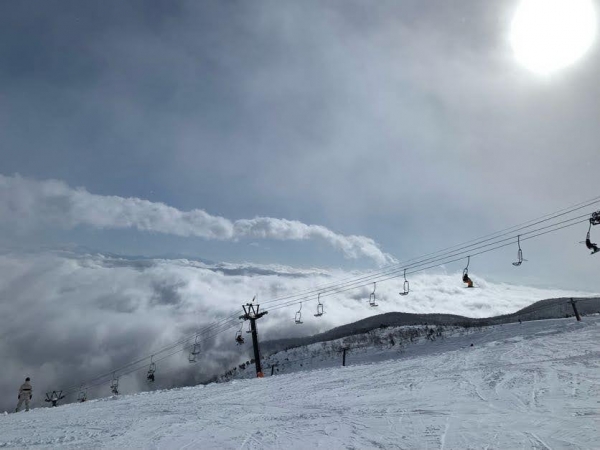 雪質が最高!国際的なスキーリゾート
-
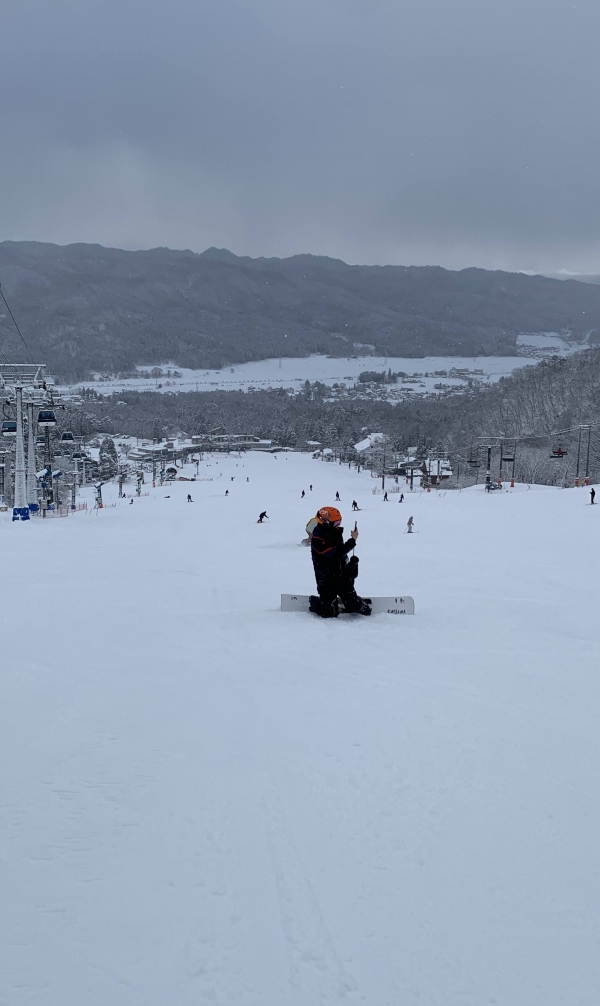 仕事前にバイト仲間とスノーボード
-
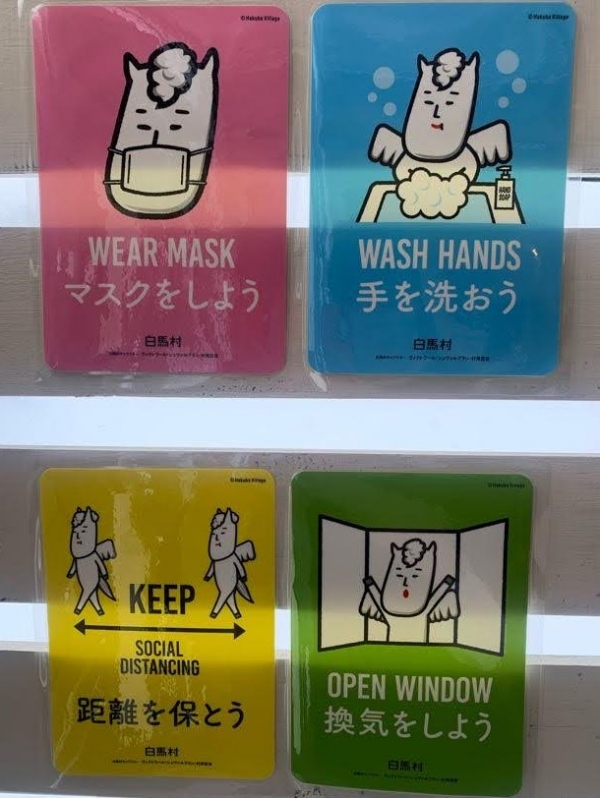 コロナウイルス感染予防の呼びかけポスター
2021/12/08 05:00:00 PCCカンボジアオンライン交流会
- 学生生活
- 広報隊倉谷
こんにちは!グローバル観光学科2年次生の倉谷歩佳です。紅葉は見ごろを終えましたが、京都の神社仏閣を中心としたエリアは、観光客でにぎわっています。冬の寒さが増してゆく日々ですが、外に出て冬の京都観光を楽しみたいです。仁和寺や嵐山、二条城は大学から比較的近いので学校帰りの散策にもぴったりですよね。
さて、今回は私が所属しているサークル、『PCC(Picture books for Cambodian Children)』が11月20日に行った『カンボジアオンライン交流会』について書いていきます。まず初めに、PCCの活動について紹介します。カンボジアの子供たちのために、教育に役立つストーリーの絵本を日本語・英語・クメール語の3ヵ国語入りで作り、現地の子供たちに届けて読み聞かせをすることを中心にボランティア活動をしています。今年はコロナウイルスの影響で、カンボジアのリトルエンジェル孤児院さんとオンラインで交流会を開催しました。
今回作成した絵本の題名は、『おかずたちのにじいろのたび』。絵本を通して、日本のお弁当の文化を楽しんでもらいたいと考え、まげわっぱ(木製のお弁当箱)や、たまごやき、たこさんウインナーなどの可愛いキャラクターが登場します。そして、私たちがこの絵本に込めた思いは、『思いやりと助け合い』の大切さ。おかずのキャラクターたちが繰り広げる感動のストーリーです。最後のページには、おかずのキャラクターのシールで遊べる付録も作成しました。
夏休み前から絵本作りに取り掛かり、絵本のみならず交流会を盛り上げるためのクイズ企画や質問コーナーの計画もし、本番に向けて着実に準備を重ねてきました!ついに当日!「ជម្រាបសួរ! សួស្តី! (チョムリアップ スォ スォ スダイ:初めまして、こんにちは!)」から始まった交流会。学校紹介では、カンボジアの孤児院で作られている伝統工芸品について教えていただきました。細かい技法と美しい出来栄えに思わず歓声があがりました。クイズ企画では琴(伝統的な楽器)について紹介し、絵描き歌に合わせて一緒にドラえもんを描くなど日本の伝統文化からポップカルチャーまで共有することができました。そして、現地の子どもたちに絵本が手渡され、読み聞かせがスタート!みんな絵本に夢中な姿を見てとても嬉しかったです。私たちは日本語で読み聞かせをして、それを現地の先生にクメール語へ訳してもらうという流れで進めました。意味は難しくても生の日本語やクメール語を通してお互いの文化に少しでも親近感を抱けたのではないかと感じています。交流会の最後には、サプライズで子どもたちから歌のプレゼントが!予期せぬ心温まるプレゼントに感動し、同時にこの活動のやりがいを感じました。
今回のオンライン交流会は、お互いの学びの機会に繋がりました。オンラインでも、言語が違っても、相手の文化を理解し、積極的にコミュニケーションを図ることで心から通じ合った交流会になりました。私たちが子どもたちに「やってあげる」ではなく、「お互いに学び合い、支え合う」ことを大切にできたこの機会。一日でも早くお互いが安心して国境を越えて直接交流日が来ることを願っています!最後に皆さんにクメール語で「ありがとう」をご紹介!「អរគុណ (オークン)」です。それでは皆さん、記事を読んでくださり、អរគុណ!PCCインスタグラムもよかったらチェックしてみてください♪
*表記訂正のお知らせとお詫び(2023.10.26)
上記文面に誤表記がございました。お詫び申し上げますとともに、以下のとおり謹んで訂正をさせていただきます。
訂正前:寺社仏閣
訂正後:神社仏閣
Hello, everyone! My name is Ayuka Kuratani, and I am in my sophomore year in the Department of Global Tourism. Although it’s the time of year that the leaves fall down, Kyoto is alive with tourists in and around the shrines and Buddhist temples. I enjoy strolling around the university after school, for example Ninna-ji Temple, the Arashiyama area, and Nijo Castle.
My blog today is about the Cambodia Online Exchange Meeting produced by PCC, a volunteer circle at KUFS. This event is held on November 20th. First, I want to introduce the PCC. -We make books to help with the education of Cambodian children in three languages: Japanese, English, and Khmer. -After that, we take these books and read them to the children. This year, because of the pandemic, we held the event online and we are able to participate in the reading exchange meeting with the Little Angel Orphanage and the Khmer Art Center.
The title we produced is called Okazutachi no Nijiiro no Tabi (“The Rainbow Journey of Side Dishes)”. -We wanted the children to enjoy Japanese “obento culture” -through these books, featuring many pretty characters such as magewappa (bentwood lunch boxes). Tamagoyaki (a rolled omelet) and a red wiener that is cut to resemble octopus appear in the story. There is a special message in this story: the importance of “kindness and cooperation”. It is a really emotional story. On the last page, there is an appendix where you can play with stickers of these characters.
We started working on the picture book before the summer vacation, planning not only the picture book but also the quiz and question corner to make the exchange event more exciting, and steadily making preparation for the actual event!
Finally, it’s the day of the meeting! -The event started with a greeting in Khmer – “Chomuriappu swo swo sudai. (Hello nice to meet you). During the introduction to the school, we learned about the traditional handicrafts made at the orphanage in Cambodia. The detailed techniques and beautiful workmanship drew cheers from the audience. In the quiz session, we introduced the Koto (a traditional musical instrument), and the children drew Doraemon together to the accompaniment of an illustrated song, allowing us to share everything from traditional Japanese culture to pop culture. Then, picture books were handed to the local children and the storytelling began! I was very happy to see how absorbed they were in the picture book. We read the book to the children in Japanese, and then the local teacher translated it into Khmer for us. At the end of the party, the children gave us a surprise gift of a song! I was moved by this unexpected and heartwarming gift, and at the same time, I felt that this activity was worthwhile.
This online exchange event led to an opportunity for mutual learning. Even though we spoke different languages online, we were able to truly communicate with each other by understanding each other's culture and actively communicating with each other. This was an opportunity for us to learn from each other and support each other, rather than just doing it for the children. I hope that the day of direct exchange across borders will come sooner rather than later, when we can both feel at ease! Last but not least, I want to introduce how to say “Thank you” in Khmer: “អរគុណ (o-kunn)”. So, អរគុណ for reading my blog today!
Please check out our Instagram!
-
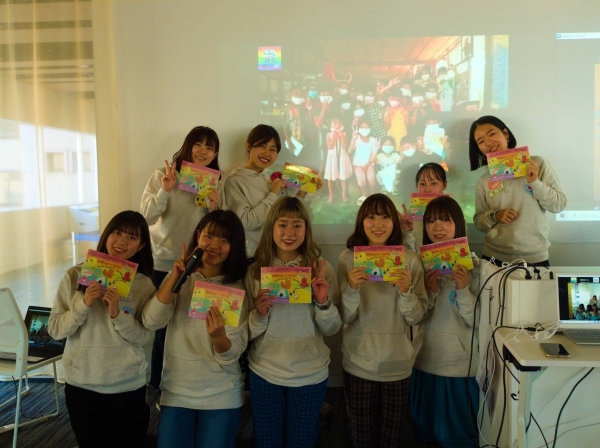 カンボジアの子どもたちと一緒に
-
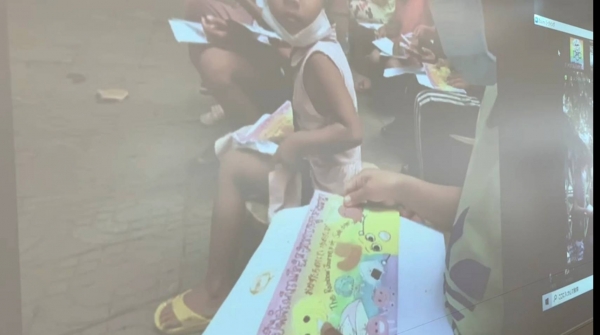 絵本が子どもたちに届きました!
-
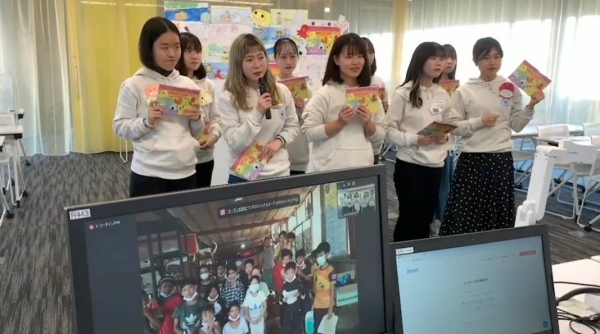 交流会の様子


