


学生生活
2019/04/05 09:30:00 マレーシア・カンポン レアウ村でのホームステイ
 学生生活
 Student Reporter
こんにちは!
グローバル観光学科2年次生の宮本千晴です。今回は、3月12日付の遠藤さんのマレーシア研修に関するブログに引き続き、国立マレーシア科学大学英語研修でのホームステイについて報告します。
私は3月7日〜9日に、マレーシアのケダー州カンポン レラウ村へホームステイに行ってきました。今回は、二泊三日のホームステイでのいろいろな体験の中から、マレーシアの伝統工芸バティックの色ぬり体験とマレーシアの民族衣装について報告したいと思います。
まず、バティックとはマレーシアの伝統的なろうけつ染のことです。バティック専用に織られた木綿の生地に、ろうで模様を描いて色をつけます。今回はバティックの色ぬり体験をしました。自分の好きな柄を選び、色を混ぜ合わせて好きな色を作り、色ぬりを楽しみました。
次に、マレーシアの伝統衣装について紹介します。女性の衣装はバジュクロン、男性の衣装はバジュマラユと呼ばれます。2日目の夜に、ホストファミリーに貸してもらい、みんなで伝統衣装を着ました。それがこの写真です。柄や色がとても個性的でとても素敵でした。
カンポン レアウ村でのホームステイでは、文化、食、宗教など日本との違いについて多く知ることができ、とても良い経験になりました。ぜひみなさんも来年度のマレーシア研修に参加してみてください。
Hello! My name is Chiharu Miyamoto. I'm a second-year student at the Department of Global Tourism Studies. During this spring break, I participated in the KUFS English Language Program at Universiti Sains Malaysia (USM). Today, I am going to report on my homestay experience in Malaysia.
From March 7th to 9th, we went to the villlage of Kampung Relau in Kedah State for a two-night homestay program. We experienced many things there, but in particular, I would like to talk about Malaysian traditional batik coloring experience and Malay ethnic dresses.
Batik is a Malaysian traditional wax-resist dyeing technique used on textile. Wax was used to create a colored design on a special cotton fabric. Each of us chose the design that suits her taste and enjoyed coloring.
Next, I would like to tell you about Malay traditional costumes. Female dresses were called "Baju kurung," while male counterparts were "Baju Melayu." We were able to borrow the dresses from our host families, and we tried them on. One of the attached photos shows us in these costumes. The designs and colors were very original and lovely.
I had a very good homestay experience in Kampung Relau, learning about local cultures, foods, and religions that are often different from Japan. I highly recommend this experience for your next spring break!
-
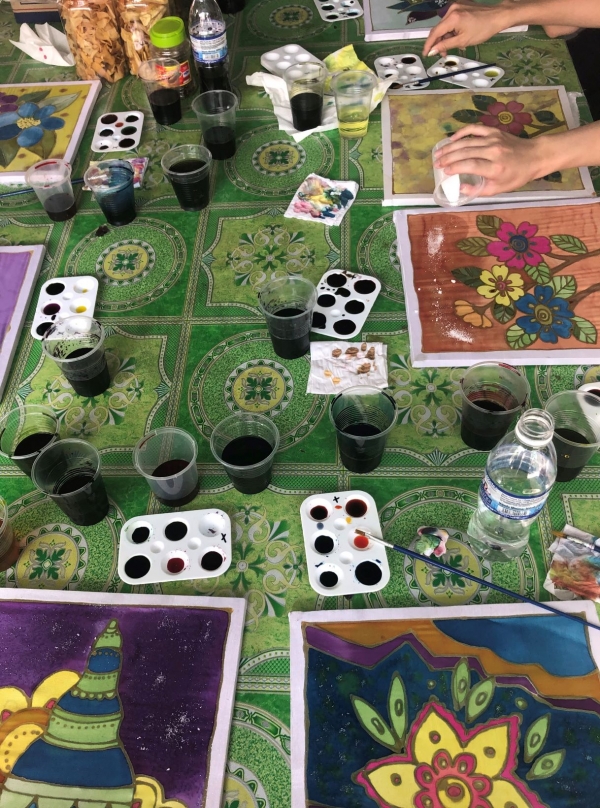 好きな柄を選んで色ぬりをしている様子
-
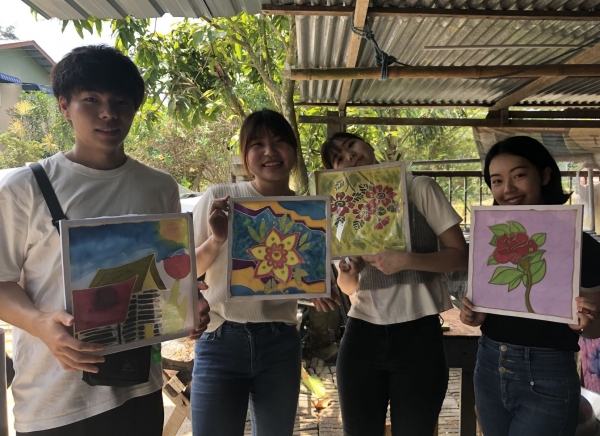 完成したバティック
-
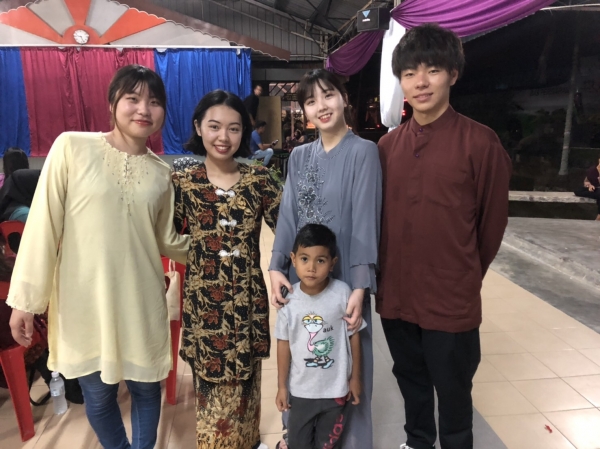 みんなでマレーシアの伝統衣装を着てみました
2019/03/12 02:40:00 マレーシアからの現地レポート
- 学生生活
- Student Reporter
こんにちは。グローバル観光学科1年次生の遠藤櫻です。今回は、京都外大のマレーシア英語研修について現地レポートしたいと思います。
このプログラムは1年次生から3年次生までが参加することができます。国立マレーシア科学大学(USM)のヒューマニティ(人文)学部の教授から、TOEIC対策に関する授業を主に受けながら、マレーシア文化研修を経験するプログラムです。本学とUSMは提携を結んでおり、2016年8月にはキャンパス内にKUFS-USM Japanese Cultural Centreが設立されています。
マレーシアではマレー語が公用語ですが、かつてイギリス領だったこともあり、英語も共通語としてよく使われています。
USMのあるペナン島は、日本との気温差が大きく、日中はとても日差しが強いです。そのため、水分補給が欠かせません。また、食文化については、マレー系、中国系、インド系の3つの民族が大半を占めているため、それぞれの代表料理を食べることができます。USMの食堂やナイトマーケットで本場のハラールフードなども食べています。ハラールフードとは、イスラム法上で食べることが許された食材や料理のことを指します。
さらに、現地の小学校訪問や観光ツアーもあります。休日には、バディと呼ばれる同世代のUSMの学生と共に有名な観光地のある世界遺産のジョージタウンに出かけたり、ショッピングモールに買い物に行ったりもしています。引き続きTOEICの勉強もしながら、マレーシアでの観光を楽しみたいと思います。
Hello, my name is Endo Sakura in Global Tourism Studies. Today, I would like to report on the KUFS English Language Program in which I am currently enrolled at Universiti Sains Malaysia (USM).
First to third year students can participate in this program. We prepare for TOEIC tests and also study Malaysian culture from the professors of Faculty of Humanity at USM. KUFS has had a partnership with USM. In August 2016, the KUFS-USM Japanese Cultural Centre opened on the campus of USM.
The official language of Malaysia is Malay, but English has also been commonly used partly because Malaysia used to be under British control.
The temprature of Malaysia is really different from that of Japan. Since the sun light is terribly strong in Penang, we are concerned about rehydration. In the meantime, speaking of the food culture of Malaysia, there are three types of cuisnines: Malay, Chinese, and Indian. We can eat each representative meal. I usually eat halal foods at the USM cafeteria, night markets, or local halal restaurants. Halal foods refer to foods that Muslims are allowed to eat or drink under Islamic law.
We also visited a local elementary school and went on a school trip. On weekends, we go shopping with an USM student buddy and go to a tourist spot like George Town which is a famous world heritage site. I hope to go sightseeing more in Malaysia while studying hard for TOEIC.
-
 鶏肉とナンに似たハラールフード
-
 ジョージタウンの街並み
-
 マレーシアで最古の英国国教会、セントジョージ教会


