


CEP活動紹介
2023/10/13 23:40:00 CEP美浜町「麺と向かって「みお」」結果報告
 CEP活動紹介
 広報隊吉田
皆さんこんにちは、グローバル観光学科2年次生の吉田琳香です。8月19日の学科ブログでCommunity Engagement Program(CEP)美浜町プログラムとして地域と連携して企画をおこなったご当地ラーメンポップアップストア「麺と向かって「みお」」について宣伝させていただきましたが、今回はその結果報告をさせていただきます。
私たちは、8月29日から9月5日まで、和歌山県美浜町に滞在していました。29日から31日までは、それぞれ広報班・運営班に分かれて活動していました。広報班は、開業までの店舗装飾、SNSやビラ配り、新聞取材による宣伝等をしていました。運営班では主にラーメン・トッピングの仕込み、試作、当日のキッチンの流れ確認などをしていました。9月1日のプレオープンでは、美浜町の町長、副町長、和歌山県の職員の方々、CEPの受け入れをしてくださったNPO日ノ岬・アメリカ村の理事の皆さん、京都外大のコミュニティセンター長の古川さんや国際貢献学部長の藤倉先生など関係者がご来店くださいました。また、新聞社の方々も取材をしにきてくださり、大きくとりあげてくださいました。それを受けてわたしたちは、この日の関係者を対象におこなったアンケート結果を見てブラッシュアップし、当日へ活かせるように流れを再確認しました。
広報班のSNSの宣伝や多くの新聞に取り上げていただいたおかげで、開店1日目9月2日はオープンからわずか30分で予定していた50杯を完売、2日目9月3日はオープンの30分前に同じく完売という驚くべき結果を収めることができました。カナダ領事のMr. David Perdueご夫妻も、名古屋から食べにきてくださり、カナダ・ミュージアムも見学していただきました。そのために、英語でメニューの説明や案内も準備してのぞみました。また、京都外大の校友会関係者の方々も足をはこんでくださいました。
オープンした時、運営班の学生4人はキッチンでラーメン作りを担当しました。具体的には、麺とスープ担当、器の温めとトッピング担当で分かれて作業しました。最初は慣れないラーメン作りに苦戦していましたが、最終日には、1時間で完売させるほどお店を回すのが早くなりました。いっぽう、広報班6名は、駐車場・受付・ホールを担当していました。想像以上に多くの人が来店してくださったので、安全に駐車や車の移動を管理し、お待ちいただいているお客さんが熱中症にならないようにお茶を出したり、京都外大と地元事業者の海猫屋さんがコラボして美浜町のお土産として企画した飴を試食していただいたりもしました。そして、今回のコンセプトである「ごちそうさまからの三尾探索」を実現するために、シャトルバスを利用した三尾ガイドを実施しました。和歌山県外からこられた方々だけでなく、実際に美浜町にお住まいの方たちもご参加くださいました。私も三尾ガイドとして一緒に行きましたが、「綺麗な景色を見ることができ楽しかった」、「美浜町に住んでいるけど知らないことを知れた」と言っていただきました。
滞在最終日の9月4日は、SUPとサーフィン体験をすることができました。初めてのSUPに苦戦する子もいれば、初めて乗ったとは思えないように器用に乗る子もいました。波も出ていたので、少しだけサーフィンもすることができました。思っていた以上に波に乗るのは難しかったですが、乗れると爽快感がありました。最後に綺麗な夕日をみんなで眺めていると、大変だったけれど素敵な夏を体験する事ができて嬉しかったです。
「麺と向かって「みお」」は、大変多くの皆さまのお力添えで実現しました。非常勤で学科にきてくださっている平田先生にもお世話になり、専用Webサイトを開設させていただけたおかげで、支援者数30名という多くの方からご寄付もいただきました。いただいた資金は、開店に向けての店内装飾、のぼり作成費、ガイド用の送迎車チャーターなどに大変役立てさせていただきました。また、美浜町での滞在中には、地域の方々や学生の保護者の皆様から、激励のお言葉や差し入れも沢山頂戴しました。改めてご支援いただいた皆様、また実際に足を運んでくださった皆様、本当にありがとうございました。
10月6日には、和歌山県主催の和歌山県人会世界大会のふるさとめぐりツアーで、三尾に来られる日系カナダ人の皆さん約60名にも「みおラーメン」を提供していただき、私たちの一部もラーメン作りのお手伝いをしに三尾を再訪しました!また、昨年と一昨年に美浜町でCEPをおこなった学生有志もお手伝いをさせていただきました!将来的に「みおラーメン」の店舗を美浜町三尾地区にというお話もありますので、楽しみにしていただけたらと思います。最後にこちらは、地元の日高新報社にとりあげていただいた記事です。このほかにも、紀州新聞様、毎日新聞様、読売新聞様からの取材をうけました。ありがとうございました!
Hello everyone, this is Rinka Yoshida, a second-year student in the Department of Global Tourism, and I would like to report on the results of the Men to Mukatte Mio pop-up store as part of the Community Engagement Program (CEP) Mihama Town program. We were staying in Mihama Town, Wakayama Prefecture from August 29th to September 5th. Until the opening, the public relations team was decorating stores, distributing social networking and leaflets, and advertising through newspaper coverage. The operations team was preparing ramen and toppings, making prototypes, and checking the flow of the kitchen on the day of the event.
At the pre-opening on September 1, the Mayor of Mihama town and other officials from KUFS visited the store. Newspapers also came to cover the event and gave it a great deal of coverage. In response, we reviewed the results of the survey conducted on the day of the event. Then reconfirmed the flow of the event so that we could make the best use of the results.
On September 2 and 3, we opened Men to Mukatte Mio. Fortunately, Due to thanks to the publicity in newspapers and social networking sites, on the first day, 50 bowls were sold out within 30 minutes of opening. And on the second day, the same number of bowls were sold out 30 minutes before opening! The Canadian Consul, Mr. David Perdue, came from Nagoya to try the ramen and visited the Canada Museum. We prepared an explanation of the menu and directions in English. Members of the Alumni Association of KUFS also came to visit us.
Thanks to the opening of our dedicated website that was made possible through the guidance of Prof. Hirata who is a part-time teacher in the global tourism department, we have received donations from as many as 30 supporters. The funds which we received were very helpful in developing the ramen as a product and preparing for the opening of Men to Mukatte Mio. Furthermore, we received many words of encouragement and gifts from local residents and parents of students during our stay in Mihama Town. Once again, we would like to thank everyone who supported us and visited us in person!
On the last day of our stay, we were able to experience surfing and a stand-up paddle board (SUP). At the end of the day, as we all watched the beautiful sunset together, I was happy that we were able to experience a wonderful summer, even though it was hard work.
On October 6, our ramen stand served to about 60 Japanese Canadians coming to Mio as part of the Second Wakayama Prefecture-sponsored Kenjinkai World Conference hometown tour. Four of the ten CEP students assisted in making the ramen on the day. In addition, student volunteers who had been in Mihama town last year and the year before assisted in this town wide event. We hope you can come and eat Mio ramen when we open again! Thank you very much!
-
 「麺と向かって「みお」」店内の様子
-
 最終日にみんなで見た綺麗な夕日
-
 和歌山県人会ふるさと巡りツアーにて日系カナダ人のLISA先生と
2023/08/19 01:20:00 麺と向かって「みお」
- CEP活動紹介
- 広報隊吉田
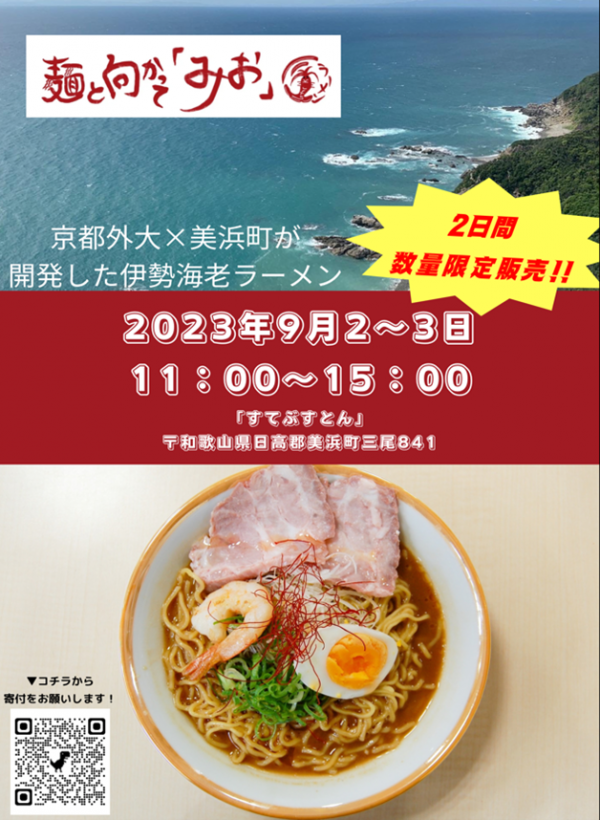
こんにちは!グローバル観光学科2年次生の吉田琳香です。今回のブログでは、8月29日から9月5日にかけて活動する「和歌山県・美浜町CEP」についてです。9月2日・3日の週末に期間限定ラーメン店「麺と向かって『みお』」を開店しますので紹介させていただきます!
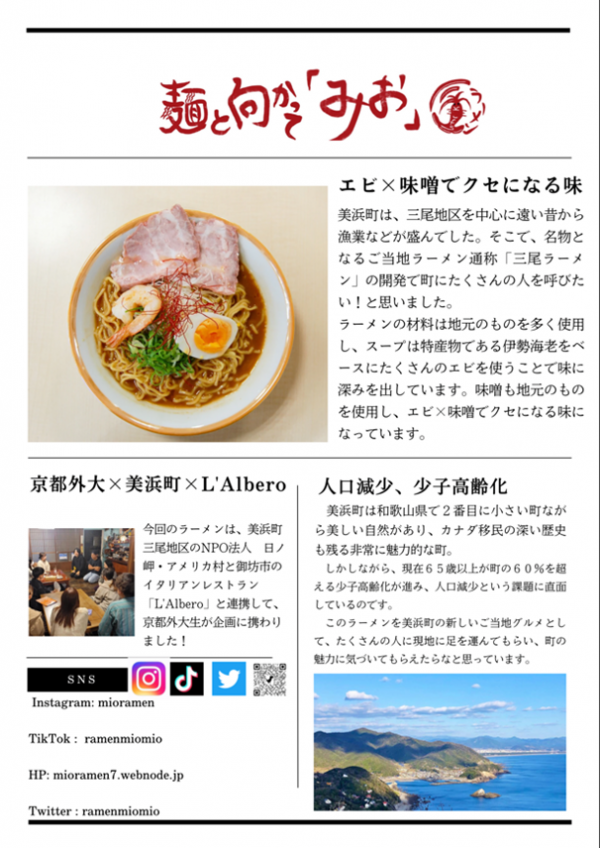
まず、今回のCEP実習場所であり、「麺と向かって『みお』」の開店場所である、「和歌山県美浜町」について説明します。美浜町は、和歌山県日高郡の西部に位置し、和歌山県で2番目に面積が小さい町です。しかしながら、「和歌山県の夕陽・100選」にも選ばれた「煙樹ヶ浜」をはじめ美しい自然が多く点在する魅力的な地域です。
さらにカナダ移民の深い歴史もあります。明治時代、大工の工野儀兵衛がカナダの漁村、スティーブストンにシャケ漁業の出稼ぎに行き、成功を収めたことがきっかけで、その後、多くの村人がカナダへ渡りました。さらに昭和時代に入ると、帰国した人々が洋風の住宅を建築したり、英語まじりの日本語を話したりするなどして、三尾地区がアメリカ村と呼ばれ始めていきました。
しかしながら、現在65歳以上の人口が町の60%を超えるほど少子高齢化が進み、人口減少という課題に直面しているのです。そこで、美浜町の特産品である「伊勢えび」を使った、ご当地ラーメン通称「三尾ラーメン」の開発で町にたくさんの人を呼びたい!と思いました。実は、このアイデアは私たちの一つ上の先輩方が、2022年度の美浜町でのコミュニティエンゲージメントプログラムで考えてくださったもの。それを、今年私たちが実現するので、昨年の先輩方の想いも詰まったプロジェクトとなります。
和歌山県・美浜町CEPは全員で10名いますが、広報班6名・経営班4名に別れて、毎週zoomを活用して、地域サポーターの方々とミーティングを行なってきました。広報班では主にInstagramやTikTokなどのSNSを運用し、美浜町の観光地やおすすめスポットや、ラーメン開発の進捗情報を投稿したりしています。また、CEP活動初の期間限定クラウドファンディングにも挑戦しています。
経営班は、ラーメンの試作を通して味・トッピング・麺の種類を決めました。ロゴ・店名・器も自分たちで考案し、ラーメン店を運営するコストや商品原価も自分たちで計算し、無駄なく環境にやさしいラーメン店を目指しています。
今回のラーメンスープやチャーシューの開発は、美浜町三尾地区のNPO法人 日ノ岬・アメリカ村と、御坊市のイタリアンレストラン「L'Albero(アルベロ)」と連携しておこなっています。ラーメンは「エビ×味噌」でクセになる味を目指しました。材料は味噌を含めて地元のものを多く使用し、スープは特産物である伊勢海老をはじめ、その他たくさんのエビを使うことで味に深みを出しています。
三尾ラーメンは、NPO法人日ノ岬・アメリカ村が美浜町三尾地区で運営するアメリカ村食堂「すてぶすとん」で販売します!NPO法人の事務局長で、すてぶすとんのマネジメントを担当する大江亮輔さんをはじめとする美浜町の皆さんに協力してもらいながら、学生10名も当日すてぶすとんで働き、大学生らしい元気と笑顔溢れる接客で盛り上げます!
「麺と向かって『みお』」のコンセプトは“ごちそうさまからの美浜探索”です。ぜひ食べに来て、ラーメンを食べたあとは美浜町をたくさん満喫しに来てください!
また、開業にあたり地域での活動支援のため、ご寄付もお願いしています。詳しくはこちらの期間限定サイトをご覧ください。
地域と一体となって限界集落での観光まちづくりに取り組む京都外大生のCEP活動をぜひ応援してください。ご協力、よろしくお願いします!
「麺と向かって『みお』」SNS
・Instagram: mioramen
・TikTok : ramenmiomio
・HP: mioramen7.webnode.jp
・Twitter : ramenmiomio
Mihama is the second smallest town in Wakayama Prefecture, yet it possesses stunning natural beauty, notably the Enjugahama shoreline, which was named one of Wakayama's 100 best sunrise and sunset spots. It's an attractive town with a history of sending emigrants to Canada in the pre-war period.
However, due to a dropping birth rate and an aging community, more than 60% of the town is now over 65 years old, and the town is confronting a population crisis. Even if it is a wonderful town, at this rate it may be lost.
Can we use the power of tourism to change the current situation?
We devised the idea of creating a local ramen using Ise Ebi lobster, a famous product from Mio, Mihama!!
This project is a fantastic collaborative effort involving ten sophomore students from the Department of Global Tourism, part of the faculty of Global Engagement at Kyoto University of Foreign Studies, working with the townspeople of Mihama.
Our ramen pop-up store will open on September 2nd and 3rd in Mio. We look forward to seeing you there!
2023/06/02 22:40:00 2022年度CEP京都市内を通して
- CEP活動紹介
- 広報隊福井
こんにちは!グローバル観光学科3年次生の福井健太郎です。今回のブログでは、2月13日~3月10日に行われた、「2022年度CEP京都市内プログラム」について紹介します!プログラムの前段階として行われた春学期の授業で、何をしていくかを話し合いました。昨年度のプログラムに引き続き、京都に多く継承されている伝統文化を発信したいということに決まりました。伝統文化は需要の減少、技術の後継者の減少などの理由から伝統文化の衰退が起こっていると考えたからです。この問題を解決するため班を「房ひも班」「伝統みらい班」「旅館班」の3つに分け調査を行いリーフレットや動画、プレゼンテーションにまとめました。また次年度のプログラムへと活動内容を継承するため「全体記録班」を設け、写真や動画で記録しました。
「房ひも班」は、お祭りの道具や刀、人形などに使用されている伝統工芸品「房ひも」を作っている「宮本株式会社」様の宮本武史様に取材させていただきました。房ひもと言ってもあまり馴染みがないかもしれませんが日常的に目にすることの多い伝統工芸品です。房ひもを作る仕事場を見学させていただき取材をさせていただきました。伝統工芸は分業の世界で、房ひもを作る前も完成してからもたくさんの人、時間、手間暇がかかって作られている価値あるものだということを学ぶことができました。
「伝統みらい班」は、伝統工芸を担う職人さんのサポート、その職人さんの伝統工芸を使った商品開発をする「株式会社伝統みらい」様の会社に訪問し、社長である太田智子さんに取材をさせていただきました。太田社長への取材を通して、仕事に対する心や、行動力の高さに圧倒されました。そこで太田社長の魅力を伝えるために動画を作成しました。動画を作るうえで班のみながイメージする動画を作成できるように事前打ち合わせを入念に行いました。
「旅館班」は、三条大橋から東に進んだ「日昇館尚心亭」様でインターンシップとして勤務させていただきました。勤務中には、実際に働いている職員の皆さんに旅館で働く楽しさをお伺いしました。みなさん口をそろえてお客様から「ありがとう」と言ってもらった時と仰っていました。従業員の方はお客様の事を第一に考え、より良いサービスを提供できるよう励んでおられました。お客様の事を第一に考え、愛される旅館を続けてきたからこそ継承される旅館なのだと分かりました。
今回のプログラムを通して、京都の伝統に触れてみると私たちが思っていた以上に身近な存在であったということが分かりました。伝統文化はその存在に気付いていなくても意外と身近なものであることが分かりました。しかしその存在に気付いて振興していかなければその伝統文化は継承されずに衰退していきます。今回動画やリーフレットにまとめたようにたくさんの人に伝統文化というものを知ってもらえるように発信していくことが大事だと考えました。今回学んだことをゼミ活動や今後の人生に生かしていきたいです。
Hello, I am Kentaro Fukui, a third-year student in the Department of Global Tourism. In this blog, I would like to introduce the "FY2022 CEP Kyoto City Program" held from February 13 to March 10! We discussed what we will do in the spring semester classes held as a preliminary step of the program. Continuing from last year's program, it was decided that we would like to disseminate traditional culture. We believe that traditional culture was in decline due to a decrease in demand and a decrease in the number of people willing to pass on these techniques. To solve this problem, we divided into three groups, the Fusahimo Group, the Dento Mirai Group, and the Ryokan Group. Each group conducted a survey and compiled their findings into a leaflet, video, and a presentation. In addition, a general record was set up to take photos and videos to pass on the content of the activities to the next year's program.
The Fusahimo Group had the opportunity to interview Mr. Takeshi Miyamoto, the founder of Miyamoto K.K., a company specializing in the production of fusahimo cords. Fusahimo cords are traditional crafts commonly used in festivals, as well as for swords, dolls, and various other items. Although you may not be familiar with fusahimo, they are intricately woven pieces that are frequently encountered in everyday life. During our visit to the workplace where these cords are meticulously crafted, we had the privilege of conducting an interview with Mr. Miyamoto. This experience provided us with valuable insights into the world of traditional crafts, where division of labor is fundamental, and numerous individuals invest significant time and effort into creating each individual cord.
Dento Mirai Inc, a company dedicated to supporting artisans involved in traditional crafts and developing products incorporating their skills, provided us with the opportunity to interview their president, Ms. Tomoko Ota. Through this interview, we were deeply impressed by President Ota's passion for her work and her proactive nature. As a result, we produced a video aimed at capturing President Ota's unique charm. Prior to its creation, the members of the group met diligently to ensure that the video effectively conveyed President Ota's character.
The Ryokan Group had the privilege of undertaking an internship at Nisshokan Shoshintei, located east of Sanjo Ohashi Bridge. Throughout the internship, we took the opportunity to inquire about the joys of working in a traditional Japanese inn from the actual employees. Without exception, they expressed that their most rewarding moments were when they received gratitude from guests. These dedicated employees consistently prioritized the needs of their customers and wholeheartedly dedicated themselves to providing exceptional service. It became evident that this ryokan has successfully been passed down through generations due to its unwavering commitment to customer satisfaction, resulting in enduring love and support from its patrons.
Through this program, We discovered that Kyoto's traditional culture is far more familiar to us than we had initially realized. Even when we are unaware of its existence, traditional culture permeates our lives in surprising ways. However, unless we actively acknowledge and promote it, the preservation of traditional culture becomes uncertain, leading to its gradual decline. As highlighted in our video and accompanying leaflet, we believe it is crucial to communicate the value of traditional culture to a wider audience, enabling greater awareness and appreciation. We are eager to apply the knowledge and insights gained from this CEP to our future endeavors and personal lives.
-
 最終発表会の記念写真
-
 伝統工芸体験の様子
-
 様々な房ひもの結び方
2023/05/19 23:20:00 城崎温泉でのCommunity Engagement Program
- CEP活動紹介
- 3年次生田中
こんにちは!グローバル観光学科3年次生の田村ももです。学科必修プログラムであるCommunity Engagement Program(CEP)のため、2022年8月3日から9月7日までの約1ヶ月間、城崎温泉に就業研修へ行きました。今回は、就業研修の様子や現地で学んだことについて発信したいと思います。
研修に参加した6人の学生のうち2人は城崎温泉西村屋本館へ、4人は城崎温泉西村屋ホテル招月庭へ配属されました。私は城崎温泉西村屋ホテル招月庭に配属されました。1ヶ月間の就業研修では、フロント・ルーム・ヘルプ・ラウンジ・プールの5種類の仕事を経験しました。
はじめに所属されたのはフロントでした。フロント業務では、ホスピタリティの基本やキビキビ動くことの大切さを学びました。お客様にはホテル到着時から最高級のおもてなしを提供しなければならないので、挨拶や返事は聞き取りやすい声で、そして笑顔で対応しました。笑顔で接客することで、自分の心に少し余裕が生まれました。接客をするうえでの意識の高さは歩き方や話し方に全て出る、と教えていただきました。
フロントの次に配属されたのはヘルプでした。ヘルプとは、主に朝食バイキングの会場で働く仕事です。会場の片付けや準備を通して、ヘルプ業務では裏方の仕事をたくさん経験することができました。バイキング会場はとても広く、隅々まで注意が行き届きにくいので最初は大変でした。まずは自分の近くのことから、ひとつひとつ丁寧に対応していくことが大切だと学びました。フロント・ヘルプでは、ただ教えられた通りにお客様と会話するのではなく、イレギュラーに落ち着いて対応する力が身につきました。
ウェルカムドリンクを提供するラウンジ、夏季限定の屋外プールでは、ワンランク上の飲食店の動きを学ぶことができました。ウェルカムドリンクの注文が多いラウンジはフロントの次にホテルに滞在するお客様と関わる場所なので、周りを見て慎重に行動しました。プールは小さなお子様が多く、常に安全のため周囲を巡回しました。プールもラウンジもとても広いので、隅々まで視線を運ぶことは難しかったです。
就業研修後半のルーム業務では、掃除の大切さ、お客様と向き合うことの難しさを学ぶことができました。ルーム業務は午前・午後に分かれていて、仕事内容が異なります。午前の業務はチェックアウトしたお部屋の掃除、午後の業務は夕食の準備・提供でした。ふすまの開け方や挨拶の仕方などを、フロント業務やヘルプ業務の時よりも細かく学びました。細かいところまで完璧に掃除するためには時間がかかります。丁寧さを極めることの難しさを知りました。
1ヶ月間の就業研修中、何度も心が折れそうになりました。しかし、研修が終わったあとは言葉に表せないほどの達成感を感じました。ホテルで働く社員の皆様が臨機応変に対応する姿を見て圧倒されました。今後、どんな状況でも焦らず落ち着いて、笑顔を忘れず対応する力を身につけたいと感じました。
Hello everyone! I am Momo Tamura, a third-year student in the Department of Global Tourism here at KUFS. I went to Kinosaki Onsen for a month from August 3 to September 7, 2022 for the Community Engagement Program (CEP), a required program in my department. In this blog post, I would like to report on my one-the-job training and what I learned there.
Of the six students who participated in the program, two were assigned to the Kinosaki Onsen Nishimuraya Honkan and four were assigned to the Kinosaki Onsen Nishimuraya Hotel Shogetsu-tei. I was assigned to the latter, and during my one-month on-the-job training, I experienced five different jobs: front desk, room, help, lounge and pool.
The first job I was assigned to was the front desk. There I learned the basics of hospitality and the importance of being on the ball. Guests must be provided with the finest hospitality from the moment they arrive at the hotel, so I greeted and responded to them in a friendly voice and with a smile. By serving guests with a smile, I began to feel a little more relaxed myself. I was taught that a lot of customer service is in the way you walk and talk.
After the front desk, I was assigned to “help". Here “help” refers to a job where you work mainly at the breakfast buffet. Through cleaning up and preparing the venue, I was able to experience a lot of behind-the-scenes work in the help position.
It was difficult at first because the buffet hall is very large and it is hard to pay attention to every corner. I learned that it is important to start with what is close to you and take care of things one by one. In the front desk help, I learned the ability to calmly respond to issues, rather than just talking to customers as I learned in my basic training.
Next came the lounge, where welcome drinks are served, and in the outdoor swimming pool, which is open only during the summer.
The lounge, where most welcome drink orders are placed, is the next place after the front desk where staff engage with guests staying at the hotel, so I had to look around and act professionally.
The pool has many small children, so I patrolled the perimeter for their safety at all times. Both the pool and lounge are very large, so it was difficult to carry my attention to every corner.
In the second half of my on-the-job training, I learned the importance of cleaning and the challenge of dealing with customers. The room work is divided into morning and afternoon sessions, and the work content differs.
Morning duties included cleaning checked-out rooms, and afternoon duties included preparing and serving dinner. I learned how to open the fusuma and how to greet guests in more detail than I did in the front desk and help duties.
I discovered that it takes time to clean perfectly, down to the smallest detail. I learned how difficult it is to master politeness.
During the one-month on-the-job training, I almost lost heart many times. However, after the training was over, I felt a sense of accomplishment that cannot be expressed in words. I was overwhelmed to see how the employees working at the hotel responded in a flexible yet professional manner.
I felt that in the future, I would like to acquire the ability to respond to any situation without rushing, calmly, and without forgetting to smile.


2023/05/12 23:10:00 CEP湯田中の活動について CEP Yudanaka
- CEP活動紹介
- 3年次生田守
こんにちは!
グローバル観光学科3年次生の田守 温陽(たもり はるひ)です。今回は、私が昨年夏に参加した「長野県・湯田中渋温泉郷」でのCEPプログラムについて紹介します!湯田中渋温泉郷は長野県北東部の山ノ内町に位置し、野生のニホンザルが温泉につかることで有名な「地獄谷野猿公苑」が近くにある温泉街です。私たちは約4週間、班ごとに旅館での就業研修やSDGs調査を行いました。
旅館での就業研修では、レストランでの接客やチェックイン補助、清掃、商品のPOP作成などの幅広い業務を行いました。私が研修を行った小石屋旅館さんは、海外ゲストが非常に多い旅館さんです。そのためレストランでの接客は、英語を使って対応することもしばしばありました。普段のアルバイトとは異なり、海外からのお客様と実際に接する機会を得られたのは、とても貴重な経験になりました!
また私たちの班は、地産地消とフードロスについてSDGs調査を行いました。私たちが就業研修でお世話なった小石屋旅館さん、ますやさん、炭乃湯さんでのインタビューをはじめとし、湯田中温泉のあぶらや燈千さんや地元レストランの渋温泉食堂gonkiさん、林檎園うえはらさんなど、たくさんの方々に取材協力していただきました。みなさんにご協力いただいたおかげで、地域の地産地消への取り組みの現状を把握することともに、今後の地産地消への取り組み意識について、地元の方々とさまざまな意見を交換することができました。
また昨年度は班ごとの就業研修とSDGs調査に加えて、私たち学生の視点からの「地域への提案」を行いました。4週間の滞在で垣間見えた温泉街の現状・課題を分析し、温泉街の新たなコンテンツ発掘や、観光アイデアなどを学生目線から提案させていただきました。
研修や調査を経て、観光の現場を自分の肌で体感し観光の現状や課題について発見し、自分自身で考える時間を経験できました。グローバル観光学科の学生として、この経験を通して更なる観光発展と自身の成長につなげていければと思います。
普段の生活圏とは異なる環境下で過ごすことで、新たな発見や知見を得ることができるかもしれません。是非皆さんも、新たな環境へと足を踏み入れてみてはいかがでしょうか。
I am Tamori Haruhi, a 3rd year student at the Department of Global Tourism at KUFS. Here I would like to introduce the CEP program I participated in last summer at Yudanaka Shibu Onsenkyo in Nagano Prefecture. Yudanakabushi Onsenkyo is located in Yamanouchi Town in northeastern Nagano Prefecture. It is a hot spring resort town near the famous Jigokudani Yaen-koen where wild Japanese monkeys bathe in the hot springs. We spent about four weeks in groups working at a ryokan and conducting research into the SDGs.
During our time at the ryokan, we performed a wide range of tasks such as serving customers in the restaurant, assisting with guests checking in, cleaning, and creating POP ads for products.
Koishiya Ryokan, where I conducted my training, is a ryokan with a large number of overseas guests. For this reason, I often had to deal with customers in English at the restaurant. It was a very valuable experience for me to have the opportunity to interact with guests from overseas!
Our group also conducted research into the sustainability of local production for local consumption and food loss - both of which are important SDGs.
We conducted interviews at Koishiya, Masuya and Suminoyu ryokans, all of which were part of our on-the-job training program, as well as Aburaya Tousen in Yudanaka Onsen, and a local restaurant called Shibu Onsen Shokudo Gonki, along with Ueharasa, an apple orchard.
Thanks to everyone's cooperation, we were able to understand the status of local production for local consumption as well as exchanging various opinions with local people about their awareness of sustainability going forward.
Last year, in addition to job training for each group and research into SDGs, we also made proposals to the local community from the viewpoint of a visiting student, analyzing the current situation and issues in the hot spring resort town we had glimpsed during our brief four-week stay. We then proposed new content and tourism ideas for the town.
Through the training and research, we were able to experience and learn firsthand about the current state of tourism and the issues it faces, and spend time considering these topics. As a student of the Department of Global Tourism, I hope that this experience will lead to further development of tourism in the region, as well as my own personal growth.
By spending time in an environment that is different from the one in which I normally live, I was able to make new discoveries and gain new knowledge. I encourage everyone to try stepping into a new environment, you can learn a lot!
-
 実際に作成したPOP
-
 就業研修 レストラン
-
 温泉街からの花火(歩行者天国)


