


CEP活動紹介
2022/04/12 22:30:00 CEP城崎温泉活動報告
 CEP活動紹介
 広報隊廣瀬
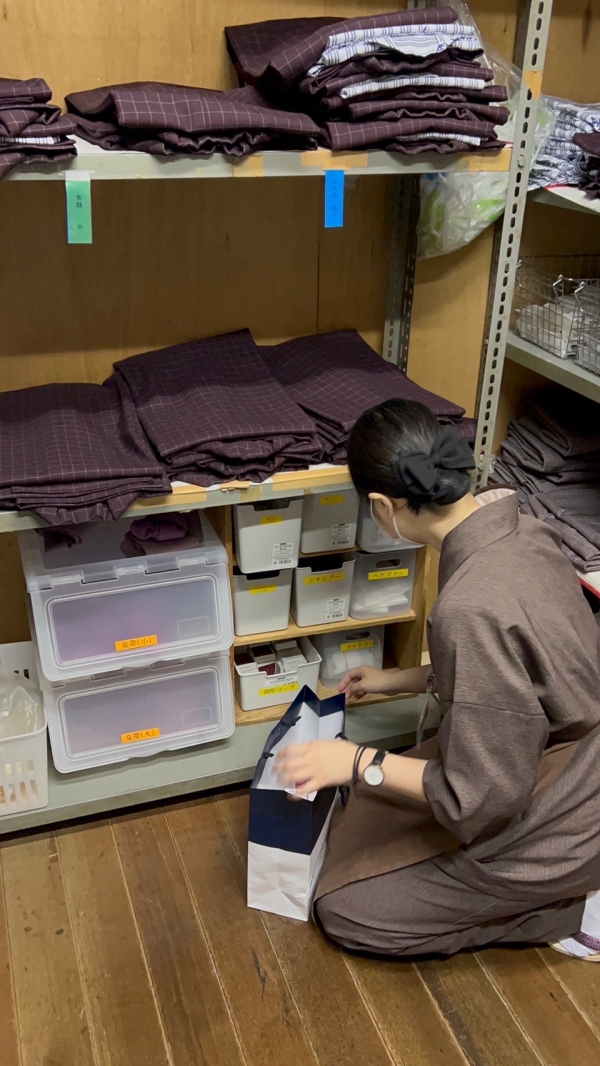
こんにちは!グローバル観光学科3年次生の廣瀬結衣です。今回は、私のCEP先である城崎温泉での活動内容についてご紹介します。城崎温泉CEPでは「西村屋」の方々にお世話になり、就業研修を行いつつ、城崎地域のSDGs調査を行いました。就業研修では、「西村屋本館」と「西村屋ホテル招月庭」で客室業務とフロント業務を行いました。客室業務では、お布団上げやお布団敷き、朝食・夕食の配膳や下膳、チェックアウト時のお見送り、チェックアウト後の客室清掃、客室準備等を行いました。フロント業務では、フロントやラウンジの清掃、チェックアウト時のお見送り、チェックイン時のお出迎え、館内案内等を行いました。
この研修を通じて主に接客マナーやおもてなしの精神について深く学ぶことが出来ました。研修の中では、すれ違ったお客様への挨拶、食べやすさや見栄えに気を遣った料理の配膳のほか、お客様に合わせて料理を提供するタイミングを考えたり、配膳・下膳時は音を控えてスムーズに行ったり、会話からお誕生日や記念日でお越しになったとわかれば祝い膳を用意したりと目に見えない場面でも、態度や行動、心遣いがサービスに表れていることに深く感動しました。また、客室係同士での助け合いが見られ、従業員間での感謝や挨拶も頻繁に交わされており、従業員同士の絆も窺うことが出来ました。このような従業員間での心遣いがサービスのクオリティーを向上させていると感じました。
西村屋社長である西村総一郎様によると、現在の城崎のまちづくりは、北但大震災が大きく影響しているそうです。北但大震災とは、大正14年5月23日豊岡・城崎方面に生じたマグニチュード6.8の烈震のことです。この大震災によって、城崎の多くの家屋が倒壊し大火災が生じました。復興の際には、景観資源の保全・継承を行いつつ、災害対策にも力を入れました。道幅や川幅を広げ、川には玄武岩を使用した護岸壁を設け川の氾濫に備えました。それだけでなく、コンクリート製の建造物を設置し、火事が起きても周囲に広がらないよう対策が施されました。この北但大震災によって倒壊・焼失した街の再建が今のまちづくりの基盤となっています。また、城崎地域では、駅は玄関、道は廊下、宿は客室、土産屋は売店、外湯は大浴場といった街を一軒の旅館としてとらえ、城崎全体で街づくりを行っていく「共存共栄」というまちづくり哲学を掲げています。
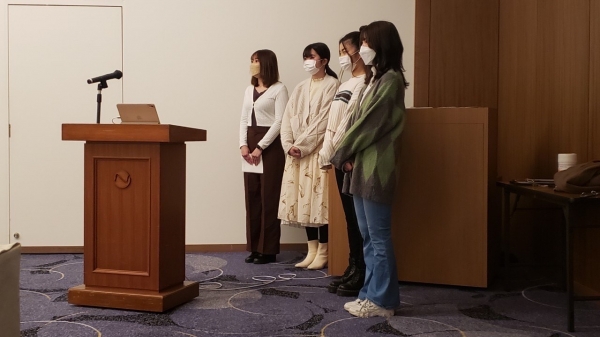
私たちは、この城崎のまちづくりを含めた地域の魅力やブランドに着目し、城崎地域の不安定な観光客数という課題解決に取り組みました。具体的には電子媒体を利用した地域の魅力発信が有効であるという現地で行ったインタビュー調査結果に基づき、PR動画を作成するという取組をおこないました。この動画では、「共存共栄」についての説明を行いつつ、城崎の蟹や温泉以外の魅力として若者に人気があるようなインスタ映えスポットを主に取り上げています。この記事を読んでくださった皆様に城崎の魅力をより知って頂きたいため、こちらのURLから是非私たちの作った動画をご視聴ください。城崎温泉CEPは、就業研修と調査を同時並行で行う非常に内容の濃い3週間でした。今回のCEPにご協力頂いた全ての皆様に心より感謝申し上げると共に、この研修を通じて経験し学んだことを今後も活かしていきます。
Hello! I'm Yui Hirose, and I am a third year student in the Department of Global Tourism. This time, I would like to introduce our activities at Kinosaki Onsen, my CEP destination. At the Kinosaki Onsen CEP, we conducted an SDGs survey in the Kinosaki area while conducting employment training with the help of the staff of Nishimuraya.
Our employment training consisted of housekeeping and reception work at both the Nishimuraya Main Building and Nishimuraya Hotel Shogetsutei. Through this training, I was able to learn about customer service etiquette and the spirit of hospitality. We greeted guests when we passed each other, served dishes that are easy to eat and look good, prepare easy-to-use amenities and yukata, as well as thinking about the timing of serving dishes according to the guests’needs. Attitude, behavior, and consideration are always required, even small details like serving food quietly, or preparing a celebration for a guest when staff overhear that a guest has a birthday or anniversary during their stay. I was deeply impressed by what I witnessed.
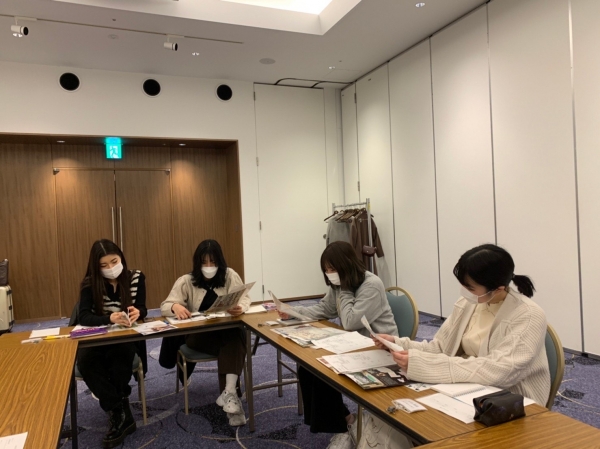
In addition, the room clerks frequently helped each other and exchanged words of gratitude and greetings among staff, and I was able to feel the bonds between the employees. I felt that this kind of consideration among staff really improves the quality of service. In the SDGs survey of the Kinosaki area, the theme was Efforts to Revitalize the Tourism Industry by utilizing Sustainable Development in Kinosaki: Coexistence and Co-prosperity, and through literature and interviews, we compared Kinosaki's development and the goals of the SDGs. We investigated and made concrete proposals for revitalizing tourism.
According to Mr. Soichiro Nishimura, the President of Nishimuraya, the current development of Kinosaki is greatly affected by the Great North Tajima Earthquake. This quake had a magnitude of 6.8 and shook Toyooka and Kinosaki on May 23, 1914. Many houses in Kinosaki collapsed and a fire broke out. During the reconstruction, the town planners focused on disaster countermeasures while conserving landscape resources. The width of the road and river were widened, and a revetment wall using basalt was installed on the riverbank to prevent flooding. Concrete structures were also installed to prevent fire from spreading to the surrounding area in the event of another quake. The reconstruction of Kinosaki is the basis of today's town development.
In Kinosaki, the station is the entrance, the road is the corridor, the inn is the guest room, the souvenir shop is the store, and the outdoor hot spring is the large communal bath. This is the philosophy of development in this town. We focused on the attractiveness and brand of the area, including the development of Kinosaki, and worked to solve the problem of unstable tourist numbers. We created a PR video as an initiative based on the results of an interview survey conducted locally to showcase the appeal of the region using digital media. In this video, while explaining "coexistence and co-prosperity", we mainly focus on Instagram-worthy spots that are popular with young people as attractions. We would like everyone who reads this article to learn more about the charms of Kinosaki, so please watch our video by clicking on this link.
-
 就業研修中
-
 調査会議
-
 現地発表
2022/03/04 21:30:00 CEP観光プラン作成(日本と台湾の鉄道)活動報告
- CEP活動紹介
- 広報隊前田
こんにちは!京都外国語大学グローバル観光学科2年次生の前田優希です。みなさん春休みはいかがお過ごしでしょうか。
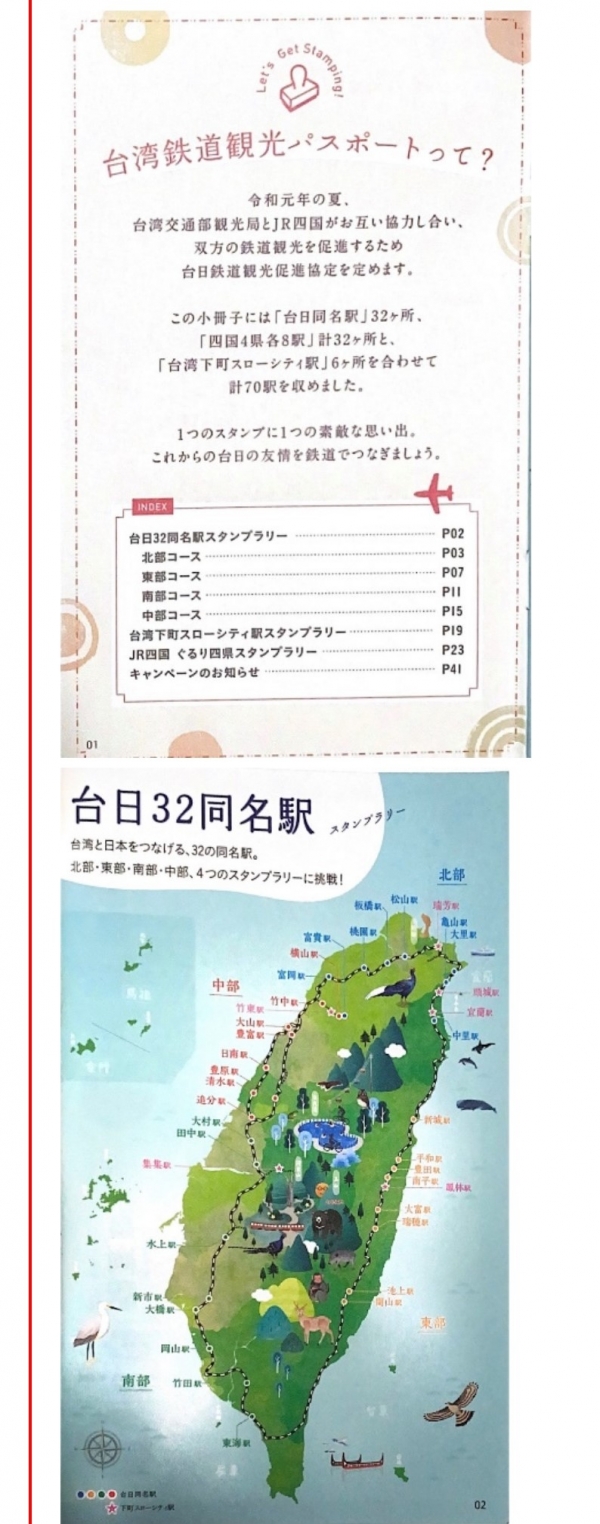
今回は、秋学期に行われたCEP観光プラン作成(日本と台湾の鉄道)の活動報告を発信させていただきます。このプログラムでは、「鉄道」と「サイクリング」をテーマに台湾向けの四国観光プランを作成しました。そして実際に作成したプランに沿って現地調査を行い、PR動画を作成しました。また、台湾の方々とも交流をしました。
私たちは3グループに分かれ、4週間にわたって活動を行いました。1週目は台湾の方と合同で、各班が作成した観光プランの発表を行いました。また、たくさんの企業の方々より動画撮影のノウハウや台湾の航空、鉄道事情など貴重なお話を聞かせていただきました。加えて、台湾観光局の方々から現在の台湾についての基礎知識を教えていただきました。
2週目は、実際に4泊5日で広島県、愛媛県、香川県を訪問しPR動画の撮影を行いました。1日目は広島県の尾道を訪問し、各班で観光スポットやグルメの撮影を行いました。夜には、名物の尾道ラーメンの紹介動画を作成し台湾の方々と共有しました。2日目はしまなみ海道をサイクリングしながら各地を取材しました。この日はグランピングを行い自然と触れ合う1日となりました。3日目は愛媛県の今治市と松山市を取材しました。松山ではJR四国様を訪問させていただき、観光列車やアンパンマン列車の運行などJR四国の様々な活動について教えていただくことができました。また、日本と台湾には松山駅(台湾語でソンシャン駅)という同名の駅があるため、JR松山駅でも撮影を行いました。この日は道後温泉に宿泊し各班で有名な温泉施設や道後名物を撮影することができました。4日目は各々、松山市内や海に最も近い駅として有名なJR下灘駅を撮影しました。そのあと、午後からは鉄道を利用し香川県まで移動しました。最終日は香川県庁を訪問し、香川県が行っている観光推進活動についてお話を伺いました。
3週目と4週目には、現地実習で撮影したものをもとに5分程度のPR動画を作成しました。また、CEP最終日にはオンライン上で台湾の方と合同で観光プランのプレゼンとPR動画の発表をしました。同じ地域を取り上げて各班動画を作成しましたが、テーマがそれぞれ異なり個性豊かなものが集まりました。台湾の方々が作ってくださったPR動画も台湾の魅力が伝わる素晴らしいもので日本にいながら台湾旅行の気分を味わうことができました。
今回の研修は、企業の方々や撮影に協力していただいた地元の方々そして、台湾の学生や関係者などたくさんの方々の力をお借りして成し遂げることができました。これまで、コロナウイルスの影響で学外の人との交流が極端に少ない状況でしたが、この研修では感染対策を万全におこない、たくさんの方々と交流する機会を得ることができました。動画の撮影依頼なども最初は緊張しましたが、地元の方々は皆さん親切に協力してくださっていることに気付きました。ゼミなど今後の大学生活では、今回の実習を活かし大学や学部内だけで完結せず外部の方とも積極的に交流しながら活動していきたいです。
CEPで作成したPR動画URL
日本チーム①
https://youtu.be/X3A4Wa6DmJY
日本チーム②
https://youtu.be/Hh8lgIi6hF8
日本チーム③
https://youtu.be/243xJUH2tRg
台湾チーム
https://youtu.be/MlNY-ozLwfo
お世話になった団体のホームページリンク
JR四国様 https://www.jr-shikoku.co.jp/
JR西日本コミュニケーションズ様 https://www.jcomm.co.jp/
STA Travel様 https://www.statravel.co.jp/
エバー航空様 https://www.evaair.com/ja-jp/index.html
テレビ愛媛様 https://www.ebc.co.jp/
香川県庁様 https://www.pref.kagawa.lg.jp/
阪神電鉄様 https://www.hanshin.co.jp/
三普旅行社様 https://www.sanpu.tw/
村上悠太様 https://twitter.com/yuta_murakami
台湾観光局様 https://jp.taiwan.net.tw/
Hello! My name is Yuki Maeda, and I am a sophomore in the Department of Global Tourism. How are you spending this spring vacation?
Today, I would like to introduce my CEP program, which was to create a tour plan (for the railway networks of Japan and Taiwan). We created a Shikoku Tour combining both rail links and cycling for Taiwanese visitors and undertook field work. We made a Shikoku promotion video and also interacted with Taiwanese students online.
We divided into 3 groups and worked for 4 weeks. We gave presentations about our tour plan together with the Taiwanese students in the first week. We learned how to shoot video, as well as about the Taiwanese air and rail network from many company sources. We also brushed up on basic knowledge about Taiwan from the Taiwanese tourist bureau.
We visited Hiroshima, Ehime, and Kagawa for four nights and shot a promotion video in the second week. We visited Onomichi, Hiroshima and shot video of sightseeing spots and gourmet spots on the first day. We also made a video that introduced Onomichi-ramen and shared it with the Taiwanese students. The next day, we went cycling on the Shimanami-kaido and interviewed in various places and locations. We also went glamping and connected with nature. On the third day, we went to Imabari and Matsuyama and visited JR Shikoku. We learned about programs of JR Shikoku such as their tourism trains and even an Anpanman train! We also shot video in Matsuyama Station because a station with the same name exists in Taiwan 松山駅 (Songshan Station). We stayed in Dogo Onsen and took a video of the famous hot springs and amazing food. On the fourth day, we visited Matsuyama City and Shimonada Station which is famous for its location near the sea. Then, we went to Kagawa by train. Last day, we visited the Kagawa Prefectural Office and learned about tourism promotion in Kagawa.
We edited a 5 minute-long promo video from the third week to the fourth week. On the last day, we gave presentations about our tour plan and promotion video with the Taiwanese students online. Each group examined the same region but each video that had a different theme. The promotion video that was made by Taiwanese students was wonderful too. I felt like I was traveling in Taiwan.
We were able to achieve this CEP program thanks to the kind assistance of various companies, local people, Taiwanese students, and participants. Before this program, we didn’t have many opportunities to interact with people outside the university because of the pandemic. However, we could interact with a lot of people in this program with infection control measures in place. At first, I got nervous when I had to shoot video but I was happy to find that the local people were very kind. In the future, such as when I have to participate in seminars, I want to take advantage of this experience and interact with people outside of university proactively.
-
 台日観光パスポート
-
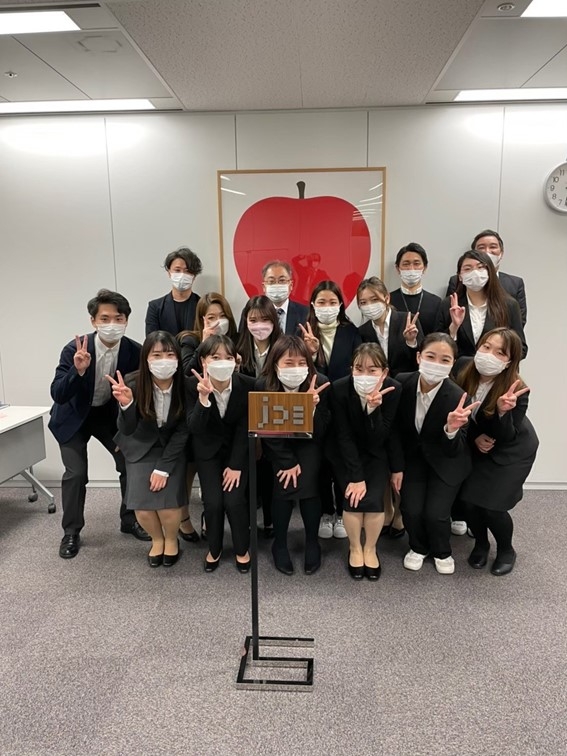 JR西日本コミュニケーションズ様訪問時の様子
-
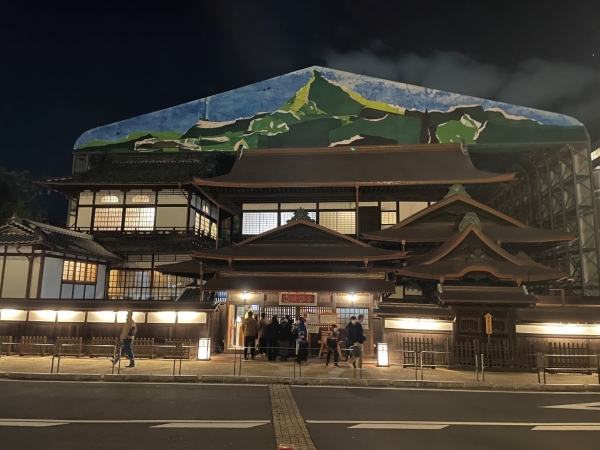 道後温泉本館
2022/02/26 00:40:00 CEP美浜町:各班の進捗と提携校カナダNICとのオンライン授業
- CEP活動紹介
- 広報隊太田
こんにちは!グローバル観光学科2年次生の、太田楓華です。今回は私のCEP先である、和歌山県美浜町での各班の取り組みについてと、カナダNorth Island Collegeの学生とのオンデマンド学習を核としたオンライン交流について発信したいと思います。
私たち和歌山県美浜町CEPは「起業班」「ガイド班」「ミュージアム班」「環境班」に分かれて活動しています。この4つの班についてご紹介させていただきます。まずは、起業班についてです。起業班は、美浜町にて地域の起業家および商工会へのヒアリング調査を行い、地域密着型事業の提案をしています。現在は、美浜町三尾地区に適当なお土産ものがないことから、鮭漁のために戦前に多くの村人がカナダへ渡った三尾ならではの鮭をかたどったオリジナルの焼き印を入れた大判焼き(現地では太鼓焼きと呼ばれているそうです)のサンプル品の作製に取り組んでいます。次に、ガイド班についてです。ガイド班は、美浜町で日系カナダ人の方に向けたルーツツーリズムマップの作成を当初の目標に設定していましたが、コロナのためなかなか現地に行けなかったため、NICの学長で三尾にルーツをもつLisa Domae氏とつながる日系カナダ人ファミリー堂前家の歴史を調査しています。ルーツツーリズムとは、家系図などを作成しながら自分のルーツを巡る観光形態のことです。そして、ミュージアム班についてです。ミュージアム班も三尾からカナダに移住した人たちのことを調査しています。特に戦時中、日系カナダ人がカナダ政府に持ち物を没収された歴史や、その中で唯一漁船を取り戻すことに成功した松永さん一家について詳しく調査しています。いつかカナダにいる松永さんの子孫たち(日系4世、5世)が、ルーツ探しをしに三尾を訪れた時に役に立つ資料を残すことができればと研究をまとめています。最後は、環境班についてです。環境班は、SDGsや海洋プラスチックの問題、美浜町の事を大学生に知ってもらう事を目標に活動しています。その為に、美浜町の海猫屋様に協力をしていただき、昨年12月にシーグラスボールペンを作製するワークショップを大学内で行いました。ワークショップの他にも、美浜町紹介の動画を作成したり、パネルを使った展示を行ったりと目標に向けて活動しています。
次に、2月8日、18日に行ったカナダのバンクーバー島にある海外提携校North Island College(NIC)の学生とのオンラインオンデマンド学習、オンライン交流についてお伝えします。オンライン交流会では、カナダの学生とzoomを使用して交流を行いました。2月8日には、カナダNICの学生と京都外国語大学の学生が、お互いに自己紹介をし合いました。2月8日から18日までは、オンデマンド学習をおこない、カナダの学生が作成した、ブリティッシュコロンビア州(BC州)についての8つのプレゼン発表動画を見て、その感想や質問を送りました。発表の内容は、BC州の歴史や、地形、民族、日系カナダ人についてなど、深くBC州について知ることができる内容でした。18日には、オンデマンド学習で得た知識をもとに、カナダの学生と小グループに分かれて意見を交換し合う交流を行いました。私の班では、美浜町三尾とも深い関わりのある、カナダのStevestonの近くに住んでいる学生が交流をしてくださいました。この交流で、カナダのリッチモンドには日本庭園があり、日本人・日系人のコミュニティも盛んであることを教えていただきました。実際にそこに住んでいる方と交流を行う事で、インターネットでは知ることのできない情報や、考え方を得ることができて貴重な経験になりました。オンライン交流や、オンデマンド学習で得た知識を、3月の現地報告会で美浜町の方にもお伝えできるように今後も活動していきたいと思います。
Hello! My name is Fuka Ota and I am a student in the Department of Global Tourism. I'd like to share with you our activities in Mihama Town, Wakayama Prefecture, as well as the online on-demand learning and online exchange programs with students from North Island College in Canada.
For the CEP in Mihama Town, students are divided into four groups. In this article, I would like to introduce all four groups. First up is the Entrepreneurship Group. They proposed making oval pancakes using Mio's unique salmon, and also making souvenirs with original branding on the pancakes. Second is the Museum Group. They are researching about people who emigrated from Mio to Canada. Particularly, they have focused on the family of NIC's President, Lisa Domae whose grandfather was from Mio. Third is the Museum Group. They have been researching about the transnational history of the Matsunaga family. The Matsunaga family in Campbell River is known as one of the rare cases where they were able to buy back their fishing boat Soyokaze after it was confiscated during WWII by the Canadian government. Last up is the Environment Group. The goal of the Environment Group is to let university students know about the SDGs, the problem of marine plastic, and Mihama Town. So we held a workshop to make sea glass ballpoint pens with the cooperation of Uminekoya in Mihama Town.
For more information about our activities in Mihama Town in November, please see this blog.
Next, I would like to introduce the online on-demand learning and online exchange program we held with students from North Island College in Canada in February. During the online exchanges with Canadian students, we introduced ourselves to each other and exchanged knowledge and opinions gained through on-demand learning. In March, we are planning to visit Mihama Town in Wakayama Prefecture again and hold a debriefing session there.
-
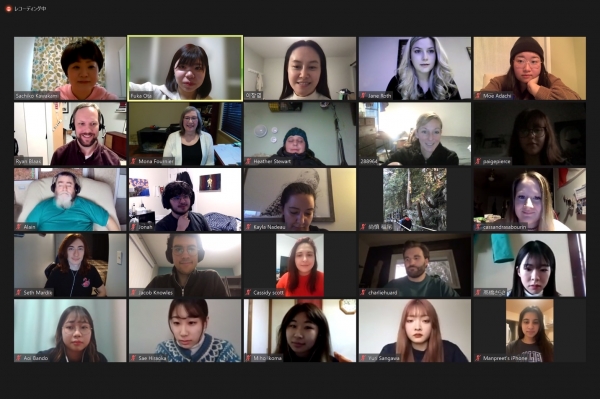 NICとのオンライン交流の様子
-
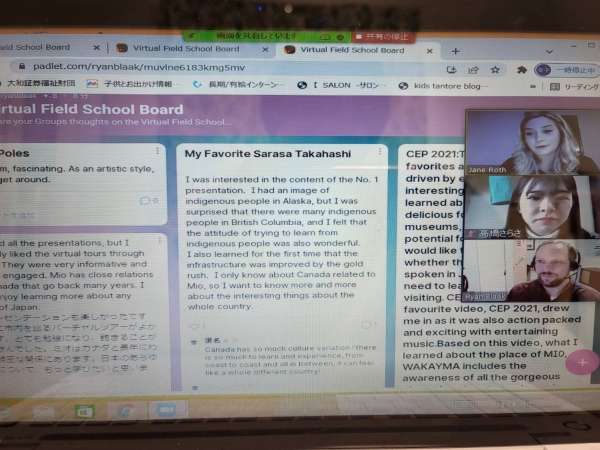 カナダ側の学生たちも、翻訳アプリを使い日英両語で授業資料を準備してくれました
2022/01/21 23:30:00 CEPオンラインツアー作成活動報告
- CEP活動紹介
- 広報隊畠中
こんにちは!京都外国語大学グローバル観光学科2年次生の畠中紅葉です。厳しい寒さが続いております。いかがお過ごしでしょうか?
今回は、私が参加したオンラインツアー作成CEPでの活動について発信させていただきます。今回私が参加したプログラムは、プログラム開始当初、海外の日本語を学ぶ学生に向けてリアルタイムでのオンラインツアーを行うという予定でした。しかしながら、コロナウィルスの状況等を踏まえ、リアルタイムでのツアーの実施が難しい事から動画で日本の魅力を海外に伝えるという事を目的として、活動を行いました。
私達は、4週間の活動で約60人のモンゴル、ロシア、ベトナム、フィリピン、 ミャンマーの方と交流しました。日本語のレベルや、日本語の学習年数はそれぞれ違いますが、皆さんが一様に日本に対する愛を表現してくださり、とても楽しんで交流をする事ができました。また、交流した皆さんとは、Instagramを交換し、今でも連絡を取り続けています! 今回交流した海外の学生の中には、貧困状態の中で支援団体からの支援により大学に通う事ができ、一生懸命学ぼうと努力している学生や、政治的に厳しい情勢の為自由がない学生、中には日本に留学する予定だったけれど行くことが出来なかったという学生とも出会いました。彼らの話を聞き、今、私たちがどれだけ恵まれた環境で勉強することができているか、今の環境に感謝しなければならないと強く感じました。
また、今回は、動画作成を行うにあたり、登録者数38万人のYouTuber EXIT JACKのメンバーである木村太一さんに動画の撮影、編集について教えていただきました。メンバーそれぞれが思う、日本の魅力をサプライズで、海外の方に伝えるという課題についてそれぞれが企画を練り、企画発表を経て、テーマ決定を行いました。日本の大学生のリアルや、日本のお菓子、などユニークなテーマが多く、私たちにしか作れない魅力のある動画ができたのではないかと感じています。
そして、今回のプログラムの4週目では私達が制作した動画を、実際に今回のプログラムで交流した海外の学生の方々に見ていただきました。面白い!早く日本に行きたい!という嬉しい感想がある一方で、漢字や言葉の表現が少し難しかったなど貴重な意見も頂きました。
今回の4週間の研修を通じて、普段、私達が当たり前だと思っている事の有り難さ、そしてどれだけ恵まれた環境で生活出来ているのかという事を学ぶことができました。また海外の日本語学習者にとっての日本の魅力についても、実際に交流を通じて見識を深めることができました。 今回の4週間の研修を通じて学んだ事をこれからも忘れずに、大学生活を送っていきたいと思います。また、今回の研修で出会った60人とは、今後も連絡を取り合い、交流を続けていきたいと思います!
Hello! My name is Momiji Hatakenaka. I am a second-year student in the department of Global Tourism. Cold weather is likely to remain with us for a while. How are you doing?
Today, I would like to introduce the CEP program that I participated in. This time I took part in an online tour creation program. At the being of this CEP, we were planning to conduct a real-time online tour for people studying Japanese overseas. However, we were not able to carry out the program as planned due to the pandemic, so we changed our aim slightly and decided to convey the charm of Japan to people overseas through video.
Through this program, we interacted with about 60 students who are learning Japanese in their home countries of Mongolia, Russia, Vietnam, the Philippines and Burma. Their language abilities and the number of years they have studied Japanese are different, but I really felt their love for Japan. I exchanged Instagram messages and still keep in touch with them. Through this CEP, I made many friends who continue to learn even in difficult situations. For example, students who have no freedom because of political difficulties, and students who are in poverty and are only able to continue their studies with the help of support organizations. Listening to their situation, I felt a deep gratitude for my current blessed environment.
Also, this time Taiichi Kimura, a member of Youtube vlogging group “EXIT JACK” with 380,000 subscribers, taught us about making videos. Each CEP member made a plan with the theme of conveying the charm of Japan to people living overseas. Then, we presented our own plans and finally decided on a theme. I feel that we were able to make videos that only we could make with unique themes such as introducing the life of real Japanese university students and Japanese snacks.
In the fourth week of the program, the students who interacted with us watched the video we made. I asked them for their impressions after watching the video. They said that, “It was a really fun video and it made us want to visit Japan! But it was difficult to understand the kanji expressions.” Listening to their impressions, I felt we needed to reflect on our lack of consideration regarding the use of kanji.
Through this CEP, I have realized what a blessed environment I am in. I’d like to make the most what I’ve learned in this program. We will continue to communicate with the 60 people we met through this CEP and continue to support each other! Thank you for reading my blog!
-
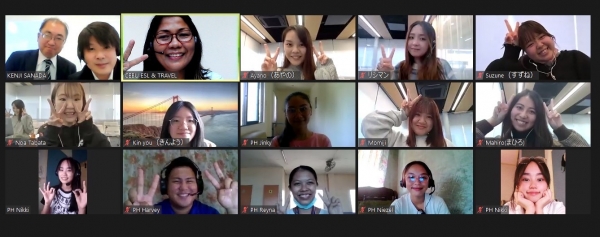 海外の日本語学習者とのオンライン交流会の様子
-
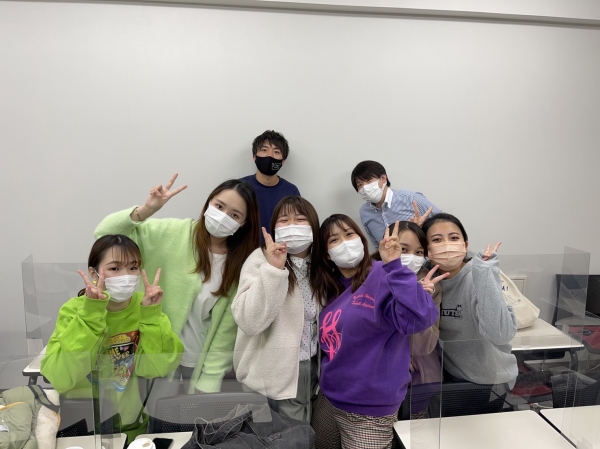 CEPメンバーと一緒に
2021/12/01 01:10:00 CEP美浜町活動報告
- CEP活動紹介
- 広報隊太田
こんにちは!グローバル観光学科2年次生の太田楓華です。今回は和歌山県美浜町でのCEPについて発信したいと思います。和歌山県美浜町CEPでは、環境班、起業班、ガイド班、ミュージアム班に分かれて調査しています。私が所属している環境班では、海洋プラスチックなどの海洋問題について調査し大学生にプラスチック海洋問題を知ってもらう事を目的としています。
今回のCEPでは、3日間の調査を行いました。まず1日目は最初に日ノ岬のカナダ資料館を訪れました。普段は閉鎖されている場所ですが、特別に開放してもらい見学することができました。ここでは、私たちが滞在した美浜町三尾のカナダ移民の歴史についての資料や写真、展示物が多数あり、事前学習で学んだ知識をより深めることができました。次に紀伊日ノ御埼灯台の一般公開に行きました。一般公開は、この3代目の灯台が設立されてから、今回で3度目なので、とても貴重な体験をさせていただきました。語り部ジュニアという地元の地理や歴史を英語で学んでいる中高生たちから英語でガイドをしていただき、地域との交流も深めることができました。最後は地域の方と房州音頭を踊りました。房州音頭は三尾地区に伝わる盆踊りです。踊り方を教えてもらい、みんなで声を出して円になって踊りました。初めは難しいと感じましたが、地域の方と何度も踊ることで段々と踊れるようになりました。
2日目は、それぞれの班ごとに分かれて活動をしました。環境班は、午前中に4つの海岸を周り、 漂流物やシーグラスを拾い集めました。午後からは、地域連携事業者の海猫屋様に協力していただき、シーグラスボールペンを作りました。その後、美浜町商工会のご協力を得て12月13日の週に大学で予定しているワークショップの練習をしました。ゲストハウスダイヤモンドヘッド様と起業班は、町役場の隣にある商工会でお話を聞き、午後からは御坊市にある老舗醤油屋の堀川野村屋様にインタビューをしに行きました。ガイド班とミュージアム班では、日系カナダ人のルーツを探るため、語り部ジュニア講師の方々と三尾の町を歩いたり、カナダに親戚がおられる住民の方に聞き取りをしたりして調査を行いました。3日目は、松永渡船様に小型船に乗せてもらいクルージングをしました。1時間ほどのクルージングで、美浜町の周りの景色を海から見ました。また海猫島にも上陸させていただき、島の上からの景色も見られました。ミュージアム班は、帰りのバスを途中下車して、カナダミュージアムの館長も一緒に国立民族学博物館にてヒアリングをおこないました。
この3日間で私が感じたことは地域の方々の温かさです。それぞれの班に協力してくださる方々がおり、私たちが気になること、やってみたいことを親身になって応えてくださいました。そのおかげでとても有意義に調査を進めることができ、本当に感謝しています。また美味しい夕食を用意していただき、地元の沢山の方が私たちのお話を聞いてくださいました。滞在した三尾は小さなコミュニティだからこそ、人と人との繋がりがとても濃く、魅力的な所だと感じました。また、2月に美浜町を再び訪れ、地元の方々に最終発表を行う予定です。協力してくださった方々へ恥じない発表が出来るようにこれからも頑張っていきたいと思います。
最後に、環境班が計画している学内展示およびワークショップのご案内です。海猫屋様に協力していただき、美浜町の海岸で拾った海洋プラスチックとシーグラスを入れたボールペンを作るワークショップ及び海洋問題に関する展示を京都外国語大学で行います。 ワークショップは12月13日からの週のお昼休みに京都外大生を対象に予約制で行うので、お時間が合う方は是非ご予約をお願い致します!【予約はこちらから、お願いします!】
Hello! I'm Fuka Ota, a second-year student in the Department of Global Tourism. This time, I would like to tell you about my CEP destination, Mihama Town in Wakayama Prefecture. For this CEP, I undertook three days of research. We are planning to visit Mihama again in February and give a final presentation on our research to the local community.
At the CEP in Mihama Town, we divided into four groups: the Environment Group, the Entrepreneur Group, the Guide Group, and the Museum Group. We are all investigating different themes. The Environmental Group, to which I belong, is conducting research on marine issues such as ocean plastic. The goal of the Environmental Group is to make university students aware of plastic ocean issues. Therefore, with the help of Ms. Ando of Umineko-ya, we plan to hold a workshop to use ballpoint pens filled with ocean plastic and sea glass, in addition to hosting an exhibition on ocean issues at Kyoto University of Foreign Studies. The workshop will be held at the university during the lunch break from December 13 to 16, so if you can make it, please make a reservation from here. Reservations are available only for KUFS students.
Next, I would like to introduce our activities during the three days we spent in Mihama Town. For our first activity, we visited the Canada Resource Center. A place that is usually closed to the public, but was kindly made available to us for a special visit. For our second activity, we went to Hinomisaki Lighthouse, which was open to the public for only the third time since it was built, so it was a very valuable experience for us. For our third activity, we danced the Boshu Ondo with some members of the local community. They kindly taught us the steps, and then we danced in a circle, shouting out to each other. I felt it was difficult at first, but after dancing with the local people many times, I gradually learned the moves.
On our second day, we split up into separate groups for different activities. In the morning, the Environment group went around the four beaches and picked up driftwood and sea glass. In the afternoon, we made sea glass ballpoint pens with the help of Umineko-ya. Afterwards, we gave a lecture on how to make sea glass pens to those who had never made them before, and practiced for a workshop that we plan to hold at the university. The Entrepreneur Group went to interview a soy sauce maker called Horikawa Nomuraya. The Guide Group and Museum Group conducted research on the roots of Japanese Canadians by walking around the town of Mio and interviewing people with that background knowledge. On our third day, we went cruising. During the hour-long cruise, we saw the Hinomisaki Lighthouse, Umineko Island, and the surrounding scenery of the town from the sea. We also landed on Umineko Island, where we were able to view the scenery from the highest point on the island.
What I felt over the past three days was the warmth of the local Mio community in Mihama. In each group, there were people who cooperated with us, and they kindly responded to our concerns and what we wanted to try. Thanks to them, we were able to proceed with our research in a very meaningful way, for which we are truly grateful. We were also served a delicious dinner and many local people listened to our stories. I would like to do my best so that I can deliver a good final presentation in February to the community of Mio, Mihama Town.
-
 日ノ御埼灯台の上から
-
 海猫島に上陸!
-
 シーグラスボールペン


