


2021/01/07 23:30:00 空き家のリノベーション(南博史ゼミ)
 GTゼミ活動紹介
 Student Reporter
皆さん、こんにちは。国際貢献学部グローバル観光学科3年次生の岡村知果です。今回は私の所属している観光政策コースの南先生のゼミについてお話しようと思います。
このゼミでは、観光に関連していれば自分の研究における制限はとくににありません。自分が興味をもっていることを研究することができます。実質、さまざまな研究テーマが出ています。中でも、このゼミには「地域活性化·地域創生」に興味がある学生が多いです。さて、皆さん「持続可能な観光」というワードを聞いたことがあると思いますが、これを具体的に説明するのは難しいですよね。一口に地域活性化といってもいろいろなやり方があります。例えば、伝統ある文化の活用、商店街の再生、行事・イベントによる集客など…。まだまだあると思いますが、南先生曰く、「町全体を博物館、ミュージアムと捉え、町が抱えているいくつかの問題の解決を目指して、さまざまな関係者が協働し続けていくことも『持続可能』の一つの形」とのことです。このことを踏まえて、今4つのグループに分かれそれぞれ活動しています。
今からは、私の所属しているグループについてご紹介させて頂きます!
「空き家のリノベーション」
私たちのチームは使われていない空き家をリノベーションし、地域の方々にとっての憩いの場にしたいと思っています。また、伝統工芸品などその地域の産品を展示・販売できれば観光客も訪れ、伝統的な技術も残すことができ、町の一つの観光スポットになればと考えています。
まず、その第一段階として、私たちは京都市左京区の大原を活動拠点にしていこうと考えています。まずは、私たちが地域の方のことを知ることが大切であろうと、大原で「手作り市」を開こうと企画しています。大原にある京のまちなか龍池学区が所有する学舎を借りて、大原で飲食店を経営している方や伝統工芸品の職人さんに協力してもらい、地域の方やその他の地域の方が交流できるような場を作りたいと思います。その準備として1月にフィールドワークをして、龍池大原学舎の下見や工芸品の体験など地域の方々と交流できればと思います。そして、大原には空き家をリノベーションしてお店を経営している方も多くいらっしゃるので、将来のテーマである空き家活用についてお話を伺えたらいいなと思います。
まだ企画しただけで、実際にできるかどうかはわかりませんが、何かイベントを開催できたらぜひ皆さんも遊びに来てください!
Hello everyone! My name is Chika Okamura and I am a third year student at the Department of Global Tourism Studies. Here I am going to introduce the seminar led by Prof. Minami, of which I am a member.
In this seminar, we are free to research any topic as long as that topic is related to tourism. Seminar members are researching various different fields, and a lot of us are especially interested in regional revitalization. There are many aspects to regional revitalization, such as traditional culture, revitalization of shopping areas and events to attract visitors. You may have already heard of sustainable tourism, but I first heard of this concept after I entered the Department of Global Tourism Studies. It is a term we often hear, but it can be difficult to explain the specifics of sustainable tourism. Prof. Minami explains it this way, by breaking it down into three steps:
1. Think of the region as you would a museum.
2. Identify and try to solve a problem prevalent in the region.
3. Continue working with people involved in the region.
These three steps are one way of promoting sustainable tourism. We split up into 4 groups to begin our research based on this premise.
My group is working on the Vacant House Renovation Project. Our aim is to
renovate an unused property and create a place for local residents to come and relax. Additionally, we think the house may become an attraction as well as a way to preserve a traditional building if we can manage to exhibit and sell traditional crafts. Firstly, we decided on the location, which is the village community of Ohara, part of Sakyo Ward, Kyoto. The next step is to plan a handmade market event in Ohara. We intend to hold the event at school grounds operated by the Tatsuike Educational Foundation (Nakagyo Ward, Kyoto). Our plan is to collaborate with local people who run restaurants or make traditional crafts. If we succeed, the once-vacant house will be a place where local residents can meet and interact with visitors to the area. We will undertake some advance fieldwork in January.
At this point in time, we do not know how the project will turn out, but please do pay us a visit when we hold our events!
-
 プレゼンの様子
-
 プレゼンのパワポ
-
 龍池大原学舎
2020/12/31 23:00:00 京都学を極める(村山弘太郎ゼミ)
- GTゼミ活動紹介
- Student Reporter
こんにちは、グローバル観光学科3年次生の関戸友香です。2020年最後のブログは、グローバル観光学科政策コース村山ゼミの紹介をします。村山ゼミの大きな研究テーマは「京都」です。自分が興味のあるテーマに京都を結びつけた直接卒論に繋がる研究をしています。
春学期は自分が選んだ興味があるテーマに関連する論文をciniiなどを使い探して読み、自分なりにパワーポイントを使ってまとめて、ゼミの時間に発表し合うということをしていました。このような機会がないと論文を読むことがなかなかないため、勉強になりました。加えて、専門的な内容なので自分のテーマの知識を知れますが、完全に理解することはとても難しいので読み続けることの重要性を感じました。
秋学期は対面授業が可能になり、少人数のゼミであるため完全に対面の形式で各々のテーマの確認や情報の共有をしています。オンライン上ではなかなか難しかった顔を見て話すことができるので、そこから話が広がり、発見することが多くあります。それぞれのテーマについて知りたいことなどを言い合い、第三者の意見を取り入れることができて有意義な時間を過ごせています。論文を読んだり、みんなで話したりしていると、もともと調べていたことよりも面白そうなテーマが見つかることもあるので、その際にテーマを変えた人もいます。
ここで、私たちが実際にどのようなテーマで研究を進めているか紹介したいと思います。私は祇園祭を軸にしています。その中でも祇園祭は有名な祭りであるが、地元でも詳しく知っている人が少ないと感じたため、小学校などの郷土教育、また、山鉾巡行で復活に向かっている鷹山について調べています。他のゼミ生は、京都のDMO「お茶の京都」、「海の京都」などの行政的な部分や着物、修学旅行、お土産、寺社や無形文化財のバリアフリーなど様々なジャンルをテーマにしています。
せっかく大きな研究テーマである「京都」にいるのでフィールドワークで寺社や企業様へ伺いたいと考えていますが、なかなか叶わないので、引き続き各自の研究、情報共有を中心にフィールドワークに行けるようになったらその様子もお伝えしたいと思います。
Hello, my name is Tomoka SEKIDO. I am a third-year student at the Department of Global Tourism Studies. The last blog of the year 2020 is about the research seminar that I belong to. I have studied Kyoto-related themes under the guidance of Prof. Kotaro MURAYAMA.
We have read academic articles and discussed various topics in class. My research topic is Gion Festival. In particular, I have studied such themes as a recent movement to revive Taka-yama and homeland education. My classmates have been doing research on DMOs (Destination Management/Marketing Organizations) in Kyoto, school trips, souvenirs, and the accessibility of temples and shrines.
I look forward to resuming fieldwork activities in Kyoto. As soon as the situation allows us, I would like to share our fieldwork report with you.
Happy Holidays!
-
 2021年もよろしくお願いします!
2020/12/24 23:50:00 多彩なマーケティング・ビジネス系調査を展開中!(野﨑俊一ゼミ)
- GTゼミ活動紹介
- Student Reporter
皆さんこんにちは!グローバル観光学科3年次生の阪田麻歩です。今回は私が所属している野﨑ゼミについて紹介します。突然ですが、グローバル観光学科のゼミでは観光や旅行についてしか研究できないと思っていませんか?実は、グローバル観光学科では観光系以外にもマーケティングやビジネス系、ホテル事業や地域活性化などについても研究を行っているゼミがあります!私が所属する野﨑ゼミもその1つです。
春学期は「ホテル」を調査対象にしてホテルの経営理念やコンセプトなどについてチームごとに調査しプレゼンテーションを行いました。そして、秋学期は春学期の調査で培った分析力や情報収集力を生かして4つのチームに分かれてチームプロジェクト・チーム調査を行っています。今回はこの4つのチームプロジェクト・チーム調査についてご紹介します。
まず、1つ目が食ロス調査チームです。食ロスチームでは百貨店の食ロスの取り組みの有無をホームページやインターネットで調査しリスト化、そこから得た知識をもとに大丸様に協力をしてもらい食ロスに特化したプロジェクトを行います。また、消費者へのアンケート調査も行い、実際に消費している皆さんの食ロスに対する行動についても調査を行います。
2つ目が、テーマパーク調査チームです。皆さんはあの大人気のUSJも経営に伸び悩んだ時期があったことを知っていますか?このチームでは関西一有名なテーマパーク、USJの経営戦略やV字回復のデータをもとに他の観光地もどうすればUSJのように盛り上げていけるかということに焦点を当てて調査を行っています。
3つ目は、子供連れ向け京都旅館紹介チームです。小さいお子様連れの方にも古き良き京都を楽しんで欲しい!という思いからチーム活動を始めました。旅館へのインタビューと子育て中の保護者の方へのアンケートを元に、旅館ではどのようなお子様向けサービスがあるのか、保護者の方がお泊まりされる際にどのようなことを求めるのかなどをInstagramで情報発信をするプロジェクトをメインに考えています。これから本格的に発信活動していきますのでぜひ覗いてみて下さい!
→Quck【子供連れにおすすめの京都旅館紹介】 @quck._.kyoto
Quck(クック):靴のことを「くっく」と言う幼児語から引用。
くっくを履いて家族みんなで京都に旅行しに来て欲しいという思いが込められています。
4つ目は、カフェチームです。このチームでは、2月に3日間の期間限定でオープンするカフェに向けて開業の準備を進めると共にInstagramで京都旅行におすすめのお店や観光地、レンタル着物の情報を発信しています。若い女性やカップルを中心にコロナで閑散とした京都を元に戻したいと言う思いを元に活動に励んでいます!2月のカフェ開業に向けても外部の方と話し合いを重ね、実現に向けて着々と準備を進めています。今どきの京都について情報発信をしているInstagramではフォロワー1万人を目標に活動を行っています。京都の魅力が沢山詰まっていますので是非覗いてみて下さい!
→ toi et moi(トワエモア) @toietmoi_kyoto
toi et moi:「あなたとわたし」(フランス語)。
大切な誰かと京都旅行を素敵な思い出にして欲しいという思いが込められています。
以上が、現在、野﨑ゼミで行っている調査です。
それぞれ学生が主体となって彩り豊かな調査を行っています。まだまだ駆け出しですが、それぞれが実りある調査になるよう頑張っていますのでこれからの野崎ゼミにぜひ注目していただけると嬉しいです!
Hello everyone! My name is Maho Sakata and I am a third-year student at the Department of Global Tourism Studies. Here I want to introduce the research activities of the Nozaki Seminar group. In particular, I will introduce the work of our four project teams.
Team #1 chose to look into food loss. The first step was internet research, to check if department stores had any stated food loss policies on their official homepages, and based on the knowledge gained from this research, Team #1 was able to approach Daimaru and ask for their cooperation on this food loss project. The team also conducted surveys of consumers, looking at food loss behavior from the consumer’s perspective.
Team #2 chose to look at Theme Parks. Are you aware that USJ – such a popular attraction these days – had a period where they just could not get the business to grow? Team #2 focused their research on the management strategies at USJ and how they were able to deliver a V-shaped recovery for the business, as well as what other destinations can learn from this data.
Team #3 looked into ryokan - traditional Japanese inns – aimed at families traveling with children. The idea behind the research is how can families to enjoy the older, more traditional side of Kyoto. The team interviewed ryokan owners and management, as well as asking parents to fill out a survey questionnaire. They looked into the support services provided by the ryokan for families, as well as what parents ask for when they stay in a ryokan with their children. The team is using Instagram as a way to transmit information about the project as it evolves. Please be sure to check Team #3’s Instagram feed (@quck._.kyoto) when they start to post about their research and findings!
Quck: follow @quck._.kyoto for recommendations on great ryokan for families
Quck: Taken from the Japanese kid’s word for a shoe: kukku
Pop your shoes on and head off to Kyoto with the family for an adventure!
Team #4 chose cafés. This team are tracking the preparations for a pop-up café that will open for just 3 days in February, as well as using Instagram to disseminate information about good shops for visitors to Kyoto, places to visit, rental kimono shops, etc. The team members are driven by a desire to see Kyoto return as a place for young couples and women to visit after being shut down as a destination due to the novel coronavirus. As the February launch of the pop-up café draws closer, the team is holding meetings with external advisors and partners, and the preparations become more intense. Another aim is to reach 10,000 followers on their Instagram (@toietmoi_kyoto), so please be sure to follow as there will be lots of great information about Kyoto on their feed!
toi et moi: You and Me, in French. Naming concept: come and visit Kyoto with someone special and make some great memories
This summary covers what we are researching at the Nozaki Seminar. The surveys and research are all carried out by the students. We are still novices when it comes to these topics, but we intend to work hard and we hope to see the fruits of our labors when it comes to our research and survey findings. Please remember to keep an eye on the Nozaki Seminar!
-
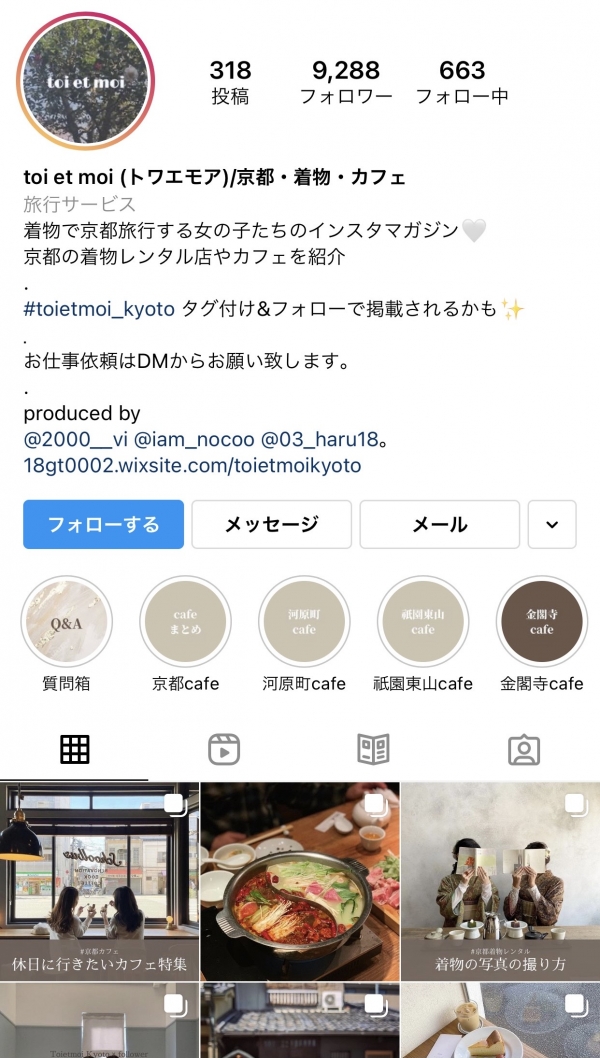 カフェチームメンバーが運営するインスタグラムアカウント「トワエモア」プロフィール
-
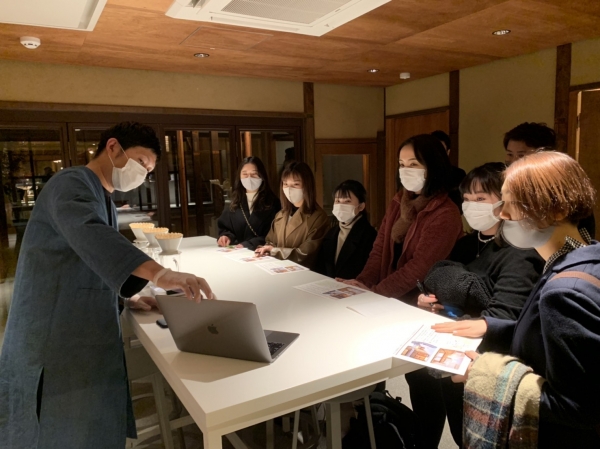 ブルーボトルコーヒーでの現地調査の様子
-
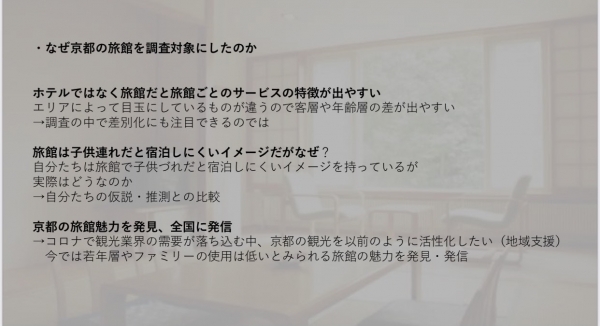 ゼミ紹介にて作成した子連れ旅行チーム発表パワポ
2020/12/18 23:50:00 京都スピリチュアルツーリズムプログラム
- CEP活動紹介
- Student Reporter
こんにちは!グローバル観光学科二年次生の梛木絢芽です。今回は私が参加するコミュニティーエンゲージメントプログラムについて紹介しようと思います。今年は新型コロナウイルスの拡大によってほとんどの学校行事やプログラムが中止になってしまいましたね。
グローバル観光学科必修のコミュニティエンゲージメントの一部のプログラムも中止になってしまいました。しかし、その代わりに新しいプログラムが追加されました。その一つに京都スピリチュアルツーリズムプログラム(藤本茂先生ご担当)があり私はそれに参加することになりました!もともと参加する予定だったプログラムは中止になってしまったけれど、自分からは踏み込まなかったであろうスピリチュアルツーリズムというものを学ぶことができるチャンスだと思っています。
2月の1ヶ月間、京都の神社を訪ね宮司さんやその神社の有力者の方にお話を聞かせていただいたり、その神社の周辺調査を行ったりする予定です!現在はそのプログラムに向けての準備授業を受けています。この授業を受けているうちに神社や神道に関する知識をもっと身につけるべきだと思い、個人的に調査の一環として松尾大社に行ってきました!
松尾大社は社殿が創建されて以来約1300年の歴史を持つ京都最古の神社です。神社の中には亀の置物がたくさんありました。松尾大社では、大神様が国を拓くため保津川を流れに逆らって上流に進む時に、急流は鯉に、緩やかな流れは亀の背に乗って進まれたと伝えられ、それ以来亀と鯉は神の使いとして崇められています。神社の風景のすべてに歴史がありとても面白いと感じました。神社巡りなどは好きではないとあまり行かないかもしれませんが、行ってみると静かな雰囲気や独特な澄んだ空気で心が洗われる気がしてとても気持ちがいいです。松尾大社は外大からも近く行きやすい場所にあるので皆さんもぜひ足を運んでみてくださいね!
Hello, everyone! My name is Ayame NAGI, a second-year student at the Department of Global Tourism Studies. Today, I would like to talk about the Community Engagement Program [CEP] which I am participating in. Most school events and some programs are cancelled because of COVID-19. Some programs in the CEP, which is a compulsory subject, are also cancelled.
However, new programs have been added instead. One of them is the Kyoto-Spiritual Tourism Program coordinated by Prof. Shigeru Fujimoto, which I’ll take part in. I think this is a good opportunity to learn about spiritual tourism, which is an unfamiliar field for me that I would not have experienced were it not for this program.
For the month of February, we are going to visit some jinja (Shinto shrines) in Kyoto and hear stories from the chief priest and influential people as well as undertaking research of the surrounding area! We are now taking a class to prepare for this program. I thought that I should acquire some knowledge about jinja and Shinto so I visited Matsunoo Taisha as part of my personal research.
Matsunoo Taisha is the oldest shrine in Kyoto with a history of about 1300 years, counting from the construction of the main shrine building. There are many turtle objects here. It is said that when Ookami (a legendary shinto deity) went upstream against the flow of the Hozu River to create the Japanese islands, Ookami rode on a carp up the rapids and proceeded on the back of a turtle on the gentler parts. Since then, turtles have been worshiped as a divine messenger. I thought this was interesting because many jinja have stories connected to history. People who are not interested in jinja typically do not visit them, but should you go, you may feel refreshed by the quiet atmosphere and uniquely clear air. Matsunoo Taisha is close to our university, so please visit!
-
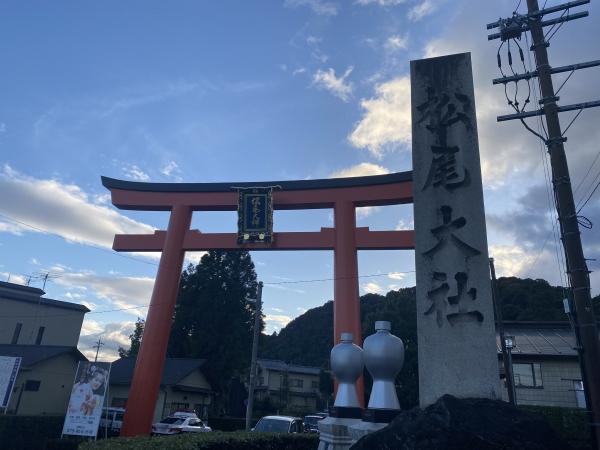 松尾大社
-
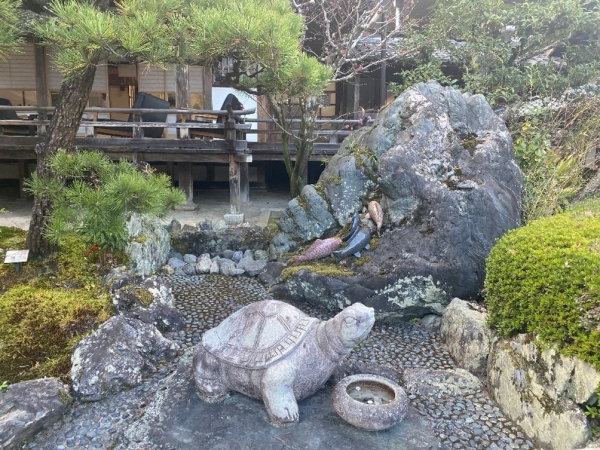 神の使いである亀と鯉の置物
-
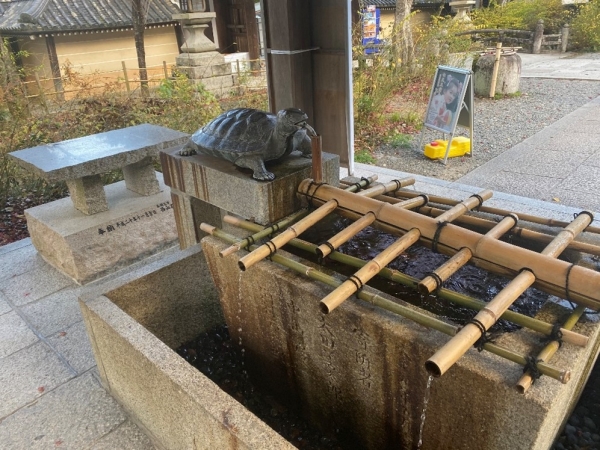 こんなところにも亀が
2020/12/15 18:50:00 コミュニケーションの大切さを学んだ秋学期
- 学生生活
- Student Reporter
みなさん、こんにちは!グローバル観光学科1年次生の増田悠希です。今回は秋学期になってからの学生生活と、そこから感じたコミュニケーションの大切さについてお話ししたいと思います。
私は秋学期になって、エアラインプロジェクトとFollow me!の2つサークルに所属しました。というのも、現時点の目標として、グランドスタッフ、CA、ホテルコンシェルジュなど多様ではありますが、将来にやりたいことがあるからです。その中で入学前から気になっていた2つのサークルに所属することで、もっと将来に対しての考えや知識が広げられるのではないかと思い秋学期対面授業が再開されると同時に所属を決めました。
10月31日にはエアラインプロジェクトで交流会として伊丹空港へ行きました。間近で飛行機を見ながら、先輩方や他学部の人たちとの交流会は新鮮でした。また、エアラインプロジェクトに所属していたOBの先輩(現在は空港で働いている方)のお話を聞いたり、3年次生の先輩からエアラインについての専門知識を教えてもらうなど、とても充実した時間を過ごせました。初めての交流会というのもあり、緊張しましたが、みなさんとても気さくで、他学部の子とも仲良くなれるきっかけとなりました。
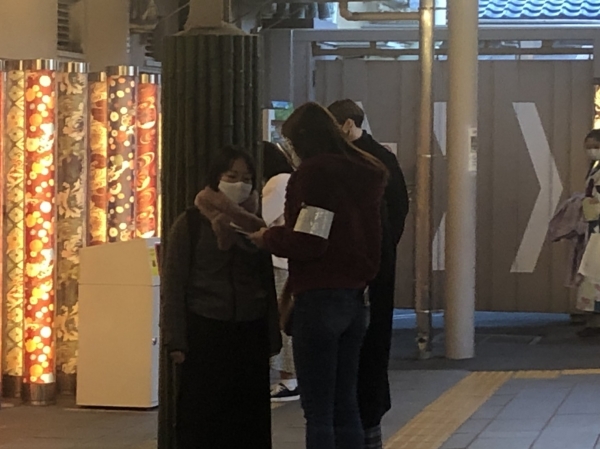
11月29日にはFollow me!で初めての嵐電で活動をしました。私は愛知県出身ということもあり、京都の道や路線などの知識について、正直不安はありましたが、事前の勉強会や先輩方に教えてもらったことでその不安は軽減することができました。
自分から観光客に声をかけ道案内をすることで、一度学んだことをアウトプットすることができ、自分の知識として完全に取り込むことができました。思いもよらない質問を受けることもありましたが、自分が知らなかったことを知る機会となり、活動をしながらも学ぶことがたくさんありました。
ある観光客には観光プランを考えて欲しいと言われ、自分が知っている知識の中ではありましたが、提案したプランを喜んでくれたときはとてもやりがいを感じ嬉しかったのを覚えています。
対面授業も少しではありますが、こういった活動をする中でやはり人と直接コミュニケーションを取ることの重要性を再確認できました。直接会わずとも取れるコミュニケーションはあるとはいえ、やはり顔の表情、声、立ち振る舞いがあることで人と直接会って話す楽しさがあり、関係を広げ、深めることができるのだと活動や対面授業をしている中で感じました。
Hello everyone! My name is Yuki MASUDA, and I am a first-year student at the Department of Global Tourism Studies. I want to write about my life as a student at KUFS this fall semester as well as what I came to realize about the importance of communication.
At the start of the fall semester, I joined a couple of clubs, namely the Airline Project and Follow Me! These clubs covered a lot of my current goals and possible future areas of employment, such as ground staff, cabin attendants, hotel concierge, to name but a few. These were areas that interested me before I matriculated into KUFS and so by joining these clubs I thought I would have opportunities to build my understanding and knowledge towards these goals. I decided to join up prior to the restart of in-person classes in the fall.
On October 31, the Airline Project club took an exchange group to Itami Airport. It was a fun, fresh experience seeing the planes so close up and spending time with seniors from other faculties. We also had the chance to meet with and hear from former students from the Airline Project club who now work at the airport, as well as hearing detailed information about airlines from third year students. It was my first experience attending an exchange group trip like this, and everyone was so friendly – it was such a good chance to connect with students from other faculties.
On November 29, I attended my first get-together of Follow Me! which involved us applying our learning on the Randen train line. I’m from Aichi Prefecture and I’m not so confident when it comes to Kyoto’s streets and trains, but thanks to some preparatory sessions and words of advice from seniors, my nervousness about the day was eased.
I was asked by a visitor as to the whereabouts of some trains and streets, so it was a good opportunity to put into practice what I had learned. I got asked things that I just could not have predicted, which again became a learning experience. It was great to be active and to have the chance to learn at the same time.
I did get asked by one visitor to help put together a sightseeing plan, and I drew upon what I knew and had studied about Kyoto, and I was happy to see they were pleased with what I put together for them. It felt good to contribute to their Kyoto experience and it made me want to help others in the same way.
A few in-person classes have restarted, and for me it has reaffirmed how important direct communication is in this field. We can communicate even if it is not directly person-to-person, but to see the expressions on someone’s face, hear their voice, their gestures and movements as they speak – all of this makes communicating more enjoyable and meaningful, broadening and deepening relationships. That is my take away from the restart of in-person classes.
-
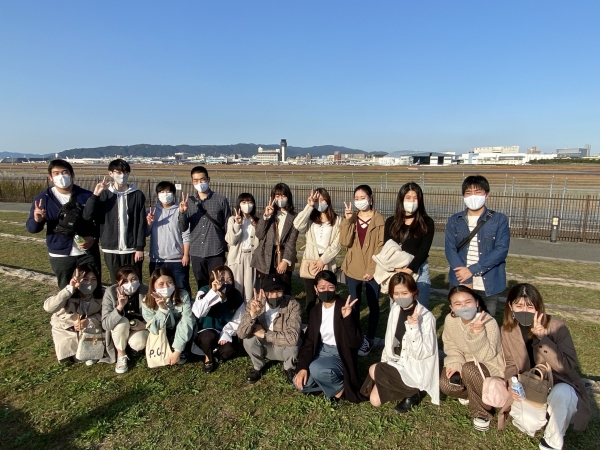 エアラインプロジェクトの交流会
-
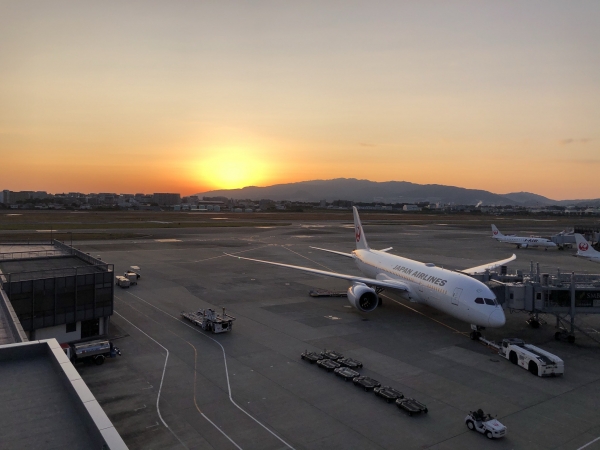 伊丹空港からの景色
-
 嵐山駅でのFollow me!活動


