


2021/03/11 23:50:00 【CEP越前】4:活動を振り返って
 CEP活動紹介
 Student Reporter
こんにちは!CEP越前で活動をしているグローバル観光学科2年次生の下川紗良です。集大成である成果発表はオンラインという形になりましたが、メンバーそれぞれが工夫してなんとか無事に終えることができました。今まで活動を応援してくださった先生方、CECの方々、そして何より越前熊谷の皆様にお礼申し上げます。
CEP越前熊谷で行ったフィールドワーク草木染めブログに続いて、今回はCEP越前の活動の振り返りについて報告します。CEP越前チームは三回にわたって越前熊谷でフィールドワークをおこなってきました。主な活動内容としては、道場として使われているせせらぎ会館※、熊カフェプラス※※で宿泊しながら、地元の方々に食についてのインタビューを行いました。
食のインタビューでは、地元の方が育てている野菜などの調理法や保存方法などを聞き取り、のちに収穫時期別にグラフ化をしました。その際、冬瓜、柿などたくさんの美味しい野菜や果物を頂きました。インタビューの中では、熊谷の歴史やせせらぎ会館の浄土真宗とのつながりなどたくさんの貴重なお話を教えて頂きました。なかでも印象に残ったのが、むかしは育てた米を背負い、山を越えて海まで歩いて降り、カニなどの魚介類と物々交換をしていて、カニが定番のおやつであったことです。カニをおやつに食べていたことに驚きましたし、なにより重い米俵を背負い、現代のように整備されていない危険な山を越えていたことに先人の暮らしが山と共にあったことが感じられました。
インタビューの他にも、大きな精米機のある農舎やシイタケ栽培の榾場(榾木の置かれている場所)の見学、越前焼のライトアップ、地区総会やせせらぎ会館での“お磨き”など貴重な体験ができて、活動の新しいアイデアが浮かんだメンバーや将来の夢が広がったメンバーもいました。
越前熊谷での活動以外にも、学内で越前焼の体験やセイタカアワダチソウの草木染めなどそれぞれの関心に基づいて実験をしました。困難な状況下で四苦八苦ありましたが、多くの方々の協力があり、なんとか発表に繋げることができました。活動開始が他のプログラムよりも早く秋学期から始まったこともあり、メンバーの多くは様々な形で今後も活動に関わっていきたいと考えています。越前熊谷の皆様、今後ともよろしくお願いいたします。
注釈:
※おもに北陸地方を中心に、集落の中に設けられた浄土真宗の施設。仏像が安置されており、地区住民の宗教行事の場として共同で御守している。
※※南先生が代表するNPOが借用している民家。越前フィールドミュージアム活動の拠点。
これまでのCEP越前2020に関するブログ一覧
【CEP越前】1:報告会
【CEP越前】2:草木染めに挑戦!
【CEP越前】3:越前焼に挑戦~作陶~
Hello, everyone! My name is Sara Shimokawa and I am a sophomore at the Department of Global Tourism Studies (DGT). I am a member of CEP Echizen study group. This is my final report and here I will summarize our activities as part of CEP Echizen.
Our fieldwork included studying Echizen food culture. The region is home to much delicious produce, such as kaki persimmons and vegetables such as winter gourd, etc. in addition to being renowned for outstanding seafood, especially crab. Through our interviews, we discovered traditional Echizen recipes like rice bran pickles (i.e. vegetables preserved in rice bran) as well as a deep connection within the region with the Jodo-shu Pure Land sect of Buddhism. I will remember the image of carrying heavy bundles of rice – tawara – in order to transport the rice harvest – it must have been such hard work.
In addition to our interviews, we experienced pottery and plant dyeing, as well as visiting a rice mill, regions known for their fishing industry as well as areas where they grow shiitake mushrooms. Through these activities, some members of the CEP Echizen team hit on good ideas for study as well as broadening their horizons.
We are all really eager to continue our activities in Echizen going forwards.
-
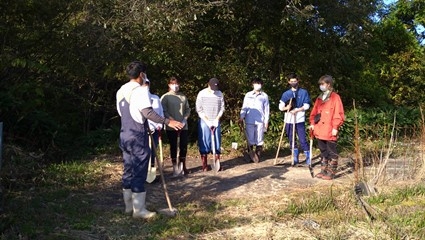 稲田の水路清掃 Cleaning a waterway in a rice patch
-
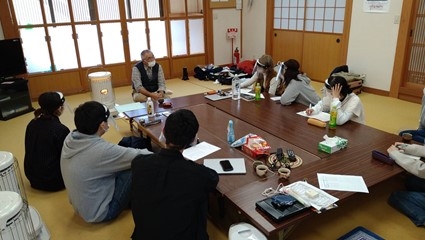 インタビューの様子 interviews regarding Echizen food culture
-
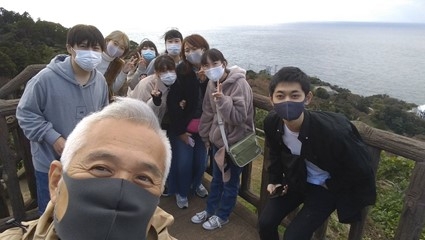 水仙ランドでの集合写真 group photograph in the Narcissi Gardens
2021/03/05 02:00:00 Fieldwork and a tour in LAKE BIWA MUSEUM (Seminar led by Professor Minami)
- GTゼミ活動紹介
- Student Reporter
Hello, everyone. My name is Shuka Kitada and I am a third-year student at the Department of Global Tourism Studies. I belong to a seminar which is led by Professor Minami Hiroshi and I am researching about the System of Lake Biwa. The System of Lake Biwa means “a deep inter-related connection between agriculture, forestry, and fishery which has brought blessings.”
On November 27 last year, 5 members of our seminar including me visited the Prefectural LAKE BIWA MUSEUM which is in Kusatsu City, Shiga Prefecture to learn about the System of Lake Biwa deeply. Today, I will report about this fieldwork and what I learned from it.
There were various exhibition rooms which have respective themes, an aquarium, and an open-year exhibition in LAKE BIWA MUSEUM. In the exhibition rooms, we learned about Lake Biwa and the lives of people through themes like nature, history, and culture. We could learn about many different things, such as the history of Lake Biwa, agriculture, creatures, the lives of people of old days. There were also hands-on exhibitions in which you can touch some items with hands and feeling their weights. I felt that Lake Biwa Museum could provide its visitors fun experiential learning opportunities. Through watching and exploring these exhibitions, we could learn about how Lake Biwa was associated with the lives of people.
In an aquarium, we observed and learned about many kinds of creatures which live in Lake Biwa. At an open-year exhibition, visitors can walk and take a stroll along a promenade which is surrounded by trees from the museum to a lakeside. We were able to enjoy the scenery of Lake Biwa right in front of us, the other side of the mountains of Hira, and a magnificent view of the blue sky while feeling the existence of Lake Biwa to our hearts’ content.
Through this fieldwork, I was able to appreciate the fact that Lake Biwa, creatures, and human beings are all related to one another, and they are supporting one another. I could also realize that Lake Biwa has nurtured the surrounding cultures and livings of each era and they have been connected to today. In my view, this feeling of our connections with the surroundings represents the System of Lake Biwa. I would like to think about “the connection” which I learned from this fieldwork and hope to study and share the importance of this connection.
-
 In front of the entrance of LAKE BIWA MUSEUM with seminar members and Professor Minami (photo taken by Prof. Minami)
-
 A lot of creatures in an aquarium (photo taken by Professor Minami)
-
 A scenery of Lake Biwa from an open-year exhibition (photo taken by Professor Minami)
2021/03/04 21:50:00 琵琶湖博物館見学フィールドワーク(南博史ゼミ)
- GTゼミ活動紹介
- Student Reporter
皆さん、こんにちは。グローバル観光学科3年次生の北田柊香です。私は、南博史先生のゼミに所属しており、琵琶湖システムについて調査をしています。琵琶湖システムとは、琵琶湖の「相互に深く関わり合い、豊かな恵みをもたらしてきた農林水産業のつながり」を表します。
昨年11月27日、この琵琶湖システムについて詳しく学ぶために、滋賀県草津市にある滋賀県立琵琶湖博物館をゼミのメンバー5人で訪れました。今回は、そのフィールドワークを報告します。
琵琶湖博物館には、テーマごとの展示室や水族展示室、屋外展示などの様々な展示がありました。展示室では、自然・歴史・文化などのテーマを通して琵琶湖と人々の暮らしについて幅広く学びました。琵琶湖の成り立ちや琵琶湖と関わる農業・生き物・昔の人々の暮らしなど、様々な事柄を知ることができました。展示室の中には実際に展示物を持ち、その重さを体感することができるといった体験できるしかけもありました。手や体を使って実際に体験をすることで、より楽しく興味を持って展示を学ぶことができるのだと感じました。こうした展示を見て廻ることで、琵琶湖と人々の暮らしの関係性について深く学ぶことができました。
水族展示室では、琵琶湖に生息する様々な生き物の様子を観察しました。水槽の中を泳ぐ様々な生き物を前にして、琵琶湖には数多くの種類の生き物が暮らしているということを知ることができました。
屋外展示では、博物館から木で囲まれた遊歩道を琵琶湖湖畔まで歩いていきます。目の前に広がる琵琶湖や対岸の比良の山々、青空の壮大な景色を楽しむことができ、琵琶湖の存在を存分に感じることができました。
今回のフィールドワークを通して、琵琶湖や生き物、そして私たち人間はお互いにつながり合い、支え合って生きているということを改めて感じることができました。琵琶湖の自然や環境を背景として、それぞれの時代の文化や生業などが育まれ、現在につながっているということにも気づくことができました。私たちとその身の回りにあるものとのつながりを感じること、それこそが琵琶湖システムの考え方を表すのだと感じました。今回のフィールドワークで学んだ「つながり」について考え、その大切さについて研究し発信していくとともに、私自身がそのありがたさを感じながら生活していきたいと思います。
●参考サイト
・未来へつなごう琵琶湖システム(県広報誌2020年7・8月号)
https://www.pref.shiga.lg.jp/file/attachment/5190166.pdf (最終閲覧日:2020年12月5日)
・滋賀県立琵琶湖博物館|びわ博(びわはく)は、湖にのぞむ、日本有数の総合博物館です。国内最大級の淡水の生き物の水族展示、また琵琶湖の地学・歴史・環境についての展示があります。
https://www.biwahaku.jp/ (最終閲覧日:2020年12月8日)
-
 琵琶湖博物館の入り口の前でゼミのメンバーと南先生と(南先生撮影)
-
 多くの生き物がいる水族展示室(南先生撮影)
-
 屋外展示から見た琵琶湖の景色(南先生撮影)
2021/03/01 01:50:00 【CEP越前】3:越前焼に挑戦~作陶~
- CEP活動紹介
- Student Reporter
こんにちは。グローバル観光学科の2年次生の八島美奈です。私たちのCEP越前の活動をご紹介します。私たちは活動の一貫として陶芸作りを行います。活動の中で焼き物作りを行う理由として、伝統工芸である六古窯の1つである「越前焼」の再生復興が挙げられます。12月の現地での活動の前段階として越前陶土を使用し手捏ねで焼き物作りを行いました。そして今回、社会福祉法人なづな学園の渡邉さんと中村さんにご協力していただきました。
実際行った焼き物作りの工程を紹介します。まず、陶土を柔らかくなるまで手でならします。次に、ろくろに陶器の底の部分になる陶土をドーナツ状に置きます。そのあと、ドーナツ状の陶土をその上に次々とのせていき内側と外側の繋ぎ目を手で丁寧に慣らします。自分の作りたい陶器をイメージして形を決めて作ります。コップやお椀などみんな好きなものを作って陶芸を楽しみました。陶土と陶土をならす際に力加減などが難しく、薄すぎると割れてしまったりする可能性があるので、厚さを調節するのに苦労しました。
12月4日には、現地で私たちの作った焼き物を野焼きする予定でしたが、あいにく雨のためできませんでした。続く1月熊谷は雪に覆われ、またコロナもあって野焼きはできないままです。野焼きはとても珍しいことなのですごく楽しみでしたが、暖かくなってから再挑戦できればと思います。
Hello everyone! My name is Mina Yashima, and I am a sophomore in the Department of Global Tourism Studies(DGT). Here I will introduce some of the activities we partake in as part of our Community Engagement Program (CEP) in the Echizen region.
One activity was pottery, and one of the reasons for this was to reconstruct and revitalize a traditional craft, Echizen-ware is known as one of the six ancient pottery traditions of Japan. As a preliminary step back in December, we were lucky enough to obtain some clay sourced from Echizen and practiced kneading it by hand. On this occasion, we learned how to make it from Mr. Watanabe and Mr. Nakamura, who work at Nazuna Gakuen, which is a social welfare corporation.
Let me introduce the actual process of making pottery. First, we work the clay by hand to make it smooth and soft. Next, put some clay on a potter's wheel – this will become the base of the vessel. After that, place a long coil of clay on the clay base and build up the walls of the vessel by wrapping the coil on top of the previously layer, smoothing out the seams both inside and outside by hand.
We were free to decide any shape we wanted to make. Everyone enjoyed making pottery such as cups and bowls. It was hard for me to adjust the thickness of the coil walls because it was difficult to adjust the force I applied when smoothing the clay. If I made the walls too thin, it might crack in the kiln.
On December 4th, we were planning to fire the pottery we made using the noyaki style of firing, which means we would fire our pieces uncovered in the ground, but unfortunately it was not possible due to rain. The following January, Kumadan was covered with snow and also due to COVID 19 we were again unable to fire the pieces in the noyaki tradition. I was really looking forward to it because it is very rare experience to create pottery this way, but I hope we can try again after it gets warm.
-
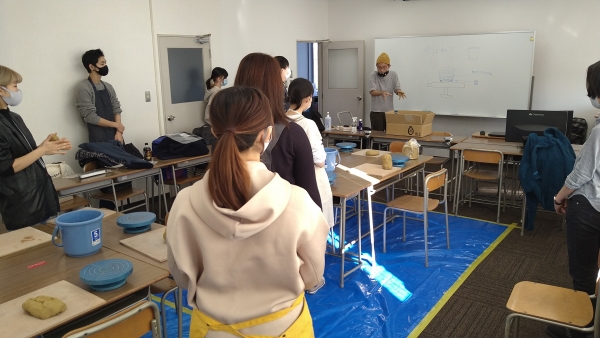 この3枚の写真は、南が撮影しました。まず、なづな学園の渡邉さんから作陶の基本を学びます。
-
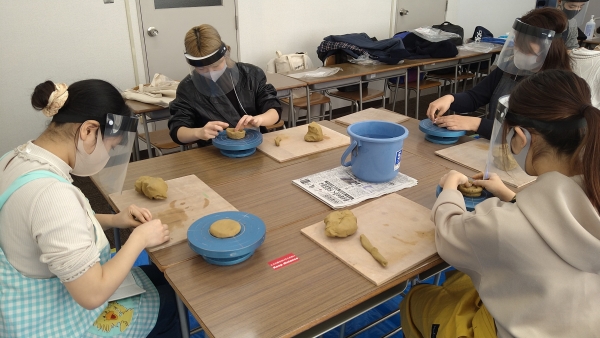 作り方はわかっても実際にやってみるとこれがなかなか難しい。悪戦苦闘・・・しかし、だんだん慣れてくると、それぞれの個性が出ます。中にはヘビとか鼻とか・・・ちょっと方向が違いますよね~。
-
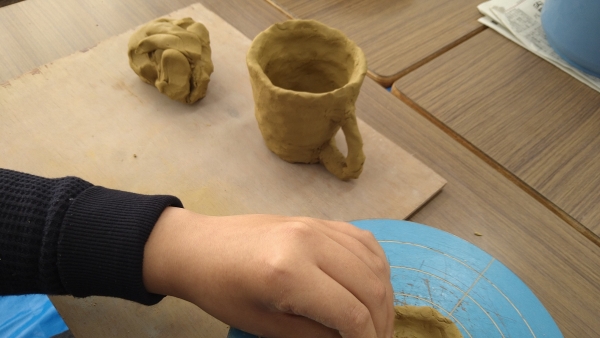 ブログを書いた八島さんの作品です。
2021/02/27 11:30:00 コロナ禍のストレスを発散する、ある方法…
- 学生生活
- Student Reporter
初めまして、グローバル観光学科1年次生の椋木希奈です。突然ですが、皆さんコロナ禍で人と会えなくてストレスが溜まっていませんか?今回、そんな人たちに向けてあるストレス発散方法をお教えしたいと思います!
その発散方法とは「推し」を作る事です!推しとは自分の好きな芸能人などのなかで特に推して最も応援している人のことを表します。しかし、推しという単語が「推薦する」という意味からきているように、好きを超えて他者に薦めるほど好きな人が対象になります。何故この「推し」がコロナ禍のなかでいいかと言うと「推し」を作ることで身体的にも心理的にもたくさんの良い効果があるからとされているからです。例えば、心理的な理由でいうとアリゾナ大学の研究によるとストレスフルな状況に置いて恋人のことを考えるだけで実際に恋人と部屋にいるときと同じくらい、血圧を安定させる効果があることがわかりました。そして「推し」を考えるとそれに近い状況になるといいます。だから「推し」のことを想像するだけでストレス的状況から脱却できるといえるでしょう。ほかにも身体的な理由でいうと人は恋をしているときに「エストロゲン」と呼ばれる美肌を作る働きや髪の毛を美しく保つ働きがある別名、美肌ホルモンの分泌が活発になるそうです。だから「推し」を持つとより綺麗になれるといえるでしょう。
ここまでである程度「推し」を作ることの良さを分かっていただけましたか?? 私は自粛期間中、友達にも会えずアルバイトもシフトを減らされ、暇な日が続いていました。でも『推し』がいたことでライブDVDを見て気分を上げてみたり、『推し』が紹介していた料理をやってみたりしたことで生活を充実することが出来ました。また初めて大学に行ったときに共通の趣味があることで友達もたくさんできました。私は「推し」のおかげで様々な経験ができました。皆さんも「推し」を作って自粛生活を充実してみてはいかがでしょうか?
Nice to meet you! My name is Marena Mukunoki and I am a freshman student in the DGT at KUFS. Does anyone feel stressed because of the Corona virus?? Today, I am going to tell you about how to decrease your stress levels!!
One way is to decrease stress is by having an oshi. In Japanese, oshi means to bring to mind, suggest or infer, so the target of your oshi thoughts should be people you like and want to spend time with. It seems that oshi has proven physical and mental benefits. For example, in one study by an Arizona college, when you are feeling stressed you can feel as relaxed as would if you were with your boy- or girlfriend if you think of your boy- or girlfriend, and your blood pressure will become lower as a result. This is the oshi effect. Another effect is to increase your production of estrogen, making your skin or hair more beautiful. So when you active the oshi effect, your estrogen will be more active, and you will become even more beautiful!!
The oshi effect makes my life special – why don’t you give it a try and see what it can do for your stress levels?
参照文献:
やまがしゅんいち 2019 「「推し」はだれ? 「大切な人」を思い浮かべた時の驚くべき効果を発見」ナゾロジー編集部 (2021年2月27日 最終閲覧)
写真説明にある「ヲタピク」の説明については、こちらのリンクを参考になさってください!
-
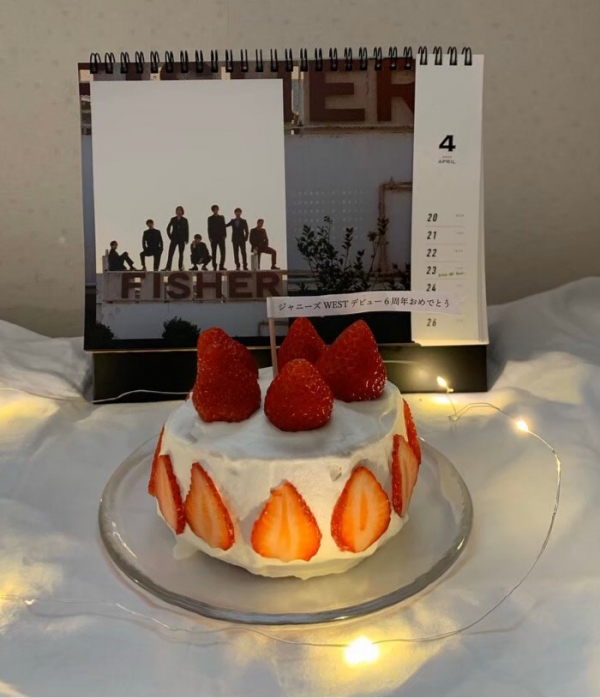 推しのデビュー日をお祝いした時の写真
-
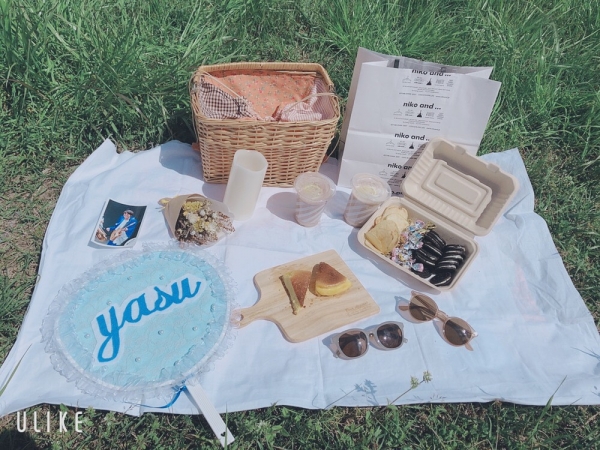 友達とインスタグラムで流行っていたヲタピクをしたときの写真


