


2021/06/05 17:20:00 吉兼ゼミ紹介
 GTゼミ活動紹介
 吉兼秀夫
吉兼ゼミは、地域を活性化させる手段としての観光に関心のある学生の履修を期待している。近年の人々の観光期待の変化(「みる」期待から「する」「しる」「ひたる」への観光期待の変化)と名所型観光(「図」の観光)から路地裏のたたずまいを喜ぶような価値創造型観光(「地」の観光)への観光対象の変化(観光における「図と地」論)を踏まえ、「地」の観光の重要性を意識し、これらを実現するための有効な手段としてのエコミュージアム(地域全体をテリトリーとし地域主体で地域の記憶を保存活用する活動)を基礎理論としながら学生個々人の関心からスタートさせた対象を調査、研究するゼミをめざしている。
まずゼミ生による議論を通してゼミ生の関心を共有できるプラットフォームづくりを模索し、共通フィールド(例えば特定地域、「食」「環境」などの共通テーマ 今年は池田市を予定)をベースにしながら各自の関心テーマを関わらせながら進めていく。後半は課題解決のための提案を行うが、「わかりやすい」ことを基本に、その提案方法の工夫を重視する。したがって卒業研究は論文だけに拘らず多様な手法による卒業研究・卒業制作を歓迎する。ちなみに今年のゼミ生はアニメ制作(動画)による課題提案を試みようとしている。
ゼミはモチベーションを継続できるような「おもしろさ」、やりすぎない、やらなさすぎない「ええかげんさ」自分よがりでなく他人任せでない「自律性」をスローガンとし、「なんとかなる」の精神をモットーに進めたい。
コロナの影響でまだ課外活動が実施できず、ビジュアルな紹介ができないので、かわりに私の地元での活動写真と私の気持ちをイラストで紹介します。
-
 地元の仲間と作った古代住居の前で古代楽器の演奏会(2018年)
-
 イラストなんとかなる
2021/06/04 21:20:00 上賀茂神社はなぜ2600年以上続いてきたのか?(京都スピリチュアルCEP)
- CEP活動紹介
- 広報隊松浦
こんにちは!グローバル観光学科二年次生の松浦芽衣です。今回は私が参加したコミュニティ・エンゲージメント活動(CEP)の京都スピリチュアルプログラムで最も印象に残った、上賀茂神社のお話を紹介します。
まず、上賀茂神社は京都最古の2600年以上の歴史を誇る神社で、厄除けや電気産業守護の御利益があります。私は、この2600年以上という長い歴史がなぜ続いているのかを上賀茂神社神職の芝田さんと権禰宜を務める乾さんに伺いました。
芝田さんからは、この長い歴史が続く理由は昔から続けてきた日々の交流の積み重ねだと教えて頂きました。上賀茂神社では、毎年お祭りが行われる知らせを町内会の方に直接お伝えしたり、お祓いのお札を直接お届けしたりしています。なぜ直接にこだわるのかは、直接会うことで得られるコミュニケーションを大切にしているからだそうです。こうした日々の交流が神社をこれからも残そうという気持ちに繋がり、2600年以上の歴史が続いたのではないかと考えているとおっしゃっていました。
乾権禰宜からは、日本人の変わらない精神と神社が心の拠り所だからだと教えて頂きました。昔から自然災害があったときも神社だけは守ろうとした日本人の精神が今も続いているのだそうです。そして神社が心の拠り所なのは、神社の人が参拝客の子供の誕生を祝ったり、亡くなった人のことを一緒に悲しんだりして、参拝客の心に寄り添ってきたからだと仰いました。
以上の少なくとも三つの点が、上賀茂神社の2600年以上の歴史の理由だと分かりました。私たちが普段何気なく訪れる神社は、昔から今まで続いてきた神社を残そうという気持ちが繋がっているからこそ存在していました。この人と人とのつながりはSDGsの17番の「パートナーシップで目標を達成しよう」に通じていると思いました。私も今回CEPで出来た上賀茂神社の皆様とのご縁を大切にしていきたいです。
Hello! My name is Mei Matsuura and I am in my junior year at the Department of Global Tourism Studies. In this article, I would like to share with you the story of Kamigamo-jinja Shinto Shrine, which left a lasting greatest impression on me during my time participating in the Kyoto Spiritual Community Engagement Program.
Firstly, Kamigamo-jinja is the oldest shrine in Kyoto, with a history of at least 2,600 years, and it serves several purposes, not least of which is warding off evil and more modern concerns such as protecting the electrical industry. I asked Rev. Shibata, a priest at Kamigamo-jinja and Rev. Inui, junior priest at the shrine, why this long history has continued for 2,600 years.
Rev. Shibata told me that the reason for this long history is the accumulation of daily interactions that have continued since ancient times. At Kamigamo-jinja, they directly inform neighborhood associations of the annual festival and deliver purification tablets directly to them. The reason why they insist on direct communication is because they value the connection that can only be gained by meeting in person. Rev. Shibata said that he believes these daily interactions have led to a desire to preserve the shrine for the future, and that is how the shrine has lasted for 2,600 years.
Rev. Inui told us that this is because of the unchanging spirit of the Japanese people and the fact that shrines are a stronghold of the community. He said that the spirit of the Japanese people, who have always tried to protect shrines even in times of natural disasters, continues to this day. Rev. Inui also told us that the reason why shrines are such a stronghold of the community is because the people who serve at these shrines have always been close to the hearts of the visitors, celebrating the birth of children or grieving with them over the loss of loved ones.
These three points are why Kamigamo-jinja has a 2,600-year history that continues to the present day. The shrines we visit without thinking about their past exist today because of the connections between people, creating a community that wants to preserve shrines that have existed since ancient times. I feel that this connection correlates with SDG number 17, "Partnerships for Goals” and going forward I want to cherish the relationships I have made with the people of Kamigamo-jinja through my participation in the CEP.
-
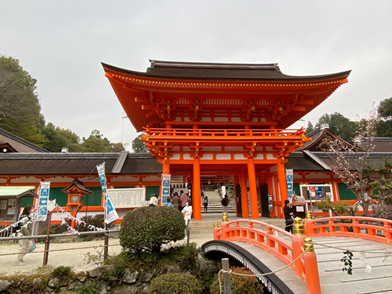 上賀茂神社
-
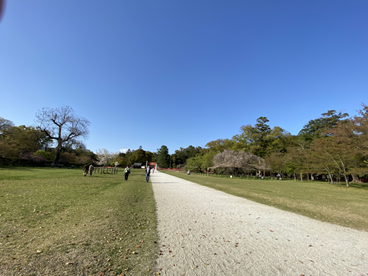 芝生のある境内
-
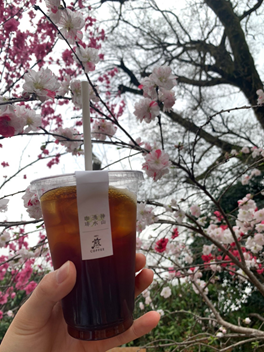 境内にあるカフェ「神山湧水珈琲 煎」の神山湧水珈琲
2021/05/28 23:00:00 学科事務の千葉さんに聞く京都:十三まいり
- 広報隊からのインタビュー~ちょっと聞かせてください
- 広報隊石橋
皆さんこんにちは!グローバル観光学科3年次生の石橋尚子です。今年は梅雨入りが早いですね。連日雨模様でじめじめとしており、過ごしづらい日々が続きますが、いかがお過ごしでしょうか。
今回は本学科の事務をされている千葉真紗代さんのご協力のもと、「十三まいり」についてお話を伺いました。千葉さんは、いつも様々な学科のお仕事をしながら、私たち学生たちにも気さくにお話をしてくださる明るい方です。ちなみに、千葉さんのご実家は「ふさとひも宮本株式会社」という京都府知事認定の伝統工芸品である組みひもの製造をしている会社です。
さて、皆さんは「十三まいり」をご存知でしょうか。十三まいりは京都ならではの行事です。特に旧暦の3月13日(現在の4月13日頃)を基点として、その前後1か月にあたる3月13日から5月13日まで嵐山にあるお寺、法輪寺にて行われるお詣りが有名です。
本来であれば、ちょうど今年「十三まいり」をお祝いされるお子さんがいらっしゃる千葉さんと法輪寺に同行し、取材させていただく予定でしたが、新型コロナウイルスの流行のこともあり、同行は断念し、後日参拝の内容をお聞きすることにしました。
千葉さんによると、十三まいりは、京都に昔から住んでいる人にとっては当たり前というくらい浸透している行事だそうですが、他府県出身の方は初めて聞く方も多いと思います。数え年で十三歳に成長した男女が、成人の儀礼として虚空蔵菩薩に厄除けと知恵の授与を祈願するために参拝した習わしが現在も続いています。十三歳という年は古来より成人とされる年齢で、十三まいりは重要な通過儀礼でした。確かに現在でも小学校を卒業し、中学生になると、感覚や気分が少し変わりますよね。
歴史ある行事であり、「難波より 十三まゐり 十三里 もらひにのほる 知恵もさまざま」という歌が広まったことから江戸時代の中頃には既に京都以外の近畿圏から参拝に来る人も多かったほど有名です。現在もメディアによって情報を得やすくなったため、多くの人が他府県から参拝に来られます。
参拝では、自分の好きな漢字を一文字書き、虚空蔵菩薩に奉納します。お寺では、書いた漢字を参拝者本人の身代わりとして毎日御祈願をしてくださいます。千葉さんは授与品として、お札、御守り、知恵の箸、御供物の落雁、数珠を戴かれたとのことでした。参拝後、最初に食べるご飯はこの知恵の箸と呼ばれるお箸を使っていただくそうです。
千葉さんは、「このご時世と桜の散った時期というのもあるかもしれないが、自分が十三まいりをした時に比べると、十三まいりをする子供の少なさに驚いた。昔は沢山の子供がいた」と仰いました。コロナによる自粛の影響を踏まえたとしても、こういったことの裏側にはやはり少子化の問題が関係しているのでしょうか。
今回は十三まいりについての記事でした。十三歳になった人に限らず法輪寺への参拝は誰でも可能です。法輪寺は阪急電鉄嵐山線の嵐山駅から200mほど行ったところに位置しています。境内には全国でも珍しい、電気や電波の祖神が祀られている「電電宮」が鎮座しており、針供養やうるし祖神も有名です。機会があれば訪れてみてください。
参考Web資料: 十三まいりなど法輪寺の行事・祭事 (kokuzohourinji.com)
Hello everyone! I'm Naoko Ishibashi, a third-year student in the Department of Global Tourism. The rainy season has started early this year. In the midst of this rainy season, how are you doing?
This time, with the help of Ms. Masayo Chiba, who works as an office clerk in our department, we learned about "Jusan-mairi." Mrs. Chiba was born and raised in Kyoto, and with her bright personality, we enjoyed our conversations.
Have you ever heard of "Jusan-mairi"? “Jusan-mairi” is an event unique to Kyoto. It is especially famous for the pilgrimage held at Horinji Temple in Arashiyama from March 13 to May 13, which is one month before and after the 13th day of the third month of the lunar calendar (around April 13 now).
Originally, we were planning to accompany Mrs. Chiba, whose son celebrates his "Jusan-mairi" this year, to Horin-ji Temple to cover the event, but due to the current COVID outbreak, we decided to cancel it and instead interviewed her afterwards.
According to Mrs. Chiba, “Jusan-mairi” is a common event for those who have lived in Kyoto for a long time, but many people from other prefectures may have never heard of it. It is an important rite of passage to adulthood for men and women who have grown to the age of thirteen to pray to the bodhisattva for protection from bad luck and the bestowal of wisdom. It is true that even today, after graduating from elementary school and entering junior high school around that age, one's senses and moods change a bit.
It is an event with a long history, and it is said that many people from the Kinki region other than Kyoto has visited the temple since the middle of the Edo period. Even today, many people come from other prefectures to visit Horinji Temple hearing this tradition through SNS and other media.
During the visit to the temple, you write one kanji character of your choice and dedicate it to the bodhisattva Emptiness. The temple will pray for you every day using the kanji you wrote as a substitute for yourself.
Mrs. Chiba said, “I was surprised to see very few children visiting the temple for their Jusan-mairi compared to the time I experienced this event when I was a child. This might be just because of the timing of this pandemic, but still there used to be a lot more children. Even if we take it into account, I cannot help but think about the declining birth rate.
I hope this article gives you some ideas on "Jusan-mairi,” the traditional life ritual in Kyoto. Horin-ji Temple is located about 200 meters away from Arashiyama Station on the Hankyu Railway Arashiyama Line. On the temple grounds, you can see the "Den-den-gu," a shrine dedicated to the ancestral deity of electricity and radio waves, which is rare in Japan, and is also famous for its needle offerings and the Urushi Ancestral Deity. If you have a chance, please visit.
-
 千葉さんへの取材風景
-
 見せていただいた千葉さんの十三まいりの時の写真
-
 法輪寺での参拝の様子
2021/05/25 19:50:00 Toietmoi Kyoto
- 広報隊からのインタビュー~ちょっと聞かせてください
- 広報隊遠藤
皆さんこんにちは。私はグローバル観光学科4年次生の遠藤櫻です。毎月恒例の学校外で活躍するグローバル観光学科生にスポットライトを当てたインタビュー形式のブログシリーズです。先月はお休みしてしまい申し訳ございません。今月、ご紹介するのは、京都のおしゃれスポットなどを紹介するインスタマガジンを運営している「Toietmoi Kyoto」メンバーの皆さんです。
―まず始めに、活動内容について教えてください。
着物で京都旅行する女の子たちのインスタマガジンをコンセプトにインスタグラムで20代に向けて京都の飲食店や観光情報を発信しています。インスタマガジンとはインスタグラム版のガイドブックをイメージしています。そのようなアカウントにするため、ガイドブックのようにモデルルートや予算別・地域別などで飲食店をまとめてより効率的にお出かけできるような提案をしています。コロナ禍で閑散とした京都を若者の力で華やかにしたいという想いから、今年の3月7日、13日、14日には東山にある茶寮・和香菜にてテイクアウト専門のポップアップカフェを運営しました。少しでも観光地のお店の力になりたく、商品であるクロワッサン・ホットチョコレート・カフェラテはほとんど京都のお店で仕入れさせていただきました。ありがたいことにたくさんの人に来店していただき、大盛況でした。
―ポップアップカフェはたくさんの同期や後輩の学科生が訪れていて、本当に大盛況でしたね!現在の運営メンバーとおすすめの京都スポットを教えてください。
相原伽凜: loose kyoto(カフェ)
重田乃胡: 京都府立植物園
下田春菜: 陶版名画
永田早耶: スターバックス二年坂店
瀬戸口未桜: here(カフェ)
―このようなご時世ではありますが、いつか必ず行ってみたいですね。
活動を始めたきっかけは何でしたか?
きっかけは友人が京都旅行に来た際にインスタグラムでの情報が散乱していて不便だと感じたことです。また、着物を着て京都観光した時のワクワクや楽しさを共有したいと思い、発信活動を始めました。アカウント名の”Toietmoi”はフランス語で”君と僕”という意味で、京都は1人ではなく大切な誰かと素敵な思い出を残して欲しいという思いを込めています。(相原)
―そうだったんですね。では、「Toietmoi Kyoto」のインスタグラムで投稿するときに大事にしていることがあればぜひ教えてください。
自分も知りたいと思える投稿がどうか、みている人がどんな場面でその投稿をみたら役に立つのかを考えて投稿します。例えばホテルの投稿であればホテルに滞在する人が付近でカフェやディナーに行くことを考えて、ホテルの情報だけでなく付近のおすすめスポットも合わせて紹介します!また投稿を見た人が他のサイトで調べる必要がなくなるようにトワエモアのアカウントで全て知れるように投稿することを意識しています!(重田)
―なるほど。確かに「Toietmoi Kyoto」を見れば検索エンジンを使わなくてもたくさんプランが立てられそうですね。では、この活動を通してやりがいを感じたこと、嬉しかったことについて教えてください。
自分たちが発信している情報を見てくれていると知ったとき、そして、「投稿見たよ」「あの投稿参考にして行ってきた」と言ってもらったときは、すごくやりがいを感じます。私自身、地方出身で地元の友達が旅行で京都を訪れたときに、「トワエモア見て着物レンタル店選んだよ」って言ってくれて、トワエモアをタグ付けして投稿してくれたことが嬉しかったです。(下田)
―私の周りでもそのような声をよく聞きますし、私自身もよく利用させていただいています!先ほども少しお話ししていただきましたが、ポップアップカフェを開催した時の思い出について教えてください。
ポップアップカフェの準備や当日で人との繋がりを感じたことです。オープンするまでに関わって下さる方たちのお店に直接向かい、その方達の商品のこだわりやお店への思いを聞きました。何度もお店に通いコミュニケーションを深め、私たちへの期待の気持ちも言葉にしてくださいました。またカフェ当日は、多くの方が足を運んでくださり、コロナ禍で直接人とのコミュニケーションが薄まった中、「久しぶり〜!元気にしてた?」と声を掛け合う姿を見て、私たちのイベントが誰かにとって何かのきっかけになれたことがすごく嬉しかったです。(永田)
―自分たちが作り上げたもので何か人に影響を与えられるのはとても嬉しいですし、やりがいもありますよね。では、そんな「Toietmoi Kyoto」の今後の目標について教えてください。
もっと多くの方にToietmoi Kyotoを通じて京都や着物の魅力を伝えたいです。このような情勢が落ち着いたら、また人が戻ってきて京都が華やかになることを楽しみにしています。そして、また京都が活気づくようなイベントやプロジェクトをできたらと考えています。(相原)
―一生懸命努力し続ける姿をみて、同じ学科生として友達としても、すごく刺激になります。このようなご時世ではございますが、京都へ来られた際はぜひ「Toietmoi Kyoto」をご覧ください。これからの活動にも注目です!来月もお楽しみに。
「Toietmoi Kyoto」インスタグラムURL
https://www.instagram.com/toietmoi_kyoto/?hl=ja
Hello there everyone! This is Sakura Endo and I am in my senior year at the DGT at KUFS. Here I want to introduce the people behind the popular Instagram account @toietmoi_kyoto that is run by KUFS students and introduces cool hangouts in Kyoto. The target user is a 20-something female visiting Kyoto wearing kimono, looking for info about nice places to eat, drink and go sightseeing. It’s a guidebook for the Instagram generation.
The team at @toietmoi_kyoto also set up a pop-up café in Higashiyama over three days in March 2021 during a month when Kyoto was unseasonably quiet due to restrictions aimed at controlling the COVID pandemic. Lots of people visited the pop-up café and the team members are grateful to the local cafes and businesses that supported the project. It was great to see old friends able to meet up again after isolating and enduring social distancing for so long.
The idea behind @toietmoi_kyoto was to bring together disparate strands of information and to have this collated in one place. The title means “you and me” in French, referring to a dating couple looking to make great memories in Kyoto – as such, followers can access several route plans and suggestions for ways to enjoy Kyoto.
The @toietmoi_kyoto team say that you don’t have to wear kimono to enjoy a visit to Kyoto, but it does make it more memorable I was inspired by what I learned when I interviewed the team – they are fellow students, just like me, but they have created something that helps and touches the lives of many other people. Please consider following: @toietmoi_kyoto
-
 Toietmoi Kyotoメンバー
-
 ポップアップカフェで販売したカフェメニュー
-
 ポップアップカフェの広報チラシ
2021/05/22 17:50:00 最終報告会とその後(CEP京都スピリチュアル)
- CEP活動紹介
- 広報隊梛木
こんにちは!グローバル観光学科3年次生の梛木絢芽です。今回はCEP京都スピリチュアルについてです。CEP京都スピリチュアルは4月16日に行われた最終報告をもって無事終了しました!私たちの大きな目標は若者、特に学生に神社や神道への理解を深め、訪れてほしいというものです。神社は古くから、神社とその地域の人々の協力で守られてきており、私はそんな長い歴史や人々とのつながりを持つ神社がこの先もずっと残っていてほしいなと思います。今の若者が神社や神道に少しでも興味を持ってもらうことがその第一歩になると考えたので私たちはそのようなテーマを立てました。私たちはAとBの2チームに分かれ、それぞれ神社観光に関するコンテンツを考えました。今回はそのコンテンツをご紹介します!
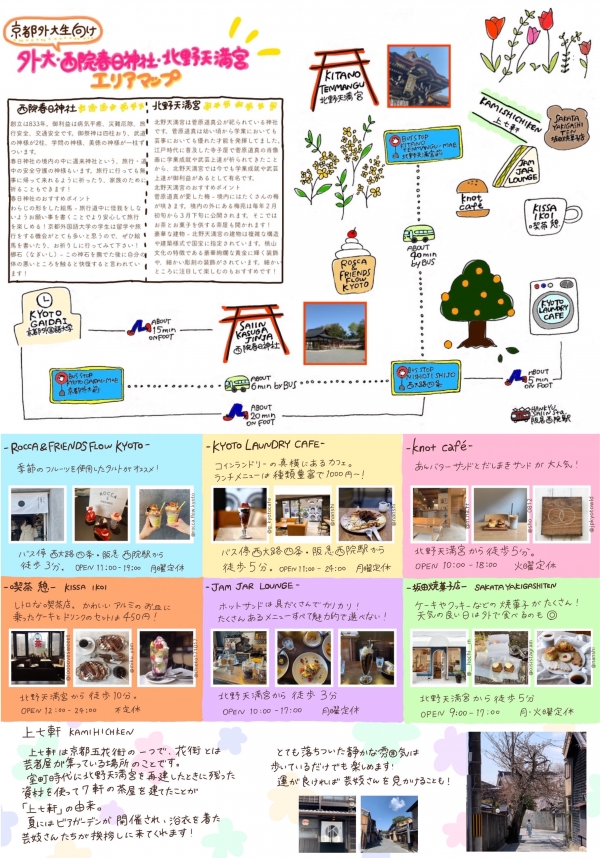
私たちAチームは今人気のカフェめぐりと神社観光を掛け合わせると興味を持ってもらいやすいと考え、その二つをメインにしたエリアマップを作成しました。実習で行かせていただいた神社と周辺調査で訪れたカフェなどを入れて、「松尾大社・嵐山マップ」「西陣マップ」「京都外大から北野天満宮マップ」「下鴨神社・上賀茂神社マップ」の4種類を作成しました。4枚ともメンバーの手書きで、温かみのあるかわいいマップにすることができました!
Bチームはインスタグラムで神社の歴史や逸話を紹介するアカウントの運営をしています。そのアカウントでは実習に行った際宮司さんから教えていただいたことや神社のおすすめポイントなどが載っておりとても面白いものになっています!コアな情報も載っているので神社へ行く前に見ておくのがおすすめです!ぜひBチームのインスタグラムアカウント(@kufs_kyoto_spiritual)をフォローしてください!
私はこのCEP京都スピリチュアルは神社や神道のことを深く知ることができた良い機会になったと思っています。京都の大学に通う学生として、行っておくべき場所にたくさん行くことができ、また神社の宮司さんたちにお話を聞くという貴重なことを経験しました。きっとこの実習に参加していなかったら神社の歴史が面白いことや神道が日本人に馴染み深いことなどを知ることはなかったと思います。実習に協力していただいた神社の方々本当にありがとうございます!この実習で学びを終えるのではなく、これからももっと知識をつけて神社観光を楽しみながらいろいろなことを学びたいです!みなさんがAチームのマップを見て観光したり、Bチームのインスタグラムアカウントで勉強したりして少しでも神社や神道に興味を持っていただけたら嬉しいです!
Hello! My name is Ayame Nagi and I am in my junior year at the Department of Global Tourism. The CEP Kyoto Spiritual wrapped up on April 16th with the final report session held on that day. Our main purpose of these projects is for Japanese students to deepen their understanding about Shinto shrines and for students to get more out of visiting these locations.
Shrines have existed for a long time to protect the local community and I hope that this long history and connection with local people will remain long into the future. The idea of this program was to get young people interested in shrines and Shinto as a first step. We divided into Team A and Team B, and each team made interesting content about the various elements one can find at a shrine.
I was a member of Team A and we made area maps that included the shrine and a nearby cafés because café-hopping is a popular pastime and if that can be combined with visiting shrines, people would get interested. We made four kinds of maps: Matsunoo Taisha and Arashiyama, Nishijin, Kyoto Gaidai to Kitano Tenmangu and lastly a map combining Shimogamo Shrine and Kamigamo Shrine. All maps were hand-drawn by team members, so they turned out to be heartwarming and cute!
Team B opened an Instagram account to post about shrine history and other anecdotal information. The posts focus on the things Team B heard when they visited the shrine and other recommendations. You should definitely check it out before a shrine visit! Please follow @kufs_kyoto_spiritual
I think CEP Kyoto Spiritual was a great opportunity to get a deeper understanding of shrines and Shinto. As a student attending a university in Kyoto, this program enabled me to visit shrines and combine that with the valuable experience of listening to shrine priests share their knowledge and recommendations. I seriously doubt I would have uncovered the interesting history of these shrines or realized the deep connection between Shinto and the Japanese people if I hadn’t participated in this program. I wish to thank all the people at these shrines for their cooperation in the program! I have finished the learning portion of this program, but I would like to continue to discover more about Shinto and shrines while sightseeing around Kyoto! Please check out the maps made by Team A for great sightseeing tips and follow Team B's Instagram account for deep knowledge about Kyoto shrines!
-
 インスタグラムより
-
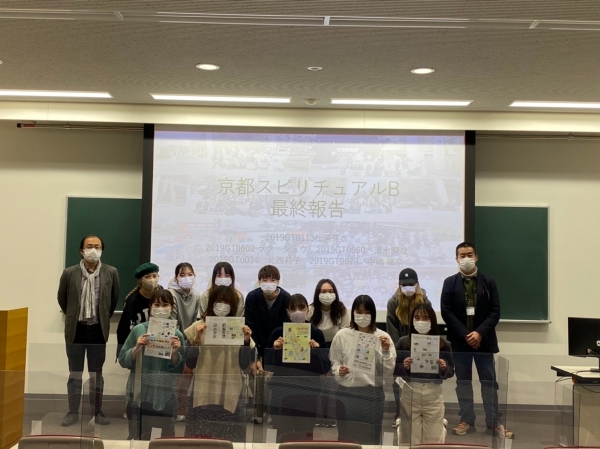 報告会での集合写真
-
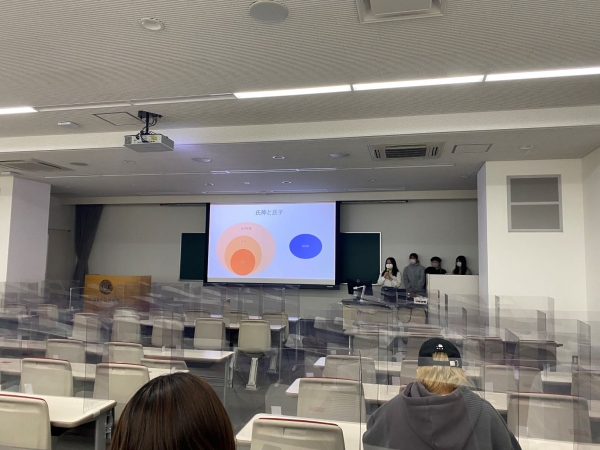 発表の様子


