


2021/06/11 18:20:00 伏見稲荷大社の山頂まで
 学生生活
 広報隊横田
こんにちは!グローバル観光学科3年次生の横田藍子です。みなさん、伏見稲荷大社に行ったことはありますか?鳥居が何基も並んでおり、とてもスピリチュアル的な空間ですよね。そんな伏見稲荷大社の鳥居はこの稲荷山の山頂まで続いています。そこで今回私は、マスクをつけながらにはなりますが、友達と一緒に伏見稲荷大社の山頂まで登ってきたので、その様子をレポートしたいと思います。
みなさんのご近所に、「お稲荷さん」と言われている神社はありますでしょうか。全国に「お稲荷さん」は30,000社あると言われており、その総本宮が伏見稲荷大社なのです。伏見稲荷大社の御祭神である稲荷大神様が稲荷山に御鎮座されたのは、奈良時代である711年。2011年には御鎮座1300年を迎えました。この歴史ある神社には山にたくさんの鳥居が建てられています。現在は約1万基の鳥居が並んで立っているそうです。なぜ鳥居が建てられているかと言うと、願い事が「通る」「通った」御礼の意味から、鳥居を感謝のしるしとして奉納することが江戸時代以降に広がったからです。
以前にも伏見稲荷大社を訪れたことはあるのですが、山頂までは行ったことがなかったので、今回、感染対策をしっかり行ったうえで再訪しました。早朝にも関わらず、伏見稲荷大社を訪れランニングや散策をしている人たちが見えました。私たちはすれ違う人たちに、「おはようございます!」とあいさつを行い、元気よく歩いていきました。千本鳥居にたどり着くと、コロナ以前は観光客も多く、人が途切れることのなかったのが、私たち以外誰もいない様子でした。途中で寄り道しながらも稲荷山を登り進めていくと、1人の男性に声を掛けられました。そして、稲荷山の一番景色の良いところに私たちを連れて行き、山頂までのおすすめルートを教えてくださいました。その方は「コロナ以前に比べると、やはり訪れる人は減少している」と話されていました。人と交流すると、新たな知識が得られるのでとても楽しかったです。そうこうしているうちに、標高233メートルの頂上にたどり着くことができました。寄り道しながらだったので、1時間半ほどかかりましたが、158もの御塚が奉納された一ノ峰(山頂)の上社神蹟にたどり着くことができました。
伏見稲荷大社を訪れて、私は人の温かさを感じました。地域の人と神社などとの交流も見られ、観光客が訪れる大きな神社ですが、地元に根付いた神社であると実感しました。伏見稲荷大社は人々が幸せを求める「庶民の信仰の社」であり、「神様と自然と人とが共生する社叢・稲荷山」であるということを大切にしていると話す宮司さんの言葉にも、すごく納得しました。みなさんもぜひ、コロナがおさまりましたら、伏見稲荷大社を訪れいつもとは違う山頂まで行ってみてはいかがでしょうか。
参照ウェブサイト:伏見稲荷大社 公式HP 伏見稲荷大社 (inari.jp)
Hello! I’m Aiko Yokota, and I am a student in my junior-year at the Department of Global Tourism, part of the Faculty of Global Engagement.
Have you ever been to Fushimi Inari Taisha? It's a very spiritual place with many torii gates lined up in a row. The torii gates of Fushimi Inari Taisha lead to the top of Inariyama (Mt. Inari). Wearing a mask, I climbed up to the top of the Fushimi Inari Taisha trail with my friends and I would like to report on our experience.
Is there a shrine called "Oinari-san" in your neighborhood? It is said that there are around 30,000 Inari shrines in Japan, and Fushimi Inari Taisha is the head of all these shrines. In 711 – what we call the Nara period in Japanese history – it is said that the deity Inari Okami took up residence on what we call today Mt. Inari. Several centuries later, Fushimi Inari Taisha celebrated its 1300th anniversary in 2011. This historic shrine has many torii gates built on the mountain. Today, there are around 10,000 torii gates along the mountain paths leading to and from Fushimi Inari Taisha.
The reason why these torii gates were erected is because they became widely used as offerings at the start of the Edo period, and they symbolize a wish for or acknowledgement of the communication of prayers from people to the kami deity.
I have been to Fushimi Inari Taisha before but I had never been to the top of the mountain, so this time I set out for the peak, making sure we took through measures against the transmission of infectious disease. Even though it was early in the morning, we could see all kinds of people visiting Fushimi Inari Taisha, some out of habit, some jogging – a young couple together. We greeted people when we passed each other, "Good morning!” and we progressed at a decent enough pace.
We reached the Senbon Torii (thousand torii gates) trail. Before the pandemic, there were a lot of tourists and a continuous line of people but there was no one around when we visited. As we climbed, stopping off at some places on the way, a man spoke to us. He took us to the most beautiful place on the mountain and showed us his recommended route. He also told us that the number of visitors had decreased dramatically compared with before the pandemic. By interacting with people on the trail, we got new knowledge and I was very happy about this.
Finally, we reached the top of the 233-meter-high mountain. It took us about an hour and a half because we had to make a detour. We were able to reach the Kamisha Shinseki on Ichinomine, where there are 158 otsuka (stones).
When I visited Fushimi Inari Taisha, I felt the heart-warming presence of the local people. I also witnessed communication between the local people and the shrine and I realized that although it is a large, famous shrine visited by tourists, it is also a shrine with deep roots in the local community. I really understood what the head priest meant when he said: “we have a duty to protect Inariyama and pass on the tradition of promoting the harmonious coexistence of the deities, human beings and nature that it represents.” Would you like to visit Fushimi Inari Taisha and see something out of the ordinary at the top of Fushimi Inari Taisha?
-
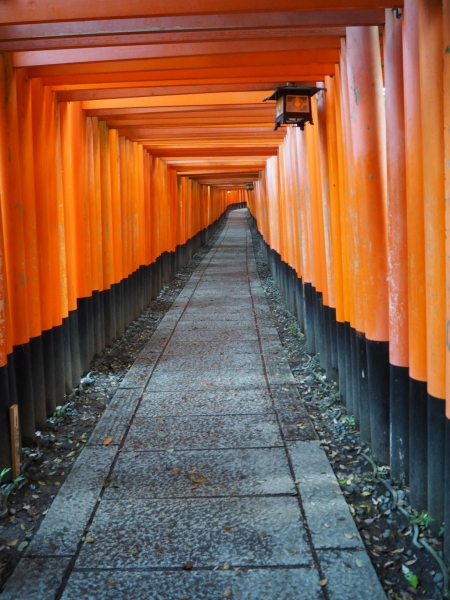 千本鳥居
-
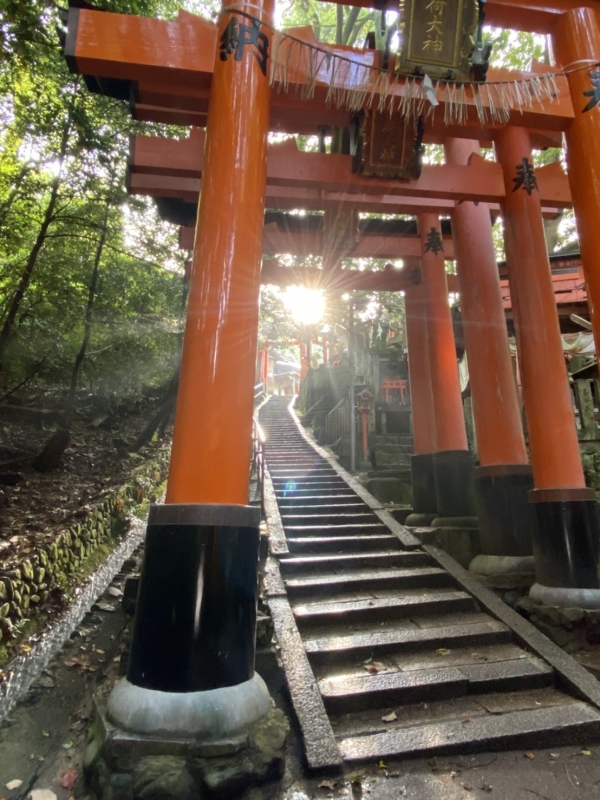 山道の鳥居
-
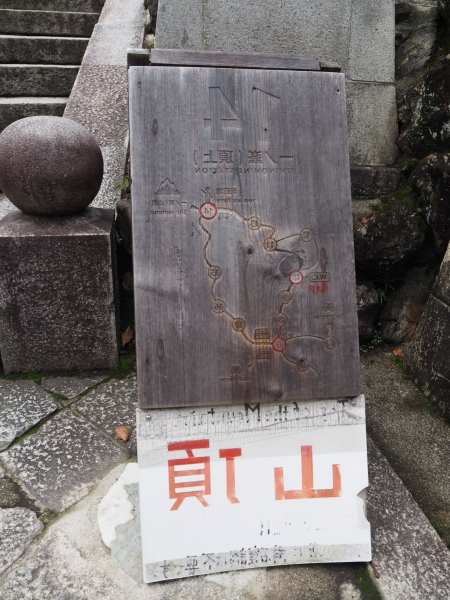 山頂 一ノ峰


