


地元紹介
2024/06/22 20:30:00 My Hometown Yangzhou
 地元紹介
 広報隊オウ
Hello everyone, I'm Wang Zhongxu, a freshman in the Department of Global Tourism. I'm from Yangzhou City, Jiangsu Province, China. I have a personal belief that "people who like Crayon Shin-chan are definitely not bad people." Certainly, Shin-chan is ridiculous and vulgar, but he is always bright and positive, giving warmth and joy to the people around him like a small sun. So, I love Crayon Shin-chan.
Today I'd like to introduce my hometown, Yangzhou. First of all, Yangzhou is a city located in the middle of Jiangsu Province, China. Situated at the intersection of the Yangtze River and the Grand Canal, it has flourished as an important city since the Spring and Autumn Period. During the Qin Dynasty, it became the county seat of Guangling County, and in the Han Dynasty, it became the county seat of Guangling Commandery. During the Wei, Jin, and Northern and Southern Dynasties, it became the capital of the Southern Dynasties: Song, Qi, and Liang, flourishing as a cultural center. In the Sui and Tang Dynasties, with the opening of the Grand Canal, it became even more prosperous and became one of the leading commercial cities in China. Yangzhou City is a treasure trove of cultural heritage with a history of more than 2,500 years. There are many tourist attractions such as Slender West Lake and Daming Temple, both of which are registered as World Heritage Sites.
Slender West Lake is a landmark tourist attraction in Yangzhou. It is also registered as a World Heritage Site and is counted among the four famous gardens in China. The West Lake is famous for its winding lakesides, beautiful bridges, and many pavilions and temples. Daming Temple is one of the oldest Buddhist temples in China. It was built in 602 and is also famous as the temple where the monk Jianzhen stayed before he traveled to Japan to spread Buddhism. Daming Temple houses many valuable Buddha statues and sutras. Due to this historical connection, Nara City in Japan and Yangzhou City have been promoting friendly exchanges since 2002. In February 2010, to mark the 1300th anniversary of Nara's establishment as Japan's capital, a delegation led by Nara's Mayor Gen Nakagawa visited Yangzhou City and exchanged a Memorandum for the Conclusion of a Friendship City Relationship. On May 23 of the same year, at the Nara Centennial Hall, the two cities officially held a signing ceremony for a friendly city alliance, agreeing to cooperate in fields such as economy, culture, tourism, human resources, and sports. Additionally, on April 21, 2014, former Japanese Prime Minister Yasuo Fukuda visited the Jianzhen Memorial Hall at Daming Temple in Yangzhou City, Jiangsu Province, wrote 心連心 (Heart to Heart), and presented it to the temple.
Next, Yangzhou City boasts many intangible cultural heritages, such as Yang Opera, paper cutting, and the Yangzhou Three Knives. The old cityscape remains preserved in an area called Dongguan Street, where traditional shops and restaurants line the streets. In Dongguan Street, you can buy Yangzhou's famous pickles, the Yangzhou Three Knives, and other traditional products. Finally, Yangzhou is the birthplace of Huaiyang cuisine, a major style within Jiangsu cuisine, one of the four great cuisines of China, with a long history of food and beverage culture. Huaiyang cuisine is characterized by its delicate taste and beautiful presentation. For example, there are many restaurants in Yangzhou where you can savor Huaiyang dishes such as Yangzhou fried rice, crab meat lion's head (large meatballs), and dried bean curd strips. The roots of Yangzhou fried rice can be traced back to a dish called Yueguo crushed gold rice in the Sui Dynasty menu book 谢讽食经. This dish, described as crushed gold rice (rice like pieces of gold) from the Yue State (present-day Zhejiang), is said to be the predecessor of Yangzhou's egg fried rice. It is unclear whether fried rice existed in its current form during the Sui Dynasty, but over time, crushed gold rice was brought to Yangzhou, improved upon, and enhanced with additional ingredients, evolving into today's Yangzhou fried rice. Each grain of rice is wrapped in egg, and when stir-fried, it shines like gold.
-
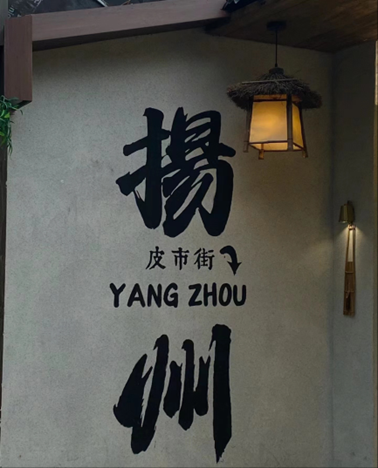 The sign of Yangzhou (Photo by sunflower)
-
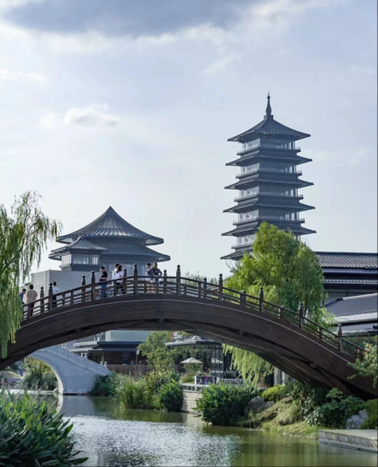 Slender West Lake during the day (Photo by sunflower)
-
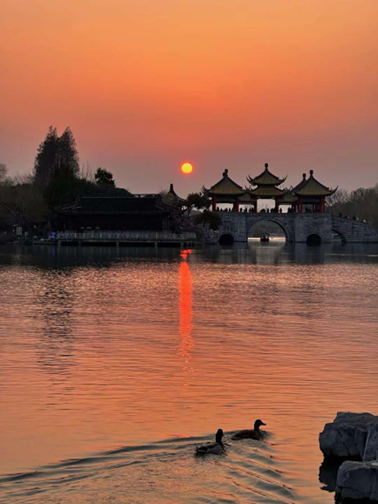 Slender West Lake in the evening (Photo by Tyrone)
2023/06/23 23:30:00 東大阪市民ふれあい祭り
- 地元紹介
- 広報隊長渡
こんにちは。国際貢献学部グローバル観光学科3年次生の長渡静流です。6月に入りじめじめとした日々が続いていますが、気持ちだけでも爽やかに明るく過ごしたいですね!
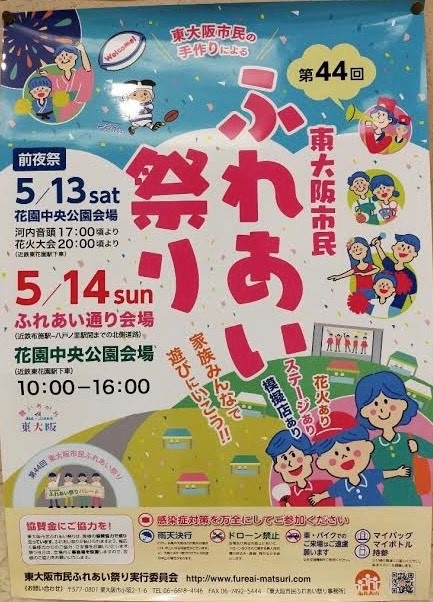
そこで今回の記事では、雨の中でも活気よく開催された大阪府の「東大阪市民ふれあい祭り」についてご紹介致します。1975年(昭和50年)から始動し、今年で第44回を迎えたこの「ふれあい祭り」は下記三つの柱を目標に掲げ、市民一人ひとりが主催者として位置づけられ開催されて来ました。
1、 車に占められている道路を人が出会い語り合う場所にする
2、 祭りを通じて市民のコミュニティを育てる。
3、 祭りのエネルギーをまちづくりに生かす。
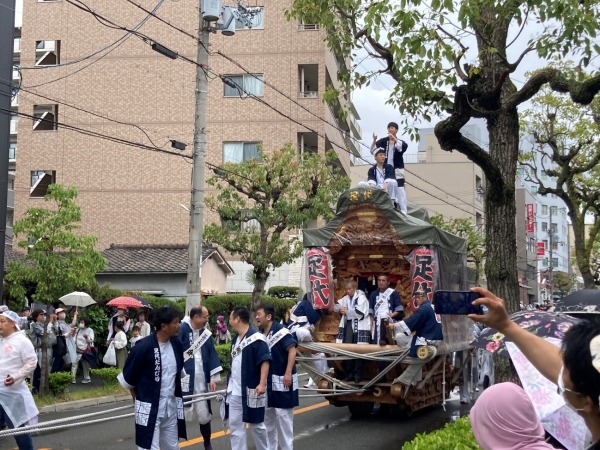
今年のふれあい祭りは5月13日と14日の二日間を通して行われました。近鉄布施駅から八戸ノ里駅北側道路の4駅間を歩行者天国とした「ふれあい通り会場」ではパレードやステージ、模擬店の出店が行われ、雨にかかわらず多くの人が押し寄せていました。パレードには音楽隊やボーイスカウト、チアリーダーや河内音頭踊り、だんじりなど子供から高齢者まで幅広い年代が参加し、多くの観覧者が集い賑わいました。また、沿道には東大阪市民による手作りの店やバザーなどの模擬店が並び、町は人々の活気であふれていました。
さらに「花園中央公園会場」では、踊りや歌で盛り上げるステージや、全国の特産品、名産品を販売するふるさと広場など、雨の中での鬱々とした気持ちを吹き飛ばすようなイベントが盛りだくさんでした。この「ふれあい祭り」は名前の通り、特に人々同士のつながりを感じさせる祭りでした。東大阪市民が一致団結し、町振興を目指して協力しあう様子がお祭りのあちこちで見られました。一般的に想像する屋台が立ち並ぶお祭りと一風変わり、町の企業や団体が主体となって模擬店を出店しているために町の団結力をより感じ、さらには、パレードやステージで活躍する出演者をみんなで歓迎し応援する姿は、市民の暖かさと繋がりを感じさせました。
実際にふれあい祭りのパレード、ステージ、出店への参加条件には「東大阪市在住、通学、通勤の方、社会貢献されている団体等」と記載されており、地域の歯医者や銀行、飲食店からの出店や、子育てネットや食品ロスゼロマーケットの方々による体験コーナーなどがありました。このふれあい祭りが50回目を迎えるころには、大阪都市部から東大阪市をつなぐモノレールが開通する予定です。それにより今後さらなる盛り上がりを見せると予想されるこの東大阪市のふれあい祭りに皆さんも一度訪れてみてはいかがでしょうか。
Hello, my name is Shizuru Nagato, a third-year student in the Department of Global Tourism. It has been a damp and dreary June, but I would like to stay fresh and cheerful at least in my mind!
In this blog post, I would like to introduce the "Higashi-Osaka Citizens' Fureai Festival" held in Osaka Prefecture, which took place lively even in the rain. The following are the three pillars of the festival.
(1) Make the streets, which are usually occupied by cars, a place where people can meet and talk with each other.
(2)To foster a community of citizens through the festival.
(3) To utilize the energy of the festival for community development.
This year's Fureai Festival was held over two days on May 13 and 14. The "Fureai-dori Street" was a pedestrian paradise between the four stations on the north side of the road from Kintetsu Fuse Station to Hachinosato Station, where a parade, stage performances, and booths were held. The parade was crowded with people of all ages, from children to the elderly, who participated in the parade, including musicians, Boy Scouts, cheerleaders, Kawachi Ondo dancers, and danjiri (traditional Japanese floats). The town was also filled with people's energy and vitality along the streets, which were lined with handmade stores and bazaars set up by Higashi-Osaka citizens.
Furthermore, at the "Hanazono Chuo Park venue," there were many events to dispel the dreary feeling of the rain, such as a stage filled with dancing and singing, and a hometown square selling local specialties and products from all over the country.
As the name suggests, this "Fureai Matsuri" was a festival that especially brought people together. The citizens of Higashi-Osaka were united and cooperated with each other to promote the town, which could be seen here and there throughout the festival. The festival was a change from the typical festival with food stalls, and the town's businesses and organizations took the initiative in setting up booths, giving the festival a more united feeling, and the way everyone welcomed and supported the performers in the parade and on stage showed the warmth and connection of the citizens. In fact, the participants of the Fureai Festival parade, stage, and stalls need to be "Higashiosaka City residents, commuters, and organizations contributing to society," and there were stalls from local dentists, banks, and restaurants, as well as a hands-on corner by people from the Child Rearing Net and Food Loss Zero Market.
By the time this Fureai Festival celebrates its 50th anniversary, the monorail connecting the Osaka urban area to Higashi-Osaka City will be in service. This is expected to make the festival even more exciting, so why don't you come and visit Higashi-Osaka City next time?
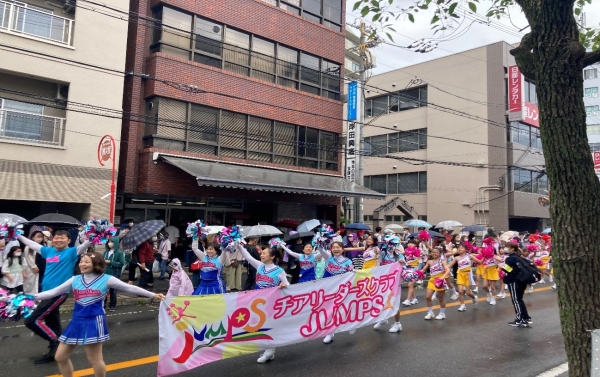
2022/11/22 01:40:00 2022年巽神社秋祭り矢柄
- 地元紹介
- 広報隊橋本
こんにちは。京都外国語大学グローバル観光学科2回生の橋本永爾です。
今回私は、地元大阪の巽という地区で開催されている地車(だんじり)祭り「巽神社秋祭り」に参加してきました。
さて、皆さんは地車(だんじり)と聞いたとき何を思い浮かべるでしょうか?ほとんどの人は岸和田の地車祭りを思い浮かべるでしょう。それもそのはず岸和田の地車は走りながら曲がったり坂を上ったりと迫力満点で、また全国区のメディアにもよく取り上げられているため、皆さんが知っているのだろうと私は推測します。ただ、今回私が紹介する地車祭りは岸和田の地車とは全く違う、ゆっくりと移動する地車です。
私が参加した今回の地車について深堀りする前に、まず地車(だんじり)とは何ぞやということをおさらいしましょう。地車とは、唐破風の大屋根と小屋根の二段の屋根と、動くためのタイヤの役割であるコマが四つの山車(だし)のことを指し、だんじりという名称は主に関西地区で使われています。
地車にはその地域ごとに歴史があり例えば、岸和田の地車は、京都伏見稲荷を城内三の丸に勧請し、米や麦、豆、あわやひえなどの5つの穀物がたくさん取れるように(五穀豊穣)祈願し、行った稲荷祭が岸和田のだんじりの始まりと伝えられています。
ただ、私の地元の地車の歴史は、地元のおっちゃんに聞いてみましたが、「わからん」と言われてしまったので、調べてみました。私の地元「巽」では、元々明治の初めごろまで相撲や獅子舞が祭りの行事でありました。その後、平野の地車に魅せられて、村内でお金を出し合って買ったという話が「大阪のだんじり」(大阪地車研究会)にでています(福助旅 2001)。
両親から聞いたところでは、地車には大きく分けて二種類あります。「上地車」と「下地車」です。岸和田の地車は「下地車」、私の地元の地車は「上地車」に分類されています。この違いは大和川という川で主に分断されているようですが、例外も多くまたどちらの要素も兼ね備えた「折衷地車」というのも存在しているようです。
ここからは、私が参加してきた巽神社秋祭りについてお話させていただきます。私は、この地車祭りには幼少のころから参加していて、現在では青年団という祭りを運営する団体に所属させていただいています。そして、今回は祭囃子の大太鼓を叩かせていただきました。
私の地元の秋祭りでは、四種類の地車:矢柄・伊賀々・西足代・四條と布団太鼓の大地の計五種類の山車が巽神社という地元の神社へ挨拶、そして豊作への感謝を伝えにのろのろと、しかし力強く地車を押して向かい、深々とお辞儀をします。今回はここまでです。読んでいただいたすべての人に感謝。
参考文献
『「だんじり」の基本をおさらい!今さら聞けないアレコレや、由来・魅力も』
https://omatsurijapan.com/blog/danjiri-basic-info/
福助旅 2001 「大阪と祭(6)巽神社秋祭り」『市政研究』(133):56―59
Hello! I am Eiji Hashimoto and I am a student at the Department of Global Tourism at KUFS. For this blog post, I am going to write about when I took part in the Tatsumi Shrine Autumn Festival, a danjiri festival held in my home district of Tatsumi, Osaka.
What do you think when you hear the word danjiri? Most people will think about the Kishiwada Danjiri Festival. I assume that everyone is familiar with Kishiwada's festival because the danjiri are so powerful, turning and climbing hills as they run, and because they are often featured in the national media.
However, here I am going to introduce the slower danjiri of the Tatsumi Shrine.
Before delving deeper into this year's event, in which I participated, let's first review what a danjiri is. A danjiri is a type of dashi or festival float with a two-tiered bow-shaped gabled roof known as a karahafu, that sits on four wheels.
Each region has its own version of this festival. For example, the danjiri in Kishiwada is said to have started as a festival held to pray to the kami Inari for a good harvest of the five grains of rice, wheat, beans, millet and rye.
However, I don't know the history of my local danjiri festival. I did ask a local man about it, but he told me he didn't know. So I did some library research. A source said that originally sumo wrestling and lion dances were festival events until around the beginning of the Meiji period. Later, the village was attracted to the jiguruma of Hirano, and according to the story told in "Osaka's Danjiri" (edited by Osaka Jiguruma Kenkyukai), the villagers pooled their money to buy a jiguruma (福助旅 2001).
According to my parents, there are two main types of danjiri: Kami danjiri and Shimo danjiri. Kishiwada is categorized as Shimo danjiri, and my local festival is classified as Kami danjiri. This difference seems to be what side of the Yamato River the festival is held, but there are many exceptions, and it seems that there are also some festivals that have both elements.
I have been taking part in the Tatsumi Shrine Autumn Festival since I was a child, and now I belong to a youth organization that helps run the festival called Seinendan. This time I had the opportunity to play the big drum and contribute to the matsuribayasi - the music of the festival.
At the Tatsumi Shrine Autumn Festival, five types of floats - Yagara, Igaga, Nishiashiajiro, Shijo, and Oji - head slowly but deliberately towards the Tatsumi Shrine to express thanks for a good harvest. Thanks to everyone who read this!
-
 祭囃子の大太鼓
-
 集まる地車:矢柄・西足代・伊賀々
-
 巽神社へお辞儀する地車
2022/09/19 22:00:00 北陸の花火大会 Fireworks in Hokuriku
- 地元紹介
- 広報隊伊藤
こんにちは。グローバル観光学科3次生の伊藤珠月です。夏が終わりに近づき、だんだん秋に近づいてきましたね。皆様はこの夏休みをどう過ごしたでしょうか。私は、地元石川に帰省し、楽しい日々を送りました。今回は、地元で行われた花火「三国花火」・「北國花火」についてそれぞれ紹介したいと思います。新型コロナウィルスの影響によって花火大会を開催する事ができなかったため、3年ぶりの開催となり、多くの人が花火大会を楽しみにしていたのではないでしょうか。今年はあらゆる場所で花火大会がおこなわれましたが、皆様も花火大会に足を運んだのではないでしょうか。私が今回訪れた「三国花火 」・「北國花火」はどちらも写真や言葉では伝えきれないほどの良さでした。
まず「三国花火」について紹介します。毎年8月11日に福井県坂井市三国町の日本海に面したサンセットビーチで「三国花火大会」が開催されています。新型コロナウィルスの影響により、三年ぶりの開催となった三国花火大会は、1981年より花火大会が復活し、今回で40回目となりました。また、三国花火は、水上花火として有名です。三国花火大会は例年20万人を超える北陸最大級の花火大会です。19時30分から約1時間に1万発もの花火が次々に打ち上げられ、北陸の真夏の夜空が美しく飾られました。三国花火大会名物の「水中花火」は、3隻の水中花火船から火をつけた花火玉を花火師が直接海へ投げ込んで。水の中から花火が打ちあがります。水中花火の美しさに皆さん驚くと思います。三国花火大会の最大の花火は、20号玉で、上がる高さは500m弱で開く直径は約500mほどで、頭上に火の粉が落ちてくるかと思うほどの迫力です。写真の花火は、水上花火で打ち上げられた花火です。私は、海の目の前で見たので今までで見た花火の中で一番迫力がありました。皆さんも機会がありましたら、ぜひ三国花火に行ってみてください。
次に、「北國花火」について紹介します。金沢市中心部で唯一の花火大会であり、3年ぶりに大豆田本町の犀川緑地で北國花火大会が行われました。北國花火大会は石川県の地方紙である北國新聞が主催とする花火大会です。北國花火大会は、北陸中日新聞が主催していた「全国選抜北陸中日花火大会」も行われていましたが、2016年の第56回全国選抜北陸中日花火大会をもって終了したため、金沢市の中心部で行われる唯一の花火大会になりました。北國花火では、スターマインや仕掛け花火、菊や牡丹など多彩な花火1万2000発が打ち上げられました。中でも、フィナーレを飾る1000連発の乱れ打ちやスターマインの大瀑布は迫力満点で、あっという間の1時間でした。様々な種類の花火が打ち上げられましたが、どの花火もとても綺麗でした。多くの屋台には人が集まっており、花火とともに夏の風物詩を3年ぶりに感じることができました。
今回は、私の地元である北陸の花火大会について紹介しました。新型コロナウィルスの影響により、開催することができなかった花火大会でしたが、やはり夏の風物詩としてかかせない存在だと改めて感じました。北陸の花火を知らない人に、知っていただけたらなと思います。機会がありましたら、ぜひ行ってみてください!
Hello. My name is Mizuki Ito, a third-year student in the Department of Global Tourism.
Summer is almost over. I can feel that it is ending. How did you all spend your summer vacation? I went back to my home in Ishikawa and I had such a fun time.
I will introduce about fireworks display in my hometown such as “Mikuni fireworks” and “Hokkoku fireworks." I would like to introduce our local firework displays – namely the Mikuni Fireworks and the Hokkoku Fireworks. This was the first time in three years that these festivals were held due to the pandemic, and I am sure that many people were looking forward to these events. This year, fireworks displays were held everywhere, and I am sure that many of you saw them. The displays I saw were so good that pictures and words cannot do them justice (but I’ll try!).
First, I will introduce the Mikuni event. The Mikuni fireworks festival is held in Mikuni, a town in Sakai, Fukui Prefecture, on August 11th each year. The firework display began in 1981 and this year it was the fortieth time the event has been held.
Mikuni Hanabi is also famous for water fireworks. This is one of the largest fireworks festivals in Hokuriku, attracting over 200,000 visitors every year. 10,000 fireworks were launched one after another for about an hour starting at 19:30, beautifully decorating the night sky in the middle of summer. The Mikuni Fireworks Festival is famous for its underwater fireworks, in which pyrotechnicians from three underwater platforms throw lit fireworks directly into the sea. Some fireworks are shot out of the water. You would be surprised at their beauty. The largest firework of the festival is the so-called No. 20 ball, which rises to a height of less than 500 meters and opens to a diameter of about 500 meters. It is so powerful that you would think that sparks of fire are falling over your head. The fireworks in the photo were launched over the water. I saw them right in front of the sea, so they were the most powerful fireworks I have ever seen. If you have a chance, you simply must go!
Next, I would like to introduce Hokkoku Hanabi. The Hokkoku Fireworks Festival is the only fireworks display held in central Kanazawa, and for the first time in three years, the event was held at the Saigawa greenbelt in the town of Soyota Honmachi. The Hokkoku Fireworks Festival is sponsored by the Hokkoku Shimbun, a local newspaper in Ishikawa Prefecture. At the Hokkoku Hanabi, 12,000 fireworks were launched, including starmines, trap fireworks, chrysanthemums, peonies, and more. Among them, the finale of 1,000 consecutive random launches and the big waterfall of starmine were so powerful that it felt like it was all over in a flash, despite the event being one hour long. There were various types of fireworks, all of which were very beautiful. Many food stalls were crowded with people, and together with the fireworks, we were able to experience a traditional Hokuriku summer for the first time in three years.
This time, I introduced the summer fireworks in my hometown of Hokuriku. Although we lost three years of fireworks due to the pandemic, I really feel it is an indispensable part of summer. If you get a chance, please go!


2022/07/29 18:50:00 神戸と京都の違い
- 地元紹介
- 広報隊リー
はじめまして、グローバル観光学科1年次生のフェン・ティ・リーです。2022年4月の入学式から、外大の大学生としてもうそろそろ3か月が経ちました。一年次生のみなさんはもう大学生の生活に慣れてきましたか?みなさんは日本の色々な所から、外大に来て、勉強していますよね。家族やふるさとから離れて、京都で一人暮らしを過ごしている方がたくさんいると思います。実は私も神戸市から京都に引っ越してきました。偶然にも同じ広報隊メンバーの仲間の河原のどかちゃんも神戸から引っ越してきました。今回は私たちが京都に来てから、驚いたことや気がづいたことをみなさんにお伝えしたいと思います。
私は日本に来てから、ずっと神戸に住んでいました。神戸のハーバーランドや元町南京町などの観光地に行ったとき、かっこよくて、オシャレな服を着る若い人をたくさん見かけました。街にあまり着物を着る人が見られませんでした。そのため、着物は特別な日にしか着られないと思いました。反対に、京都では日常にも着物を着て、出かける人がたくさんいます。清水寺や東映太秦映画村に行ったとき、多くの若い人が着物を着ているのを見た時、驚きました。
着るものだけではなく、観光地も大きく違います。神戸には欧米風の 北野異人館や、中国風の南京町などの外国の文化のスポットがたくさんあります。一方で、京都には祇園や、伏見稲荷大社、嵐山などの日本文化があふれる観光地があります。京都は一番寺が多いところではないですが、なにかと、日本の伝統文化や宗教的なイメージを感じさせています。
私は一年半ぐらい神戸に住みましたが、京都に引っ越してから、より「日本にいる」という気持ちが強くなりました。神戸と京都にはどちらにも外国人がたくさん住んでいますが、私は神戸が外国の文化に影響されて、京都は外国人にマナーや文化などを影響させると感じています。
神戸と京都はどちらも特別な魅力があると思います。これから、京都の大学で4年間学習する中で、日本の各地に行って、文化の違いを見出すことを楽しみにしています。以上、私が感じることです。みなさんはどう思いますか?みなさんと一緒に共有出来れば、嬉しいです。これからもよろしくお願いします。
Hi everyone. My name is Huynh Thi Ly and I am a freshman majoring in Global Tourism. Counting from the Admisson Ceremony for new students held in April 2022, we have now spent almost 3 months as students at KUFS! Are you getting used to university life? You guys may have come from many different parts of Japan to study here at KUFS. I am sure that a lot of people are living far away from their families and some are having to live alone for the first time. I also moved from Kobe to Kyoto. Coincidentally, Nodoka Kawahara - a fellow member of our DGT Student Reporter Team - also moved here from Kobe. For my blog submission I would like to tell you what has surprised me and what I have realized since I came to Kyoto.
I have lived in Kobe ever since I came to Japan. When I first set foot in new places such as Kobe Harborland and Motomachi Nankinmachi, I saw a lot of young people who were wearing cool and fashionable clothes. I didn`t see many people wearing kimono on the street. So I thought that kimono could only be worn on special occasions. In Kyoto, there are a lot of people who wear kimono every day. When I visited Kiyomizu Temple and Toei Kyoto Studio Park, I was surprised to see many young people wearing kimono.
Not only there was a difference in what they wear, but also where they choose to hang out. There are a lot of foreign culture spots in Kobe, such as the Western style architecture of the Kitano Ijinkan and Chinese-style of Nankinmachi. On the other hand, Kyoto has neighborhoods brimming with Japanese culture such as Gion, Fushimi Inari Taisha Shrine and Arashiyama. Kyoto is not just place with a lot of temples, it also makes people feel the traditional culture and religious history of Japan. I lived in Kobe for about 18 months but this feeling of “I live in Japan” has started to become stronger since I moved to Kyoto. There are a lot of non-Japanese living and working in Kobe and Kyoto. I feel Kobe has been influenced by non-Japanese cultures whereas Kyoto exerts its influence on non-Japanese through its manners and culture.
I think Kobe and Kyoto both have a special charm. I am looking forward to discovering cultural differences while studying at KUFS and living in Kyoto for the next 4 years. I would be so happy if you would also share your thoughts about this topic.
-
 神戸のメリケンパーク、ハーバーランド
-
 清水寺
-
 東映太秦映画村


