


2024/03/16 01:10:00 クック諸島への旅
 観光情報
 広報隊山下
みなさん、こんにちは。グローバル観光学科2年次生の山下空真です。昨年11月に広報隊に入りました。記念すべき私の初回の投稿は、2月20日から3月1日(移動日含む)まで母や弟と一緒に行ったクック諸島について紹介します。
「クック諸島」は南太平洋の真ん中、日付変更線の(東側)赤道を挟んでちょうどハワイの真下にあります。現在2月の季節は真夏、時差はハワイと同じ−19時間、そのため、2月21日を2回過ごす事ができましたが、うるう年の2月29日は6時間だけ過ごしました。首都はアヴァルアで、1周32キロの島です。公共交通機関はバスがあります。時計回りと反時計のバスがあります。約1時間で1周できます。驚くことに、信号はありません。
私がクック諸島でしてみたかったことのひとつに、海を背景に飛行機が着陸するスポットで写真を撮影することがありました。しかし、飛行機の便が少なく上手くその時間に合わせられないので、海を背景に飛行機の離陸が見たい方は事前にフライトスケジュールを確認する必要があります。2枚目の写真は、クック諸島に着陸したニュージーランド航空便の写真です。残念ながら、海を背景に飛行機が着陸する写真を撮ることはできませんでしたが、着陸の写真が撮れて私は満足しています。
次に、海のアクティビティ体験で印象に残ったことをご紹介します。一つは「ナイトサップ」です。サップはStand Up Paddle Boardの略で、ボードを使っておこなうマリンスポーツの一種です。今回はナイトサップという名のとおり、夜におこないました。夜でも安心でとても綺麗なLEDライト付きのサップを漕ぎます。途中、無人島(コロミリ・モツ)でファイヤーダンスショーを見ました。夕日を見ながら、サップを漕ぐことができました。サンゴ礁の海でするので初心者でも簡単にできると思います。二つ目は、ラグーンクルーズです。3時間半のツアーです。これは昼間に地元のスタッフが歌を歌いながら、ウクレレと木でできたドラムを叩き私たちを楽しませてくれます。乗ってから約20分後、シュノーケリングを楽しむ事ができます。まるで水族館の中にいるようで、とても綺麗です。私は泳ぐことが苦手なので、写真を撮りました。それから小島(現地語でモツ)に上陸をしてご飯を食べます。クック諸島のご飯は、マヒマヒのステーキや焼きバナナ、トロピカルフルーツがあります。マヒマヒは日本語でシイラです。(イエローフィッシュ)その後は、ココナッツショーや、ヤシの木に命綱無しで登るショーは迫力がありました。ラグーンクルーズやサップは、現地の人も多く参加していました。そのほかの参加者については、オーストラリア人やニュージーランド人が8割でした。アジアからの訪問者は、私たちだけでした。
クック諸島は、中1の時に行った初めての国で、今回が2回目の訪問です。ニュージーランド航空に乗って気づいたことがあります。機内食の食器がSDGsを意識したものに変わっていました。7年前に乗った時は、プラスチックの食器やスプーン、フォークでした。しかし、今回乗った時は、木でできた食器やスプーン、フォークでした。そして、環境配慮されていて、使いやすかったです。英語は上手くありませんが、現地の人とのコミュニケーションは楽しかったです。クック諸島は、あまり日本人に知られていませんが、多くの人に知ってもらいたいです。読んで頂きありがとうございました。
Hey everyone, I'm Sorama Yamashita, a sophomore in the Global Tourism department. I joined the PR team last November. For my first post, I'm going to share about my trip to the Cook Islands with my mother and younger brother, which we took from February 20th to March 1st, including travel days.
The Cook Islands are located smack dab in the middle of the South Pacific Ocean, right below Hawaii, across the equator and to the east of the International Date Line. It's the peak of summer there in February, with a time difference of minus 19 hours from Hawaii. Because of this time difference, we got to experience February 21st twice, but only spent 6 hours on February 29th, a leap day. The capital is Avarua, situated on an island that's 32 kilometers in circumference. There's a bus service for public transportation, with buses running clockwise and anticlockwise, making a full loop in about an hour. Interestingly, there are no traffic lights.
One thing I really wanted to do in the Cook Islands was to take photos with the ocean in the background as planes landed. However, there aren't many flights, and it's hard to time it right, so if you want to see planes take off against the backdrop of the sea, you need to check the flight schedule in advance. The second photo I took was of a New Zealand Airlines flight landing in the Cook Islands. Unfortunately, I couldn't get a shot of a plane landing with the ocean in the background, but I'm happy I managed to capture its landing.
Now, let me share some memorable sea activities. One was "night SUP." SUP (Stand Up Paddleboarding) is a marine sport where you stand on a board and paddle. This time, as the name suggests, we did it at night. We paddled on SUP boards equipped with beautiful LED lights, which made it safe even at night. We stopped at an uninhabited island (Koromiri Motu) to watch a fire dance show. Paddling while watching the sunset was possible. Since it's done over a coral reef sea, it's easy even for beginners.
The second activity was a lagoon cruise. This tour lasts about three and a half hours. During the day, local staff entertain us by singing and playing the ukulele and wooden drums. About 20 minutes after setting off, you can enjoy snorkeling. It's like being inside an aquarium, so beautiful. Since I'm not good at swimming, I took photos instead.
Then, we landed on a small island - Motu in the local language - and had a meal. Cook Islands cuisine includes mahi-mahi steak, grilled banana, and tropical fruits. Mahi-mahi is known as shiira in Japanese (yellowfish).
The coconut show and the show of climbing palm trees without safety lines were thrilling. Both the lagoon cruise and SUP had many locals participating. As for the other participants, about 80% were Australians and New Zealanders. We were the only visitors from Asia.
The Cook Islands were the first country I visited when I was in the seventh grade, and this trip marks my second visit. One thing I noticed while flying with New Zealand Airlines was a shift towards sustainability, especially with the in-flight meal utensils. Seven years ago, the utensils were made of plastic, including the plates, spoons, and forks. However, this time, they were made of wood, which was not only environmentally friendly but also easy to use. Although my English isn't perfect, communicating with the locals was fun. The Cook Islands might not be well-known among Japanese people, but I hope more people will learn about them. Thank you for reading my report!
-
 クック諸島 ラロトンガ国際空港 空の玄関口!!
-
 クック諸島 ラロトンガ島に着陸したニュージーランド航空!!
-
 軽快なウクレレと歌で楽しいラグーンクルーズ(写真撮影の許可はいただいています)
2024/02/16 21:10:00 いざ!はじめての一人旅行へ
- 学生生活
- 広報隊岩本
こんにちは!グローバル観光学科2年次生の岩本茉子です。寒い日が続いていますが、梅の花も姿を見せ始め、春が少しずつ近づいてくる季節となってきましたね。さて、今回は昨年の11月に私が初めて一人旅行へ行った時のお話をしようと思います。
記念すべき第1回目の一人旅行の舞台は島根県。真夜中に京都を出発し、夜行バスに揺られながら島根県松江市に到着したのは午前5時30分ごろでした。まだ薄暗くお店も空いていない時間だったので、24時間営業のファミレスであったかいご飯を食べほっとひと息。付箋だらけのガイドブックと見つめ合いながら、計画をたてどこに行こうかと想像するだけでワクワク、ドキドキのひとときでした。
準備も整い、いざまち歩き出発!この日は松江城や小泉八雲記念館、興雲閣など松江市を中心にぶらり歩きをしました。松江城では実際に中に入ることができました。階段は狭くて、急な造りになっていたり、天守内には鉄砲や矢を放つための狭間や石などで攻撃するための石落としがあったりなど、戦う仕掛けも見ることができ面白かったです。
小泉八雲記念館では、「怪談」などで有名な小泉八雲さん(本名:ラフカディオ・ハーン)の生涯について学ぶことができました。私はここへ訪れるまで彼のことを知りませんでした。しかし、記念館の展示を通して彼がどのような人生を歩んできたのかを知ることができました。英訳された古事記などの日本文化と出会い、日本に興味をもち、魅せられていったことから、彼は日本を純粋に愛していたのだな、と私は感じました。また、夕方には島根県立美術館の近くで綺麗な夕焼けを見ることもできました。一日歩きまわった後にみる景色は、なんとも言えないほど心に染み渡りました。
次の日はばたでん(一畑電車)に乗り出雲市へ。今回の旅行で一番楽しみにしていた出雲大社へ参拝に行きました。鳥居をくぐると神社では珍しい下り参道を通り、拝殿まで歩きました。途中にはかわいらしいウサギの石像に会うことも。これは神話「 因幡の白兎 」がもとになった「ご慈愛の御神像」や他にも66羽のウサギの石像があるそうです。それぞれ表情や動きも異なるので、お気に入りのウサギを見つけるのも楽しいかもしれませんね。
そして、いよいよ参拝へ。ここでは二礼四拍手一礼をし参拝をします。御本殿の周辺には
様々な神様が祀られている社があるので、参拝をしながらまわりました。出雲大社に行ってみて、行くまでの道中は賑わっていたのに対し、境内の中はどこか穏やかな雰囲気で不思議な感じがしました。いつか訪れてみたかった所の一つだったので、念願が叶いよかったです。
出雲大社を後にし、「出雲そばを食べに行こう!」と行きたかったお店に行くと、なんと
閉店の文字が‥。もうすぐ神迎神事がありお休みとのことでした。とても残念でしたが、
ステキな発見もありました。それは「ぜんざい」です。普段はぜんざいだけを食べていた
のですが、お店で出されたぜんざいには塩昆布がついていました。交互に食べるとその相
性のよさに一人でずっと感動していました。皆さんもぜひ、試してみてください!
今回は私の一人旅行についてのお話でした。まだまだ書ききれていないこともあるのです
が、とにかく「行ってみてよかった!」というのが正直な気持ちです。初めて一人で京都
を飛び出して、知らないまちへ行ったので不安もありました。でも、その分綺麗な景色や美味しいもの、はじめての発見に出会うことができ、のんびり楽しむこともできました。これを機に、もっともっといろんな場所へ訪れて、いつか日本全国を旅してまわってみた
いなと思います!
参照サイト
1)出雲大社公式HP
Hello! My name is Mako Iwamoto, and I am a sophomore studying in the Department of Global Tourism. Today, I'm excited to share my experiences from my first solo trip last November.
My destination was Shimane Prefecture. I departed from Kyoto on a night bus and arrived in Matsue City at 5:30 a.m. Upon arrival, I grabbed breakfast and relaxed at a 24-hour family restaurant since other places were still closed. There, I reviewed my plans, consulting a guidebook where I had marked my must-visit spots with sticky notes.
Anticipating the day ahead was thrilling. My exploration began in Matsue City, where I visited landmarks such as Matsue Castle, the Koizumi Yakumo Memorial Hall, and Kounkaku. At Matsue Castle, I had the opportunity to go inside and explore ancient defensive tactics, such as the Hazama, a small gap designed for shooting guns and arrows at enemies from within the castle's walls. At the Koizumi Yakumo Memorial Hall, I learned about the life of Yakumo Koizumi (real name: Lafcadio Hearn), renowned for his collection of ghost stories "Kaidan." Before my visit, I knew nothing about him, but I left with a deep appreciation for his profound love for Japan and its culture.
Later, a beautiful sunset near the Shimane Art Museum offered a serene end to a day filled with walking and sightseeing. The following day, I traveled to Izumo City by the Ichibata Electric Railway, affectionately known as Bataden. My primary goal was visiting Izumo Taisha, a highlight of my trip. The shrine's approach was lined with charming stone rabbit statues, inspired by the mythical "Inabanoshirousagi," each with a unique expression and pose, inviting visitors to find their favorite. The shrine visitation rituals at Izumo Taisha slightly differ from those at other shrines; one bows twice, claps hands four times, and ends with another bow, a unique aspect to be mindful of. Fulfilling my long-held wish to visit this shrine was a dream come true.
Unfortunately, the restaurant where I planned to eat Izumo soba was closed, but I'm determined to try again. However, the day wasn't without its delights; I discovered a wonderful pairing of zenzai and salted kelp at a café. The combination was unexpectedly delicious, and I highly recommend trying it.
Reflecting on my solo journey, there's so much more I could share, but the essence is, "I'm glad I went!" Initially, venturing out from Kyoto on my own was daunting, but the experience enriched me with beautiful landscapes, delectable cuisine, and new discoveries. This trip has inspired me to explore more places and, eventually, travel across all of Japan!
-
 街中でみつけた小泉八雲さんの後ろ姿
-
 夕焼け。とても綺麗な景色でした
-
 出雲大社のウサギの石像。 たくさんみつけた中のお気に入りのウサギ
2024/01/26 09:30:00 Exploring Hometowns through Virtual Reality: A Student's Journey
- 授業関係
- Tomomi Hadada
Exploring Hometowns through Virtual Reality: A Student's Journey
Hello everyone, I'm Tomomi Hanada, a third-year student in the Global Tourism Department. This past spring semester, I embarked on an intriguing project titled "My Hometown Project," under Professor Eric Hawkinson's course. The project involved creating a Virtual Reality (VR) tour, utilizing 360-degree photography and audio recording. This wasn't just a technical exercise; it became a journey into the heart of our roots.
The project allowed us to delve deeper into our hometowns, exploring their nuances and hidden gems. The beauty of this VR tour was its ability to transport us to different places, from well-known spots to lesser-known locales, each narrated with personal stories. It made the experience more relatable and engaging compared to traditional tours.
Building on this in the fall semester, we applied our skills to design tours in six locations in Kyoto: Arashiyama, Amanohashidate, Ine, Hozu, Miyama, and Wazuka. Students were divided into groups of ten, each tackling a different area. I was part of the Hozu group. Despite never having visited Hozu, thorough research was necessary. Planning the tour felt like actual travel, considering transportation and realistic itineraries. This experience opened my eyes to unconventional Kyoto tourism, where I could immerse myself in nature and discover local specialties.
For our presentation, we used MAICO to project 360-degree photographs on a large screen, guiding our audience through the tour in English. The addition of videos for transportation segments added a sense of realism and immersion. It was a revelation how many worthwhile places exist that we often overlook. This project ignited a desire in me to explore every corner of Kyoto.
The group work, initially challenging due to the large number of participants and lack of cohesion, eventually came together through persistent communication, role delegation, and discussion. The sense of accomplishment after completing the tour was immense, proportional to the effort we invested.
This experience significantly enhanced my communication and presentation skills. It was a testament to how collaborative efforts and technology can bring the stories of our hometowns to life, transcending language and geographical barriers.
こんにちは。グローバル観学科3年次生の花田朋実です。
私はエリック・ハーキンソン教授による春学期の英語の必修授業で、「私の故郷プロジェクト」に取り組みVRツアーを作りました。VRツアーには、360度写真や録音機能を使いました。
このプロジェクトは私にとって、自分の故郷をもっと深く知るきっかけとなりました。また、クラスメイトの故郷も簡単に訪れることができます。有名なところからマイナーなところまで個人の経験話つきで案内してくれるので、ストーリー性があり、普通のツアーよりも親しみやすいように感じました。
また秋学期には春学期に学んだ技術を使い、京都の嵐山、天橋立、伊根、保津、美山、和束の6箇所のうちから10人ずつの班に分かれてツアーを企画しました。私は保津のグループでしたが、実際には訪れたことがなく、細かい調査が必要でした。実際に足を運ぶときと同じ様に交通手段を用いたり、無理のない移動計画を練ったりするのは大変でしたが、王道ではない京都の観光を通して、自然と一体化する体験が出来たり、地域の特産品を知ることが出来たりしました。
発表ではMAICOを利用し、大スクリーンに360度の写真を映し出して英語で案内するツアーを行いました。訪れるスポットだけではなく、移動のための動画も用意してくださっていて、臨場感に溢れるリアルな体験が出来ました。
この授業を通して実は知らないだけで、訪れる価値のある場所がたくさんあると分かり、もっと京都の端まで訪れてみたいと思う様になりました。このグループでの活動は人数も多く、最初はまとまりがなく中々思う様に進みませんでしたが、声をかけ続け、役割を分担して、話し合いを重ねることで、ツアーが完成し、大変だった分、達成感が大きかったです。この経験を通してコミュニケーション力やプレゼンテーション力が向上しました。


2024/01/19 11:00:00 村山先生ご登壇!本日1月19日金曜日開催のイベント!!
- イベント
- GT Faculty
皆さん、こんにちは!
秋学期もいよいよ終盤ですね。期末テストやレポートでひと段落ついた皆さんに、イベントのお知らせです。
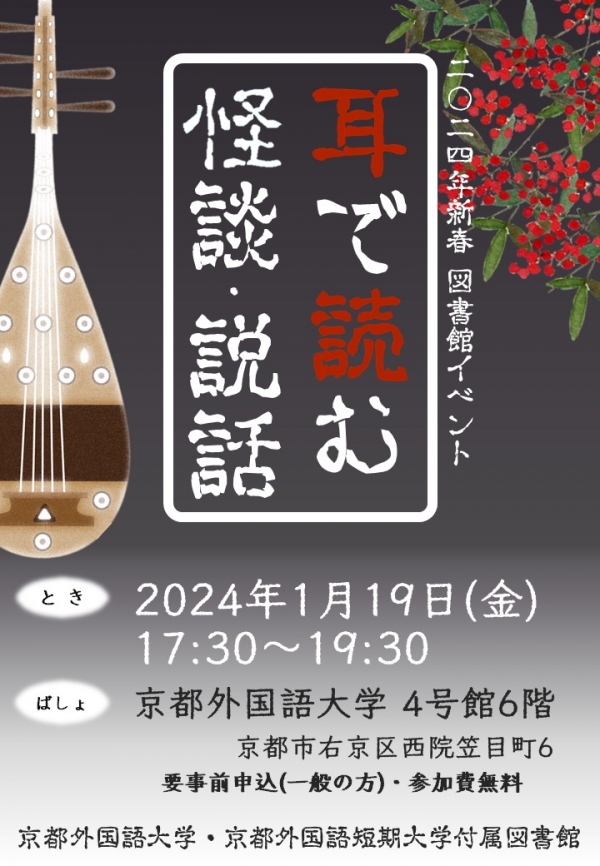
本日の夕方5時半から、4号館6Fにて付属図書館のイベントとして、小泉八雲(ラフカディオ・ハーン)の怪談を基にした創作『セツと耳なし法師の物語』、京都にある「みなとや子育飴本舗」が受け継ぐ説話『幽霊子育飴』の朗読イベントが開催されます!
案内人はグローバル観光学科副学科長の村山弘太郎先生!
お時間許す皆様はぜひご参加ください!!
日時:2024年1月19日(金) 17:30~19:30
場所:京都外国語大学 4号館6階
参加費無料
【一般参加の方のお申込はこちらから 】
秋学期もいよいよ終盤ですね。期末テストやレポートでひと段落ついた皆さんに、イベントのお知らせです。
本日の夕方5時半から、4号館6Fにて付属図書館のイベントとして、小泉八雲(ラフカディオ・ハーン)の怪談を基にした創作『セツと耳なし法師の物語』、京都にある「みなとや子育飴本舗」が受け継ぐ説話『幽霊子育飴』の朗読イベントが開催されます!
案内人はグローバル観光学科副学科長の村山弘太郎先生!
お時間許す皆様はぜひご参加ください!!
日時:2024年1月19日(金) 17:30~19:30
場所:京都外国語大学 4号館6階
参加費無料
【一般参加の方のお申込はこちらから 】
2024/01/12 22:50:00 「私は頑張る人が好きです」
- 学生生活
- 広報隊リー
皆さん、こんにちは。グローバル観光学科2年次生のフェン ティ リーです。このブログを書いているのは、2023年が終わり2024年が明けた時です。また一年が経ちました。
新年はバイト先で迎えました。「私は頑張る人が好きです」、それがバイト先での同僚に「どんな人が好きなの」と聞かれた時の私の答えでした。もちろん、その質問に答えるのは簡単ではなく、長い時間をかけて、色々な所へ行って、色々なものを見て、自分を見つめる過程が必要でした。
一年ぐらい前に誰かが私にこの質問をしたら、私は「才能のある人、良い人が好きです」というあいまいな答えをしたと思います。しかし、なぜ今私が才能のある人、良い人が好きだと答えず、頑張る人が好きだと答えたのでしょう。人それぞれから見て、才能のある人と良い人の概念が異なることが分かるようになったからです。人を判断するとき、ある人にとってはとても良い人と感じることもあれば、またある人にとっては良い人と感じないこともあるかもしれません。
一年生の時、私の友達は他人が自分をどう思うかをとても気にしていて、ドレスを着る勇気がないと言いました。女の子にとってドレスを着ることは自然なことでしょう。しかし一年後、彼女は学生向けのモデルプログラムに参加し、本番ではとても可愛いドレスを着て、ステージ上で素晴らしいパフォーマンスを披露しました。もちろん、彼女について何も知らず、彼女は思い切って勇気を出して、ステージに上がるために練習したことが分からない人が、彼女と他のプロのモデルと比べたら、彼女のパフォーマンスは素人だと思うのでしょう。しかし、彼女は自信がない自分からスタートして、チャレンジしました。努力してステージに上がったことを知っている私にとって、彼女はプロのモデルです。
私が気づいたのは才能のあるかどうかを判断するのに、その人の過程を見ないといけないということです。このように、去年、行ったことがある所やこれまで会った人たちの思い出を振り返ってみると、私は頑張っている姿にとても惹かれていることに気づきました。仕立屋さんが丁寧に手仕事で商品を作っている姿や、ウェイターさんが同時に3皿の料理を手際よくお客さんに提供している姿を見るのがとても好きです。そのお皿をみるとフラフラしているように見えましたが、落ち着いて自信に満ちた表情を見ると、落ちないように運ぶ練習をしてきたことが自分の中でなんとなく分かりました。
私はウェイターさんのワインの注ぎ方、ワインの名称を全部覚えていてすらすらと説明する様に惹かれます。そして、そのウェイターさんたちの中では最初の数日間、そのワインの名称について何も知らなかった人がいると思います。今、手際が良いのはきっと努力したプロセスの結果でしょう。そのプロセスはすべてぎこちないから、ゼロから、さらにマイナスから始まっているのでしょう。
人の頑張りを理解しようとすることで、より共感できるようになりました。研修中のスタッフがメニューの料理名を読み間違えたり、インターン生の従業員が支払いを間違えたりといった人々の間違いに同情しやすいと感じるようになりました。なぜなら、良くなるため、間違いは努力の過程の一部であり、徐々に改善されていくことを私は知っているからです。
この一年間で私は自分自身をより理解し、「どんな人が好きなの」といった質問に対して、自分がもっとも満足する答えを明確に答えることができました。それと、結果だけを見るのではなく、その人のこれまでのプロセスとストーリーも理解してから、判断するということを学べたことに感謝しています。私にとって、努力するということは偉い結果を得るためではなく、昨日より1%でも良くなろうとするということが分かりました。2024年の新年にあたり、皆さんに「失敗を恐れないでください」と伝えたいです。間違いは自分が成長するためのプロセスであると思うからです。
"I like people who strive to improve themselves." As we transition from the end of 2023 into the beginning of 2024, I'm writing this blog reflecting on another year gone by. I spent my New Year's Eve working at my part-time job. When a colleague asked me, "What kind of people do you like?", my response was, "I like people who strive to improve themselves in some way." This wasn't an easy question to answer, and it took a considerable amount of time, exploration, and self-reflection to come to this conclusion.
About a year ago, if someone had posed the same question, my answer might have been vague, something along the lines of, "I like talented or good people." However, my perspective has since evolved. I now find myself admiring people who are committed to self-improvement, rather than just those who are inherently talented or good. I've come to understand that the definitions of talent and goodness vary greatly among individuals.
In my freshman year, a friend of mine was overly concerned about others' opinions of her. She confessed that she didn't have the courage to wear a dress, something I considered normal for girls. But just a year later, she participated in a student modeling program. She confidently wore a beautiful dress and delivered an impressive performance on stage. To an outsider, she might have seemed amateurish compared to professional models. But knowing her journey of courageous practice and hard work, she appeared as professional as any model in my eyes.
What I've realized is that evaluating someone's talent is incomplete without considering their journey. Reflecting on my experiences and the people I've met, I've discovered an attraction to those who diligently work towards their goals. For instance, watching a tailor meticulously craft products, or a waiter expertly balancing and serving dishes, is captivating. Their skill and poise, even when the tasks seem precarious, are a testament to their dedication and growth from inexperience to expertise.
By acknowledging and understanding others' efforts, I've learned to empathize more deeply. I can sympathize with a new staff member who misreads a menu item or interns who make errors in billing. I recognize that these mistakes are part of the process of trying, learning, and gradually improving.
This past year has been invaluable in understanding myself better and articulating a response that truly resonates with me. I've learned to assess people not just by their achievements but by their journey and their stories. To me, trying isn't about achieving the greatest results or accomplishing grand feats; it's about striving to be just 1% better than yesterday.
As we welcome the year 2024, I hope you, too, will come to understand yourself better. Most importantly, never fear making mistakes. They are crucial steps in the ongoing process of trying and evolving into a better version of yourself.
-
 A passing foreign tourist and a street vendor trying to sell her goods.(ベトナムのホイアンにて)
-
 A message at the model event that I participated in.


