


CEP活動紹介
2019/10/31 20:20:00 コミュニティ・エンゲージメント・プログラム京都市内レポート
 CEP活動紹介
 Student Reporter
こんにちは。グローバル観光学科2年次生の岡村知果です。
私はこの夏、2019年度CE京都市内のプログラムに参加しました。このプログラムは、旅館インターンを通しての参与観察、禅寺研修、伝統産業体験という3つのコンテンツで構成されています。旅館の参与観察が2週間を占めています。参加人数は全員で8人でした。プログラム始まる前のワークショップでは、旅館の現状や京都の伝統工芸品を各々で調べ、インターン先の旅館の支配人のお話を聞く、といった事前準備をしていました。これらを踏まえて、いよいよプログラムのスタートです。
まずは、旅館の参与観察です。これは2人ペアで3軒の旅館を回っていきます。各旅館4~5日間働きます。旅館先は、綿善旅館、日昇館尚心亭、さと茂旅館です。どこの旅館も主に客室係を担当しました。しかしどの旅館も勤務時間が違えば、業務内容も違います。それに、インターンする前は、お客様と直接関わる機会が多いと考えていましたが、実際は裏作業ばかりでした。そんな中でも、布団敷や部屋チェックの際の一つ一つの行動にお客様に対するサービス精神が表れていました。参与観察の目的としては、旅館が衰退している理由、従業員の人間関係、仲居さんの一日の流れなどを調査することでした。結果的には旅館の問題点を発見し、私たちなりの解決方法を提示することができました。やはり、かつての旅館と現代の旅館は違うものであり今の時代でも旅館業を行うのであれば、その違いを認識すべきだと感じました。しかし、お客様を「もてなす」ということだけ今も昔も変わることなく、旅館の大きな特徴だと再認識できました。
旅館のインターンが終わると、禅寺研修が始まります。これは金閣寺近くの普門軒というお寺で行います。2泊3日で電子機器は基本使用禁止で、お化粧もできません。もちろんスマホも使えません。座禅を一日に何度も行い、精進料理と呼ばれるものを食べ、何かとルールが多く、慣れるのには時間がかかりました。ですが、驚くことに苦ではありませんでした。特に、和尚さんとのお話が面白くて内容は少し難しかったのですが、なかなか普段聞くことのできないお話でとても勉強になりました。とにかく和尚さん方の人柄が良く、居心地が良かったです。普段の私生活とは全く異なった環境で窮屈だろうと思っていましたが、今の便利すぎる生活を見直すことができ、コンビニ通いが日常の私には良い機会だったと思います。
そして最後の3日間で行うのが伝統産業の体験です。京都には多くの伝統工芸品があります。今回はその中の京漆器、型友禅、金彩友禅、京房紐、真田紐の5つを実際に体験しました。一つ一つ違った歴史、時代背景がありそれを今でも受け継がれていることにロマンを感じたと同時に、後継者不足などといった様々な問題を抱えていることを改めて実感しました。それを踏まえ、伝統工芸の技術とどのようなものを掛け合わせたらもっと気軽に人の手に流れていくのか、といった課題について各々で解決策を提示しました。実際に作ったものは、持ち帰ることができ良い思い出の品になります。
このようにCE京都市内のプログラムは進んでいきます。これだけのことをたった3週間で経験させてもらえたこと、とても感謝しています。正直、経験したすべてが満足いくものという訳ではなく、例えば、旅館のインターンではずっと清掃していたことや、お客様が少なく暇な時間を過ごしていたことなど、このプログラムに参加するにあたってこの時間は必要なのかと思ったこともありました。ですが、それも後に自分の糧になっていくのだと思います。だから、来年からは今年の反省点を補いもっと良いプログラムになると確信しているので、ぜひ参加ご検討ください。
-
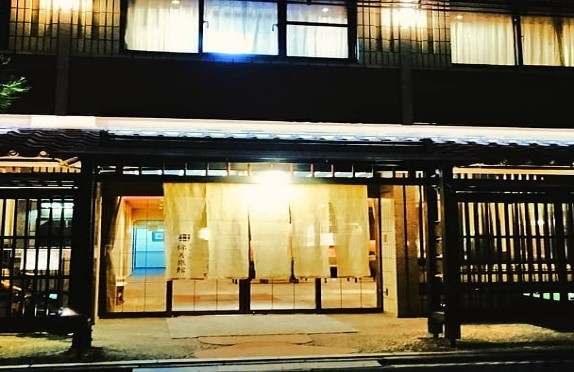 インターン先の一つの綿善旅館です。
-
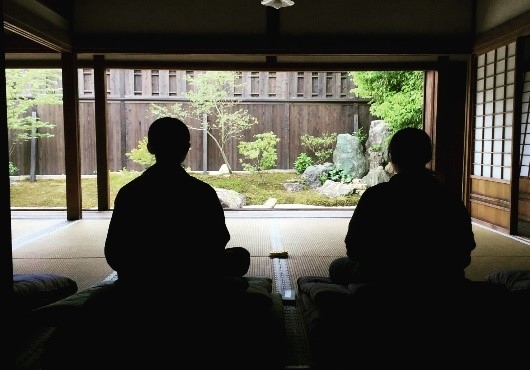 座禅をしているときの様子です。
-
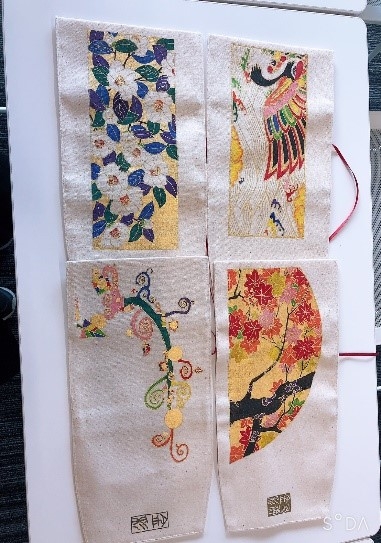 これは金彩友禅体験時に作ったブックカバーです。
2019/10/31 20:20:00 Community Engagement Program: Kyoto Report
- CEP活動紹介
- Student Reporter
Hello, my name is Chika Okamura. I am a second-year student majoring in Global Tourism Studies.
I have taken part in a CE program in Kyoto this summer. This internship program consists of a participant observation of a Japanese-style inn, training at a Zen temple, and studying the traditional industry. The participant observation takes up to two weeks to complete. The number of participants is 8. In a workshop before the program, we made preparations such as searching about the current situation of Japanese-style inns and traditional crafts in Kyoto. This is what the program will be based on.
First, we had the participant observation of a Japanese-style inn. I made trips around three inns with my partner. We worked at “Watazen(綿善)”, “Nishokan-Shosintei(日昇館尚心亭)”, and “Satomo(さと茂)”, and the period lasts 4~5 days for each inn. We were in charge of being the room clerk, albeit working time and business outline were different at each inn. In addition, we thought a room clerk usually takes care of customers, but we mostly worked behind the scenes. Yet, it appeared that the spirit of service to customers were found in all those backroom tasks such as checking rooms and setting up the futon. The purpose of the participant observation was to search the reasons for the declining of Japanese-style inns, relationships in the workshop, and business outlines of room clerk. Finally, we discovered the problem, and was able to present the solution. When we work in a Japanese style inn, it is important to entertain guests. This point has not changed since the old days.
Next, we had training at the Zen temple. This was done at the Fumonken (普門軒) near the Kinkaku temple(金閣寺) for two nights. We were not allowed to use electronics or put on makeup. In the temple, we practiced “zazen” (meditation) many times a day, ate a vegetarian diet, went to bed early, and got up early. In addition, there were many rules, so it took time for me to get used to them, albeit it didn’t feel painful at all. I was interested in the chief priest’s conversation. Although the content was difficult, I have learned various things from the conversation. Besides, there were many kind people in this temple, and I felt comfortable. I thought the life in the temple would be uncomfortable because of its different environment from the everyday life. However, I think this training has been a good opportunity for someone like me who goes to a convenience store a lot.
Finally, we studied about the traditional industry. They had many traditional crafts. In this program, we were able to experience “Kyo- lacquerware (京漆器)”, “Yuzen dyeing with patterns(型友禅)”, “gold leaf Yuzen dyeing(金彩友禅)”, “Kyo-tassel strings(京房紐)”, and “Sanada strings (真田紐)”. There were histories and historical contexts for each craft. That is why I thought that there was some sort of romantic sprit of inheriting tradition. However, at the same time, I knew the traditional industry had some problems, which we were able to suggest solutions to. In addition, we got to bring back the crafts that we made; they became our mementoes.
In this way, we made progress through the program. I appreciated being able to experience so many things in these three weeks. Although the things that I experienced were not altogether good, I think they will become steppingstones for the future. Moreover, I am certain that this program will be better in the next year, so please consider participating in this CEP Kyoto program.
-
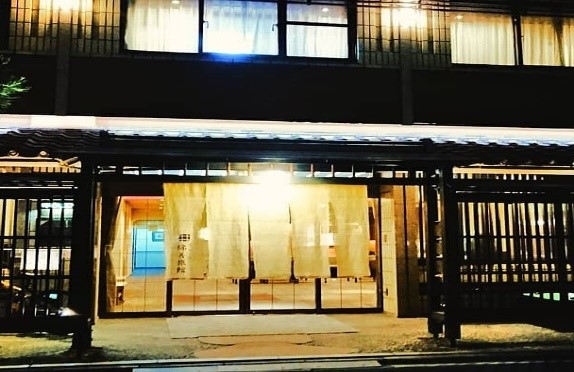 The Japanese-style Inn “Watazen(綿善)”
-
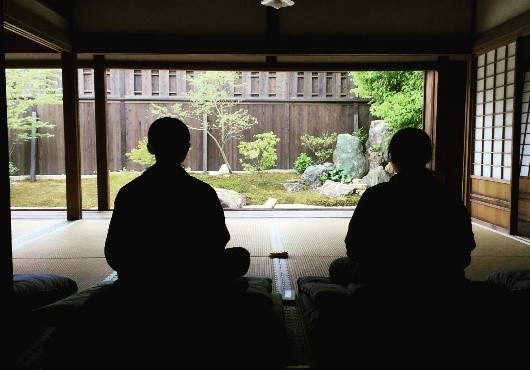 We practiced "zazen."
-
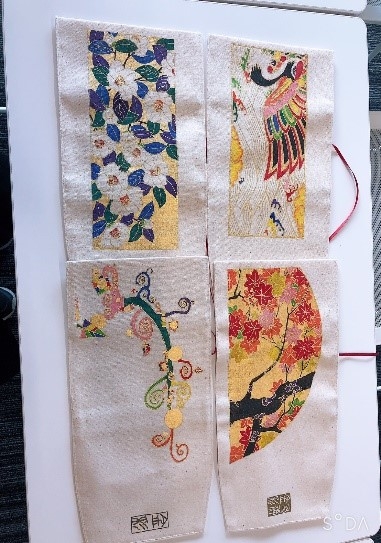 This is the book cover we made using the "Yuzen" with gold leaf.
2019/10/28 08:40:00 コミュニティ・エンゲージメント・プログラム京丹後レポート
- CEP活動紹介
- Student Reporter
こんにちは!グローバル観光学科2年次生の下田春奈です。先日、この夏に国内の城崎温泉、渋・湯田中温泉、京都市内、京丹後の各コミュニティ・エンゲージメント・プログラムに参加したグローバル観光学科生による報告会がおこなわれました。今日から、3回のシリーズでその一部プログラムの現地レポートをお届けします。今日はまず最初に出発した京丹後からお送りします。
私たちは、8月4日から8月30日の期間、京丹後で活動しました。男子3名女子12名の計15名で参加しました。京丹後は京都北部に位置する日本海に面した自然豊かな場所でした。アットホームで温かい地域の人々と新鮮で美味しい食べ物がたくさんありました。
滞在期間の前半は夕日ヶ浦地域で、後半は琴引浜地域で活動しました。前半は夕日ヶ浦の4つの旅館にそれぞれ分かれて、旅館の業務を体験させていただきました。後半は琴引浜の3つの民宿で民宿の業務や、インバウンド対応として英訳作業などをさせていただきました。前半と後半を通して、4つのチームに分かれてテーマ別の課題にも取り組みました。事前学習で京丹後の現状、課題を知り、フード・スポーツツーリーズム班、起業・移住班、インバウンド・ホスピタリティ班、ペットツーリーズム班の4つにわかれました。京丹後の旅館や民宿での活動と同時並行で、4つのチームそれぞれでテーマ別の課題を見つけ、調査を行いました。そして、最終日に自分たちの活動報告、課題解決のための自分たちで考えた対応を提案しました。
京丹後滞在中の前半は夕日ヶ浦地域の民宿たきい荘で、後半は琴引浜地域の民宿尾江で生活しました。どちらも海からとても近い場所でした。部屋は男子3人が一部屋で、女子12人は一つの大部屋で生活しました。食事は基本的に自炊で、民宿の調理場を貸していただきました。活動させていただいた旅館によって様々でしたが、賄いを出していただいたり、差し入れをいただくことが多く、食事面で困ることはありませんでした。夕日ヶ浦地域は徒歩圏内にスーパーがありました。琴引浜地域ではスーパーが遠く、民宿尾江の女将さんが毎日のようにスーパーまで連れて行ってくださいました。また、洗濯も不自由なくすることができました。
旅館や民宿での活動以外に、サップ(SUP)体験や遊覧船に乗ったり、郷土料理の丹後ばら寿司づくりをしたり様々な活動をしました。休みの日には海で遊んだり、BBQをしたり、丹後鉄道で出かけたり、近くのジェラート店に行ったりして、とても楽しかったです。
京丹後での活動を通して、計画通り進めることの難しさを感じました。事前に京丹後の現状を調べ、知ったつもりで行きましたが、実際は全然違うということもありました。京丹後で実際に生活してわかったことも多くありました。そのため、自分たちの計画が崩れてしまい、失敗ということもたくさんありました。しかし、京丹後の方々の観光に対する熱い気持ちや、モノの考え方を知ることもできました。学ぶことが多く、自分の中に新しい知識が増えていき、新鮮で楽しかったです。そして、なにより京丹後の地域の方々が本当に優しく、私たちの活動にも喜んで協力していただきました。普段、京都市で生活している中では、得ることのできないものが多くあり、とても中身の濃い一ヶ月でした。
-
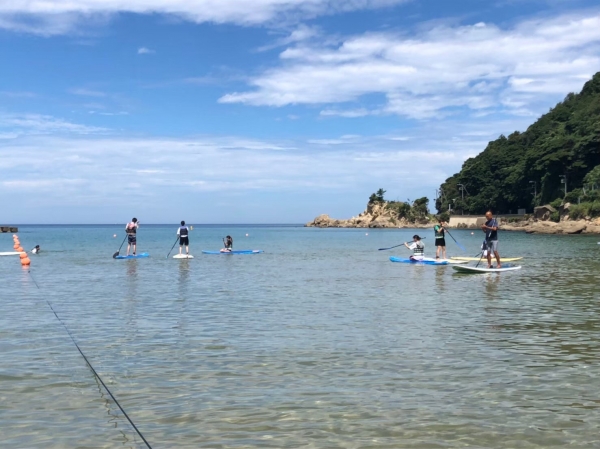 夕日ヶ浦海岸でのSUP体験。石川様に教えていただき、みんなで灯台まで行きました。
-
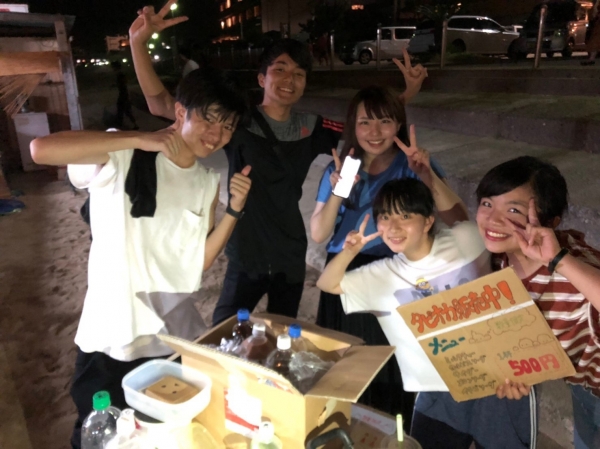 夕日ヶ浦花火大会で、企業・移住チームが京丹後産のタピオカを販売しました。
-
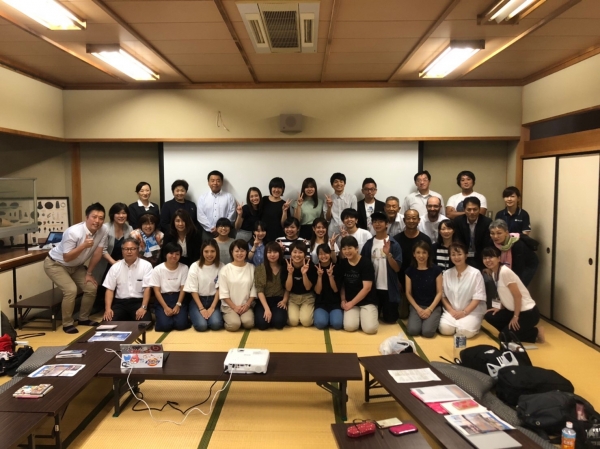 最終日の報告会にて、京丹後でお世話になった皆様との記念写真です。
2019/10/28 08:00:00 Community Engagement Program: Kyotango Report
- CEP活動紹介
- Student Reporter
Hello! My name is Haruna Shimoda. I'm a first-year student at the Department of Global Tourism Studies. Today, I am going to report on my experience of the Kyotango community engagement program.
We worked in Kyotango from August 4rd to the 30th, with a total of 15 people taking part in the Kyotango program, including 3 men and 12 women. Kyotango is located in the northern part of Kyoto. It faces the Sea of Japan and is a place rich in nature. There are lots of fresh and delicious food with warm locals.
The first half of the stay was in the Yuhigaura area and the second half was in Kotohikihama area. In the first half, we were divided into four inns in Yuhigaura and had a business experience at the inns. In the second half, we were divided into three guest houses. There, we had a business experience at the guest houses and translated Japanese tourist information into English. In addition, we were divided into four groups and worked on each assignment. As we learned about the current situation and issues in Kyotango through prior learning, we created the food and sports tourism team, business-relocation team, inbound-hospitality team, and pet tourism team. While working at the inns and guest houses, we discovered each assignment and investigated it via four groups. On the last day, we reported the findings of the investigation and suggested a solution to the problem.
During our stay in Kyotango, we lived in a guest house. The first half was a guest house called Takii-so in the Yuhigaura area, and the second half was a guest house called Oe in the Kotohikihama area. Both were very close to the beach. The 3 men lived in a small room and the 12 women lived in a large room. We rented a kitchen at the guest house and cooked ourselves. We also received staff meals from the staff and presents from inns innkeepers and the locals. We did not have any problems with the food. Since there was a supermarket in the Yuhigaura area, we were able to go to there on foot. However, in Kotohikihama, there were not many supermarkets nearby, so, the hostess of the guest house drove us to the supermarket. We were also able to do laundry freely.
Besides the activities in the inns and guest houses, we enjoyed a marine sport called SUP a pleasure boat and cooking Bara-zushi. On During the holidays, we played in the sea, had a BBQ, and walked out by by the Tango railway. There was also a delicious gelato shop nearby.
Through the Kyotango program, I realized how hard it was to have things go as planned. We had checked the current status of Kyotango and understood it in advance; however, it was completely different from what we had expected. There were many things that I found out after actually living in Kyotango. They had also been many setbacks. However, I got to know how the locals feel about tourism. I have learned a lot and increased my knowledge. Above all, the people in Kyotango were really kind and cooperative in our activities. I have gained a lot from this experience and it has been a profound month for me.
-
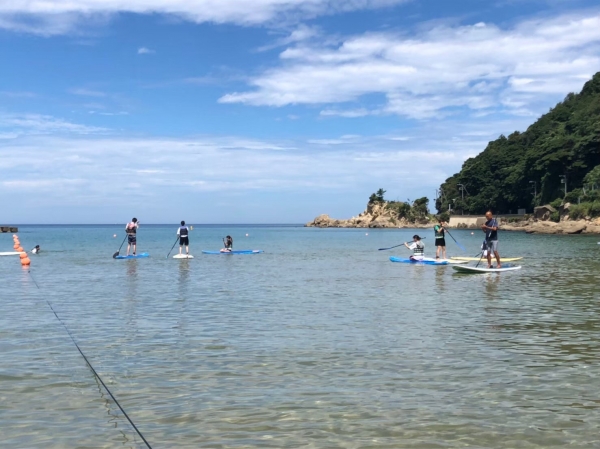 We enjoyed SUP in Yuhigaura.
-
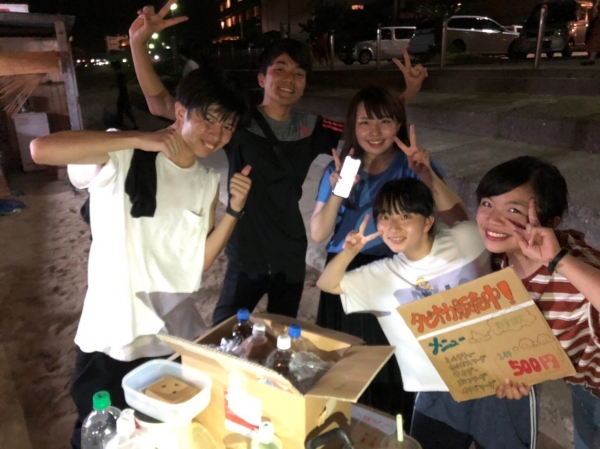 A part of our team members sold Tapioca drinks made in Kyotango.
-
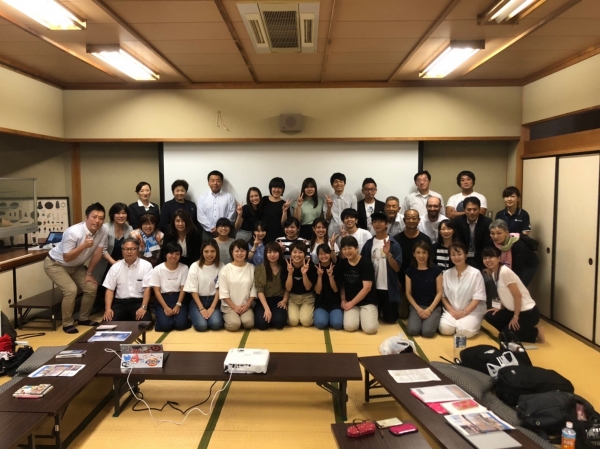 We made presentations in front of locals on the last day in Kyotango.
2019/09/19 00:30:00 コミュニティ・エンゲージメント・プログラム越前スタート
- CEP活動紹介
- 南 博史
The faculty of Global Engagement has a unique off campus program called Community Engagement Programs (CEP). CEPs have been in progress since August, and our 2nd year students have been actively involved with different communities both in Japan and overseas. Today, Prof. Minami will report on his CEP in Echizen which collaborates with Echizen field museum activities to come up with solutions to tackle local issues through tourism.
グローバル観光学科コミュニティ・エンゲージメント・プログラム(CEP)越前を担当する教員の南です。CEP越前の最初の活動が9月13日(金)~17日(火)の予定で始まりました。
CEP越前は、越前町熊谷地区を中心に京都外国語大学国際文化資料館および博物館学芸員資格課程が2013年度から行っている越前フィールドミュージアム活動と協働して、コミュニティの中で約5か月の間、地域に密着した活動を定期的に行います。地域のさまざまな資産を活用し、観光の視点から地域課題解決に向けた提案を行うのが目的です。
プログラムは、9月、10月、11月、11月末~12月初めと、1月の5回、各4,5日で実施します。また、この期間以外でも越前フィールドミュージアム活動に参加することもできます。
9月の活動はCEP越前のスタートになります。まずはCEP越前前半の活動を紹介します。
さて、春学期のコミュニティ・エンゲージメントワークショップII(CEW2)の授業では、この活動の中心の一つ「無農薬コメ作り」をとりあげました。熊谷地区の水と空気の綺麗な山間地で、身体によいコメ作りを行っている若手農業士の井上高宏さんに講師に来ていただいて「中山間地からみた日本の米作りの課題」について話を聞きました。さらに、プレ活動として古熊谷の谷水田での稲の手植え体験にも参加するなどして、事前学習をしてからのスタートとなりました。学生諸君にとっては現地を最低一度は見てもらったこともあって、地域に入るハードルは多少低くなったのではないかと思います。
今回の活動は春に田植えをした古熊谷の田んぼでの稲刈りがメインでしたが、残念ながら稲がまだ未成熟ということで断念。しかし、コンバインでの稲刈り、乾燥、籾摺りという行程を体験・見学するということで春からのコメ作りを一通り経験することができます。
一方、「クサネム」と呼ばれている雑草の除去に取り組みましたが、田んぼに入って稲の間にびっしり生えている「クサネム」を一本ずつ引き抜いていく作業はほんとうに大変でした。でも、みんなのおかげで、稲穂がそろう綺麗な田んぼに生き返りました。
-
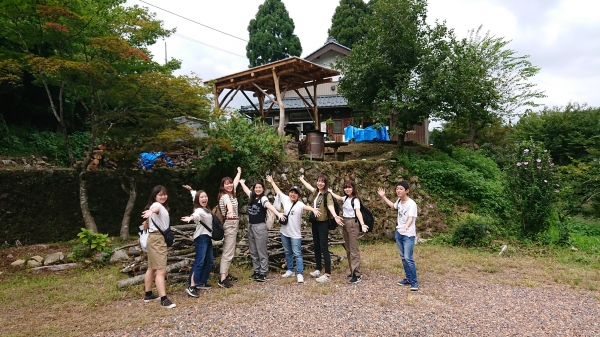 CEP越前9月スタート!
-
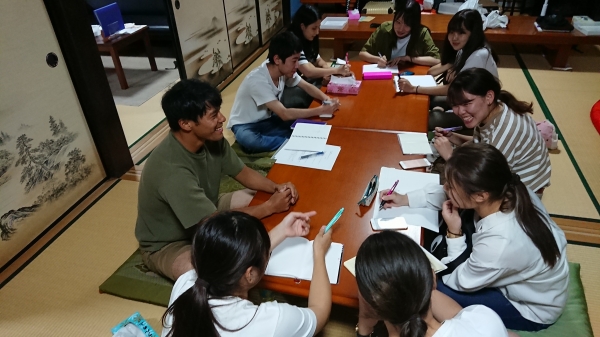 CEP越前9月 若手農業士の井上くんとのミーティング
-
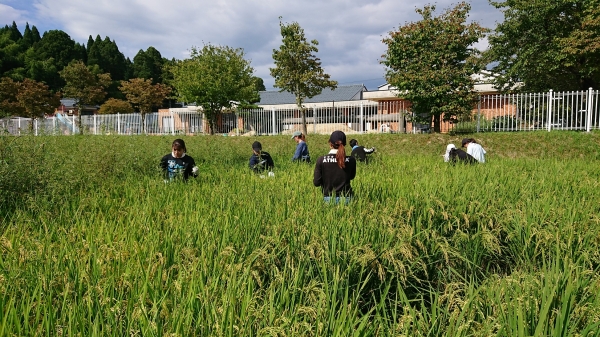 CEP越前9月 クサネムとの闘い!よみがえった水田は次回に!


