


2026/03/28 17:30:00 語学を「誰かの力」に変える学び― コミュニティ通訳育成プログラム ―Learning Through Real Practice: Community Interpreter Training at KUFS
 学内サークル・団体活動
 広報隊 長谷川
こんにちは、グローバル観光学科4年次生の長谷川穂香です。今回は、私が履修していた「コミュニティ通訳育成プログラム」についてご紹介します。本学では、「コミュニティ通訳特論」の履修や実務経験を通して専門性を高め、適性テストに合格すると、国際規格「ISO 13611:2024 通訳―コミュニティ通訳のためのガイドライン」に基づく認証書を取得することができます。本記事では、授業の学びやフィールドワークの経験をお伝えします。進路や授業選択の参考になれば幸いです。
コミュニティ通訳とは
コミュニティ通訳は、イギリスでは「Public Service Interpreting」とも呼ばれ、言語の壁によって医療・教育・社会福祉・行政・司法などの公的サービスにアクセスできない人々を支援する専門職です。単に言葉を訳すのではなく、異なる文化や制度の背景を理解しながら、人と人、人と社会をつなぐ役割を担います。ときには、その支援が人生の大きな転機に関わることもあります。
「コミュニティ通訳特論」で基礎から実践へ
「コミュニティ通訳特論」(旧カリキュラム)は、外国語学部・国際貢献学部の3、4年次生に開かれており、学科を越えて多様な学生が共に学びます。授業では、通訳者の役割や職業倫理といった基礎から、医療・教育・司法など各分野の背景知識まで幅広く学びました。近年、AI技術の発展により、通訳・翻訳の仕事が将来なくなるのではないかという声もあります。授業では、政府推奨の多言語音声翻訳アプリ「VoiceTra(ボイストラ)」を実際に使用しながら、AI時代におけるコミュニティ通訳の役割について議論しました。その中で、正確さだけでなく、信頼関係の構築や感情への配慮といった人間ならではの役割の重要性を改めて実感しました。
毎回の授業ではグループワークが行われ、設定された問いについて議論し、意見をまとめて発表します。限られた時間の中で情報を整理し、わかりやすく伝える経験は、通訳者に求められる重要なスキルの養成につながりました。さらに、裁判所、学校、病院などを想定したロールプレイを通して、実践的な対応力を磨きました。言葉の選択だけでなく、立ち位置、視線、話すタイミングといった非言語的要素も通訳の質に大きく影響することを学びました。
コミュニティ通訳が必要とされる現場は、私たちの生活に直結する重要な場面ばかりです。不安や葛藤を抱える人に寄り添いながら、正確かつ誠実に伝える。そのためには、言語力だけでなく、人間理解や責任感が不可欠だと感じました。
フィールドワークで現場を知る
本学には「LinguaLink」という翻訳・通訳人材バンクがあり、学生が実際の多言語支援活動に参加できます。登録することで、主に京都地域における多言語対応のニーズに応える活動に関わることができます。昨年12月、私は京都国際交流会館で開催された「外国人カウンセリングデイ」に参加しました。会場では、ボランティア通訳者やノートテイカーの方々が、さまざまな相談に丁寧に対応していました。相談に訪れる方々は不安や悩みを抱えており、通訳者には正確さだけでなく、安心して話せる雰囲気をつくる姿勢が求められていました。また、制度や手続きに関する専門的な内容も多く、事前準備の重要性も強く感じました。この経験を通して、コミュニティ通訳は単なる言語の仲介ではなく、人と社会を結ぶ存在であることを実感しました。教室で学んだ知識やロールプレイでの経験が、現場と確かにつながっていると感じられた貴重な機会でした。
言葉で誰かを支えるということ
語学を将来に生かしたい人、「言葉を通して誰かの役に立ちたい」と思う人にとって、このプログラムは大きな学びの場となるはずです。本記事が、進路や授業選択を考えるきっかけになればうれしく思います。
Hello! I’m Honoka Hasegawa, a fourth-year student in the Department of Global Tourism at Kyoto University of Foreign Studies. In this article, I would like to introduce the Community Interpreter Training Program, one of our university’s distinctive initiatives.
Through the course “Community Interpreting Studies” and hands-on practical experience, students develop professional skills in community interpreting. Those who pass an aptitude test receive certification based on the international standard ISO 13611:2024 — Interpreting Guidelines for Community Interpreting. I am currently enrolled in the program and will receive my certification at this spring’s graduation ceremony. I hope this article will help students who are thinking about their future careers or course selections.
What Is Community Interpreting?
In the UK, community interpreters are often referred to as Public Service Interpreters. They support individuals who face language barriers in accessing essential public services such as healthcare, education, social welfare, government services, and the legal system. Their role goes beyond translating words. Community interpreters bridge differences in language, culture, and social systems, enabling genuine mutual understanding. In many cases, their work can significantly affect a person’s life.
From Theory to Practice in the Classroom
The course is open to third- and fourth-year students from different faculties, creating a rich learning environment. We studied not only the roles and professional ethics of interpreters but also background knowledge in fields such as healthcare, education, and law. With the rapid advancement of AI, some fear that interpreting may be replaced by technology. In class, we used the multilingual speech translation app VoiceTra and discussed the role of community interpreters in the age of AI. Through this experience, I realized that building trust, understanding emotions, and responding to subtle contextual cues are responsibilities that only human interpreters can fulfill.
Group discussions were a key component of each class. We analyzed research questions, organized ideas, and presented our conclusions within limited time. This process strengthened our ability to communicate information clearly and effectively—an essential skill for interpreters. Role-plays based on real-life situations such as courtrooms, schools, and hospitals allowed us to practice professional conduct. I learned that interpreting quality depends not only on word choice but also on positioning, eye contact, and timing.
Learning from Real-World Experience
Our university operates LinguaLink, a translation and interpreting talent bank that connects students with multilingual support opportunities in the Kyoto area. Last December, I participated in fieldwork at the Foreign Residents’ Counseling Day held at the Kyoto International Community House. Observing volunteer interpreters assisting residents with various concerns helped me understand the realities of the field. Many visitors were anxious or uncertain about their situations. Interpreters needed not only accuracy but also empathy and professionalism to create a safe atmosphere. Through this experience, I came to see community interpreters as bridges—between people, and between individuals and social systems. It was a valuable opportunity to connect classroom learning with real-life practice.
-
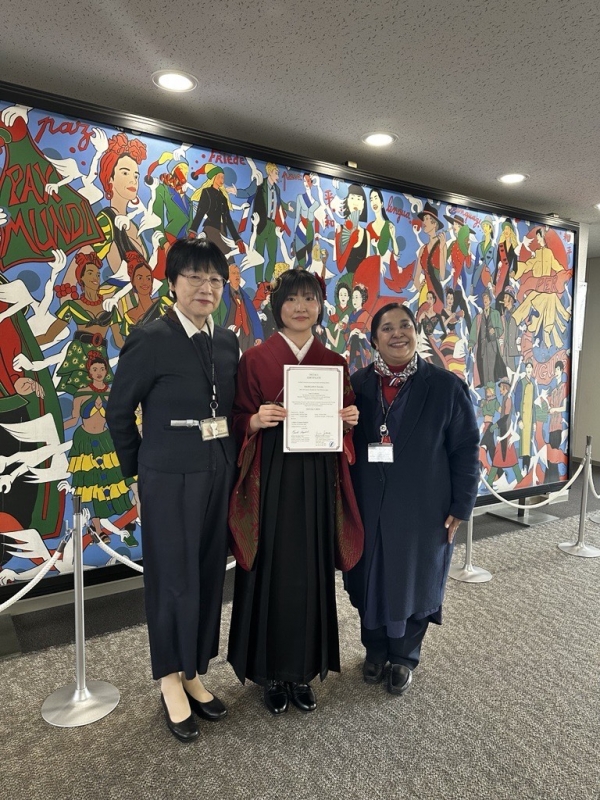 ご指導いただいた佐藤先生とスガンディ先生といただいた認証書を手に学位授与式にて


