


2023/12/22 23:00:00 西陣織でつむぐゴッホと浮世絵展に行ってきました!
 ニュース
 広報隊廣田
皆さんこんにちは!グローバル観光学科2年次生の廣田歩夢です。12月に入り、自分の部屋で使用しているカレンダーに掲載されているオーロラの写真を見ていて人生で一回は自分の目で見たいなと思っている今日この頃です。さて今回のブログでは、先日訪れた西陣織あさぎ美術館で実施されていた「西陣織で紡ぐゴッホと浮世絵展」について紹介をしていきます。
まずは西陣織あさぎ美術館への詳細情報です。立地は阪急烏丸駅より徒歩5分の場所にあります。烏丸駅から京都駅方面に歩いていくと右手に立っています。大学生の入館料は400円です。1階でチケットを購入した後、エレベーターを使って7階に向かいます。
展示は西陣織を作るときに原料となる絹糸の展示や西陣織がこれまで辿ってきた歴史の紹介から始まります。西陣織は5~6世紀に、現在の太秦辺りに渡来人が住み着いて養蚕・絹織物の技術を伝承したことが起源とされています。そこから約1500年、時代毎の進化を遂げながら現代まで伝承されています。さて、ここで皆さんにクイズです。西陣織はなぜ西陣織というのでしょうか?時をさかのぼること、1467年。歴史の授業で「人よむなしい」のごろ合わせで覚えたあの応仁の乱です。戦乱中は大阪・堺に逃れていた織手が終乱していくにつれ、京都に戻ってきて織物業を再開しました。この再開したエリアが西軍の陣が引かれていた場所であったことから「西の陣」→「西陣」が由来とされています。
館内を進むと、ゴッホの絵画やゴッホが憧れを抱いた浮世絵を全て西陣織で織ったものが展示されていました。遠目で見ていると絵画のように見える作品ですが、間近で見ると糸が何本、何百本と紡がれて作品が完成しているのが分かります。作品の横が見える場所から見るとそれらの糸が裏に出ていることがわかり、改めてこの作品が織られたものであると実感します。もう一度引きで作品を見た時に糸が繰り出す色彩の美しさ、西陣織の作品の精密さや技術のすばらしさに心を奪われました。さらに奥に進むと蓄光糸を使用し作成された「星月夜」が暗室に展示されていました。一度は見たことがあるゴッホが描く夜の風景が絹糸を用いることで暗い中に映る色の鮮やかさがより鮮明に表現されていました。
この美術館は偶然、見つけましたが、自分のお気に入りスポットとなりました。1月からはまた新たな展示をすると、スタッフの方が教えてくださりました。是非一度皆さんも訪れて京都が誇る伝統工芸西陣織の精密さ、糸が織りなす色の美しさに魅了されませんか?
*3枚の写真については、美術館の方よりブログ掲載の許可をいただいています
Hello everyone! This is Ayumu Hirota, and I am a sophomore in the Global Tourism Department. As December arrives, I find myself gazing at the aurora picture in my room calendar, dreaming of seeing it with my own eyes someday. Today, I want to share about my recent visit to the Nishijin Brocade Asagi Art Museum and their Nishijin-ori Woven Textiles: Van Gogh and Ukiyo-e Exhibition.
First, let's talk about getting to the Nishijin Brocade Asagi Art Museum. It's a 5-minute walk from Hankyu Karasuma Station, located on the right as you walk towards Kyoto Station from Karasuma Station. The entrance fee for college students is 400 yen. After buying your ticket on the first floor, you'll take the elevator to the seventh floor.
The exhibition starts with displays of silk threads, the raw material for Nishijin weaving, and introduces the history of Nishijin weaving. Originating in the 5th or 6th century with immigrants in the Uzumasa area passing down sericulture and silk weaving techniques, it has evolved over 1500 years.
Here's a fun fact: Why is it called "Nishijin" weaving? It dates back to 1467, during the Ōnin War. Weavers who had fled to Osaka/Sakai returned to Kyoto after the war and resumed their craft in the area where the western army had camped, hence the name Nishijin, which means western faction.
Inside the museum, you'll see Van Gogh's paintings and Ukiyo-e prints he admired, all woven in Nishijin style. From a distance, they look like paintings, but up close, you can see the hundreds of threads woven together. Viewing these pieces from the side reveals the threads on the back, reminding you they are woven works. The beauty of the colors and the precision of the Nishijin weave is breathtaking.
Further in, there's a glow-in-the-dark "Starry Night" displayed in a dark room, showcasing vivid colors in the silk threads. I stumbled upon this museum, but it's become one of my favorite spots. The museum staff mentioned new exhibits starting in January. Why not visit and be captivated by the precision and beauty of Kyoto's traditional Nishijin weaving?
*The permission to use the photos of the artwork has been obtained from a curator of this museum.
-
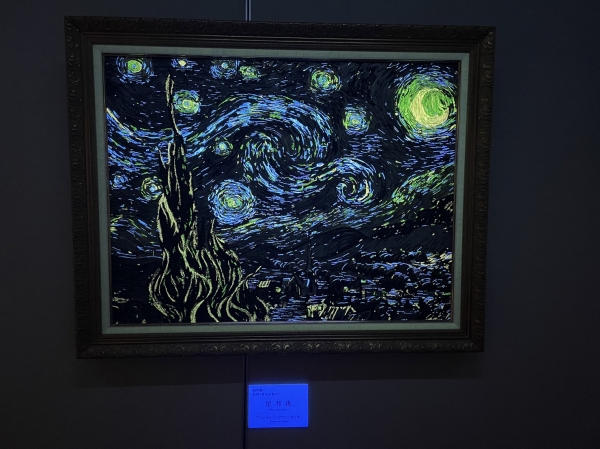 ゴッホの星月夜
-
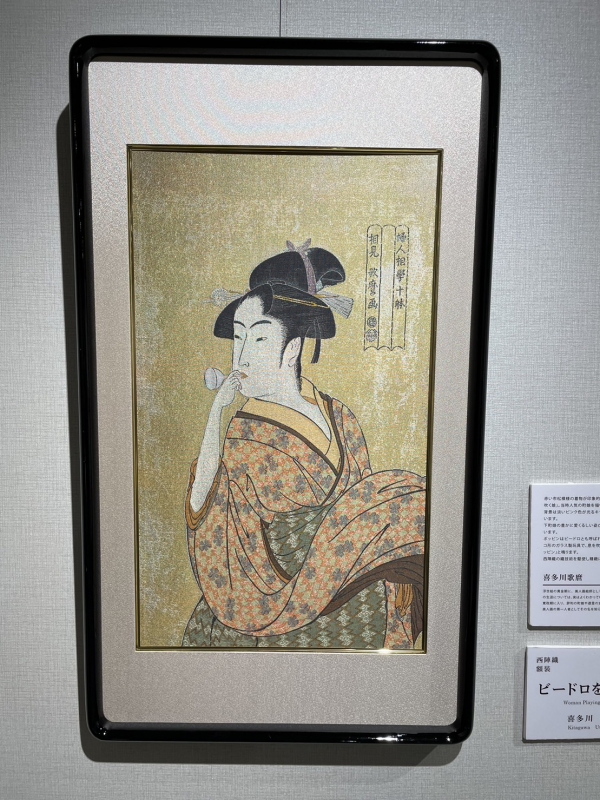 ビードロを吹く女
-
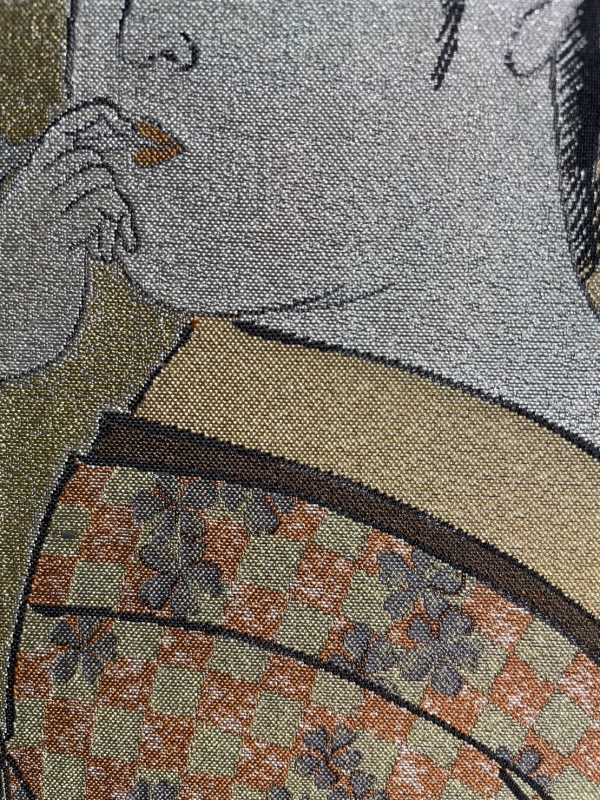 近くで見ると糸の組み合わせで作品が作られていることがわかります


