


2021/12/25 01:40:00 2年次生交流会
 イベント
 広報隊前田
こんにちは!京都外国語大学グローバル観光学科2年次生の前田優希です。今年も残すところあと少しとなりました。寒さも厳しくなりましたがいかがお過ごしでしょうか。
さて、今回は12月12日に開催された、グローバル観光学科2年次生の交流会について発信していきたいと思います。私たち2年次生は入学直後からコロナウイルスの影響でオンライン授業が続き学科間での交流の機会が少なかったため、この機会を設けていただきました。交流会では学生16名、先生方3名で西京極にある八つ橋庵かけはし様にて京友禅の体験をしました。
友禅とは、日本の代表的な染色方法のひとつです。友禅の名前は考案者の「宮崎友禅斎(みやざきゆうざいぜん)」に由来しています。有名な日本三代友禅には、京都で生まれた京友禅、金沢で作られた加賀友禅、東京の江戸友禅が含まれています。京友禅の特徴は、鮮やかな色合いと華やかな模様です。この豪華な染物は当時の貴族達から愛された一品でした。また、京友禅は元禄時代に誕生した最も歴史のある友禅です。友禅の染め方には手描きと型紙を使う物の2通りあります。
今回の交流会では手描きの友禅でハンカチを作りました。金刷りで模様が描かれたハンカチに筆をつかって着色していくのですが、色とりどりな染料がとても印象的でした。また、筆に含ませる染料の量によって淡い色から鮮やかな色まで幅広い色の表現ができました。手描きで布を染めることは想像以上に時間と集中力が必要で、着物を染め上げる友禅職人の技術のすばらしさを体感しました。
また、施設内にある京ししゅう美術館も観覧しました。美術館には、刺繍でできた人物写真や風景画が多数展示されています。葛飾北斎の富嶽三十六景、神奈川沖浪裏やオードリーヘップバーンの写真まで刺繍で再現されています。一見すると絵画や写真に見えるのですが、近くで見ると細やかな刺繍糸で作られていることがわかります。
今回の交流会では、体験や美術館観覧をしながら、参加されたみなさんとたくさんお話をすることができました。今まであまり交流がなかった学生ともこれをきっかけに親しくなることができ、貴重な機会となりました。また、普段授業以外で接することの少ない先生方ともゆっくりお話しをすることができます。次、このような交流会があれば今回参加されなかった学生もぜひご参加ください。交流の輪を広げるチャンスですよ!そして、この機会を設けてくださった先輩方、先生方ほんとうにありがとうございました。
*本行事は感染対策を徹底したうえで、実施しました。
Hello. My name is Yuki Maeda and I am a sophomore in the Department of Global Tourism. It’s getting close to the end of the year and getting colder these days - how have you been?
Today, I would like to introduce a networking event for sophomores in the Department of Global Tourism. This event was held on December 12th. We have had such little time to interact with other students from the same department because of COVID-19, so that is why this event was conceived. The event consisted of a Kyo Yuzen experience hosted by Yatsuhashi-an Kakehashi, a cultural facility in Ukyo-ku. 16 students and 3 teachers joined this event.
Yuzen is a traditional Japanese dyeing technique, which uses a resist paste so that fine designs can be produced on fine silk cloth. The name “Yuzen” comes from Miyazaki Yuzaizen, the person who devised the technique. There are three famous Yuzen traditions: Kyo-yuzen, Kaga-yuzen, and Edo-yuzen. The features of Kyo-yuzen are vivid colors and gorgeous patterns, and these designs were beloved by noblemen during the feudal period. Kyo-yuzen is the oldest tradition, as it was devised in the Genroku period (1688-1704). There are basically two ways to dye using the yuzen resist technique: hand-drawn and template-dyeing.
We made a handkerchief using the hand-drawn approach. We colored our handkerchief with a gold print pattern, using a brush. The colorful dyes were very impressive. Also, we can express various colors from pale to vivid by varying the amount of dye used. It is very hard to dye the cloth well, and through the experience I realized how wonderfully skilled the craftspeople are.
After the experience, we went to a embroidery museum. The museum has portraits and landscape paintings made by embroidery. Katsushika Hokusai’s The Great Wave and a picture of Audrey Hepburn have been reproduced by embroidery. At first glance, they look just like a painting or a picture but if you look carefully, you can see the embroidery thread.
In this event, we were able to talk with all the other participants, and I could become close with students that I met for the first time. Also, we could talk a lot with our teachers. If you have a chance, please join the next event. Think of it as a chance to expand your network. Finally, I would like to thank everyone that helped prepare this event, as well as the students and teachers that participated.
-
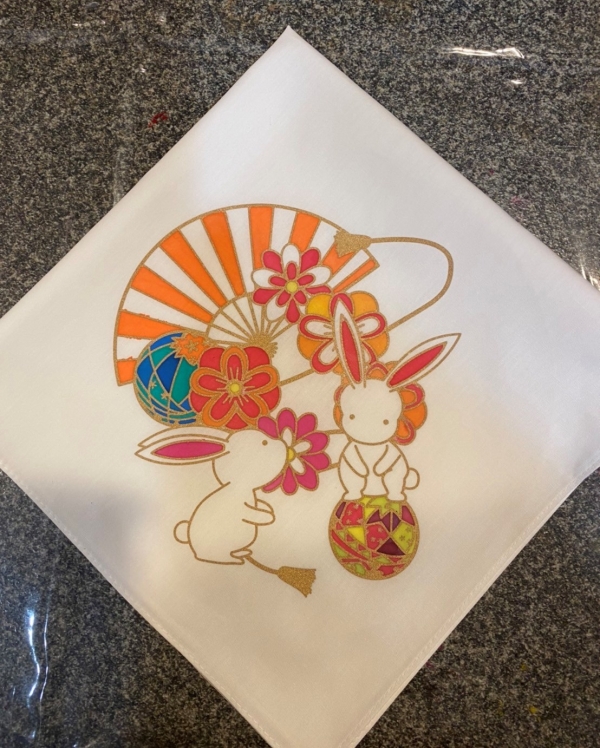 手描き友禅のハンカチ
-
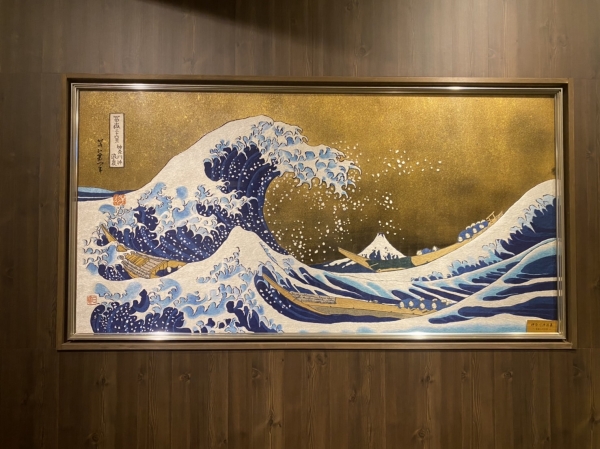 刺繍で作られた富嶽三十六景、神奈川沖浪裏


