


2021/10/30 00:30:00 城崎温泉CEPを経て
 CEP活動紹介
 広報隊横田
こんにちは!グローバル観光学科3年次生の、横田藍子です。今回は、国際貢献学部のカリキュラムに組み込まれいる"Community Engagement Program"(以下CEP)について、発信していきたいと思います。私のCEP先は、城崎温泉でした。城崎温泉の旅館で3週間働きながら、観光調査を行いましたので、その様子をお伝えできればなと思います。
私たちの研修先として、「西村屋」という、城崎温泉でも古くからある旅館の方々にご協力していただき、研修させていただきました。私たちは主に「パート業務」「客室係」の2つの業務を体験しました。ちなみに、客室係を担当する女性従業員のことを、西村屋旅館で働いている人たちは、「お姉さん」と呼びます。
まず、パート業務は朝からお客様がチェックインするまでの時間帯で仕事を行います。朝は布団上げや部屋の清掃、次にチェックインするお客様の確認や、御茶出しの用意など、お姉さんの補佐を行いながら、細かい準備を行います。朝のパート業務は、持ち場が分かれていますが、たくさん動き回ります。そしてどの部屋に誰がいて、次に誰がチェックインするのかをきちんと把握する必要があり、頭も体もフル回転で仕事を行います。
次に、お姉さんたちは、お部屋を担当するので、チェックインを行った後の夕食から、チェックアウトまでの時間帯で働きます。夕食はどのタイミングなのか、どの会席か、食事形式など、お客様に合わせて全て調整していきます。お客様の食事のスピードに合わせて運び、食事が終われば布団上げや朝食の確認などを行います。朝は朝食の準備や、布団上げもパート業務の人と分担して行います。朝食が終わると、片付けをした後、チェックアウト時間をさりげなく会話の中から聞き出し、お見送りを行った後にお姉さんも清掃を行います。お姉さん業務は全てお客様に合わせて行動するので、常にお客様を意識して、臨機応変に一人一人に合ったサービスを提供することが重要です。
私たちが城崎温泉で行った調査では、「食品ロス」に焦点をあてました。私たちの研修先の西村屋グループであるさんぽう西村屋本店や、招月庭にあるレストランRiccaで行われている地産地消について、インタビューで調査しました。そこから派生して、生産者の方や生産者と飲食店の仲介役を担う方にもインタビューを行い、地産地消のサイクルや、食品ロスに対する取り組みなどについても調査することができました。そこから私たちで考えた提案や、次回のCEPに繋がる調査結果を発表することができました。
私が業務を通して感じたことは、お客様が楽しく旅館で過ごしてもらうためのおもてなし心や、気遣いを常に持つことです。それらを行うためには、お客様一人一人の情報はしっかり頭に入れ、臨機応変に素早く対応することや、丁寧な言葉遣い、お客様とのコミュニケーションを行うことで何をお客様が求めているのかを考え自ら行動することが大切だと学びました。また、お客様だけでなく、スタッフ同士もスムーズに仕事ができるように、自分の持ち場が終わったら他のところを手伝いにいったり、次の人が使いやすいように物を置いたり、旅館全体でのチームワークを感じることができました。3週間という期間はすぐに過ぎてしまいましたが、この研修で得たことはしっかりと心得て、これからも実践していきます。今回のCEPにご協力してくださったすべての皆様、本当にありがとうございました。
Hello! I am Aiko Yokota, a third-year student in the Department of Global Tourism. This time, I would like to talk about the Community Engagement Program (CEP), which is a part of the curriculum of the Faculty of Global Engagement. My CEP destination was Kinosaki Onsen, and I spent three weeks working at a ryokan in there while conducting tourism research, so I am going to report on that.
We were trained by the kind employees at Nishimuraya, a traditional Japanese inn in Kinosaki Onsen. We experienced two main types of work: part-time work and room service. First, the part-time work is done in the morning until the guests check in. In the mornings, the part-time employees assist the ladies in charge of the guest rooms in the ryokan - who are called onee-san in Japanese - in making detailed preparations, such as preparing the futon, cleaning rooms, checking on the next guest to check in, and preparing tea. The morning part of the job is divided into different sections, but everyone moves around a lot. They need to know who is in which room and who is checking in next, so their minds and bodies are working at full speed.
Secondly, as the onee-san oversee the rooms, they work from dinner after check-in until the guests check out. Everything is adjusted to suit the guests, such as when the dinner is, which kaiseki meal is served, and how the meal is to be taken. Food is brought to the guests according to the pace of their meals, and when the meal is over, the bedding is put out for the guests to sleep, and the last task is to check on their breakfast requirements.
The morning is spent preparing breakfast and clear away the bedding, and the workload is shared with the part-time employees. When breakfast is over, after cleaning up, the staff casually asks the guests about their check-out time, and after seeing them off, the onee-san assist in the cleaning. All the onee-san duties are performed in accordance with the guests’ requirements, so it is important to always be aware of the guests and to provide services that are flexible and suitable for everyone.
The survey we conducted in Kinosaki Onsen focused on food loss. We conducted interviews to find out about local production for local consumption at the Sanpo Nishimuraya Honten, which is part of the Nishimuraya Group where we were trained, and at the Ricca restaurant in Shogetsutei. From there, we also interviewed producers and people who act as intermediaries between producers and restaurants and were able to investigate the cycle of local production for local consumption and efforts against food loss. From there, we were able to present our own proposals and research that will lead into the next CEP.
What I felt through my experience was that we should always consider hospitality and care for our guests so that they can enjoy their time at the inn. To do this, I learned to keep in mind important information about each guest, to respond quickly and flexibly, to use polite language, and to think about what the guest wants and to act on my own by communicating with the guest. I also learned how to work as a team, not only with customers, but also with other staff members so that they can work together smoothly, such as helping others when they are done with their work or placing things so that the next person can find and use them easily. Although the three-week period has passed quickly, I will keep in mind what I learned from the training and continue to practice it. I wish to thank everyone that helped us with this CEP.
-
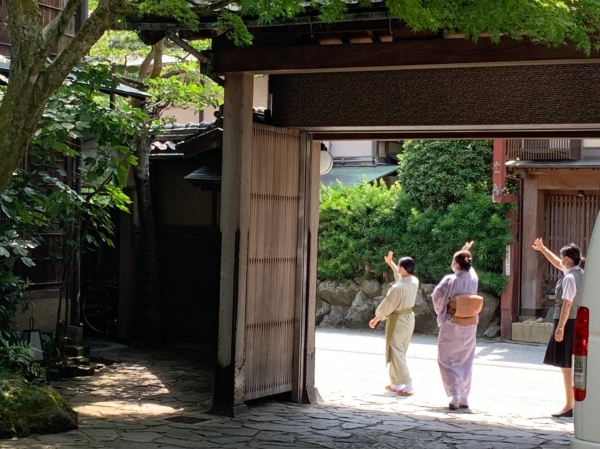 就業体験の様子
-
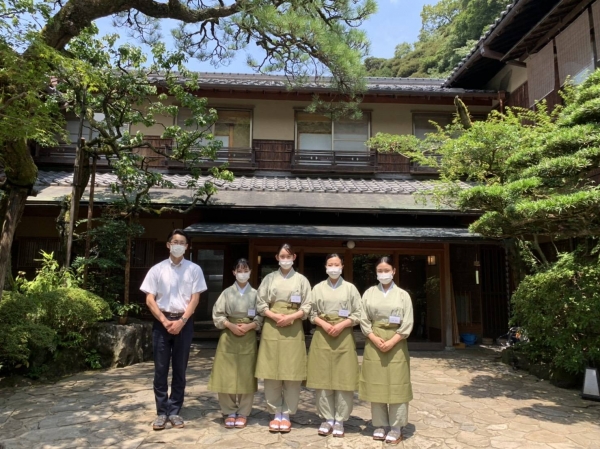 西村屋本館の前で


