


2019/10/28 08:00:00 Community Engagement Program: Kyotango Report
 CEP活動紹介
 Student Reporter
Hello! My name is Haruna Shimoda. I'm a first-year student at the Department of Global Tourism Studies. Today, I am going to report on my experience of the Kyotango community engagement program.
We worked in Kyotango from August 4rd to the 30th, with a total of 15 people taking part in the Kyotango program, including 3 men and 12 women. Kyotango is located in the northern part of Kyoto. It faces the Sea of Japan and is a place rich in nature. There are lots of fresh and delicious food with warm locals.
The first half of the stay was in the Yuhigaura area and the second half was in Kotohikihama area. In the first half, we were divided into four inns in Yuhigaura and had a business experience at the inns. In the second half, we were divided into three guest houses. There, we had a business experience at the guest houses and translated Japanese tourist information into English. In addition, we were divided into four groups and worked on each assignment. As we learned about the current situation and issues in Kyotango through prior learning, we created the food and sports tourism team, business-relocation team, inbound-hospitality team, and pet tourism team. While working at the inns and guest houses, we discovered each assignment and investigated it via four groups. On the last day, we reported the findings of the investigation and suggested a solution to the problem.
During our stay in Kyotango, we lived in a guest house. The first half was a guest house called Takii-so in the Yuhigaura area, and the second half was a guest house called Oe in the Kotohikihama area. Both were very close to the beach. The 3 men lived in a small room and the 12 women lived in a large room. We rented a kitchen at the guest house and cooked ourselves. We also received staff meals from the staff and presents from inns innkeepers and the locals. We did not have any problems with the food. Since there was a supermarket in the Yuhigaura area, we were able to go to there on foot. However, in Kotohikihama, there were not many supermarkets nearby, so, the hostess of the guest house drove us to the supermarket. We were also able to do laundry freely.
Besides the activities in the inns and guest houses, we enjoyed a marine sport called SUP a pleasure boat and cooking Bara-zushi. On During the holidays, we played in the sea, had a BBQ, and walked out by by the Tango railway. There was also a delicious gelato shop nearby.
Through the Kyotango program, I realized how hard it was to have things go as planned. We had checked the current status of Kyotango and understood it in advance; however, it was completely different from what we had expected. There were many things that I found out after actually living in Kyotango. They had also been many setbacks. However, I got to know how the locals feel about tourism. I have learned a lot and increased my knowledge. Above all, the people in Kyotango were really kind and cooperative in our activities. I have gained a lot from this experience and it has been a profound month for me.
-
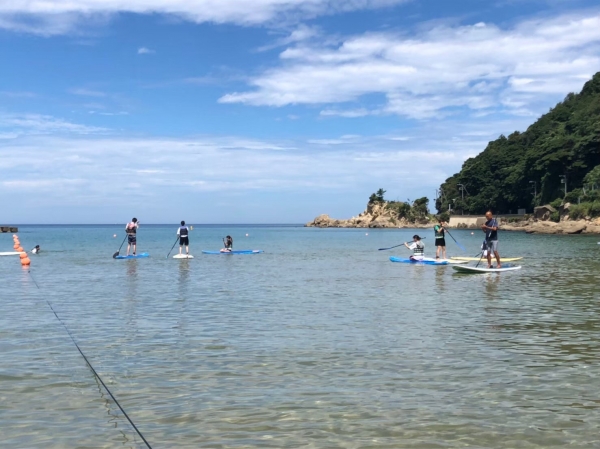 We enjoyed SUP in Yuhigaura.
-
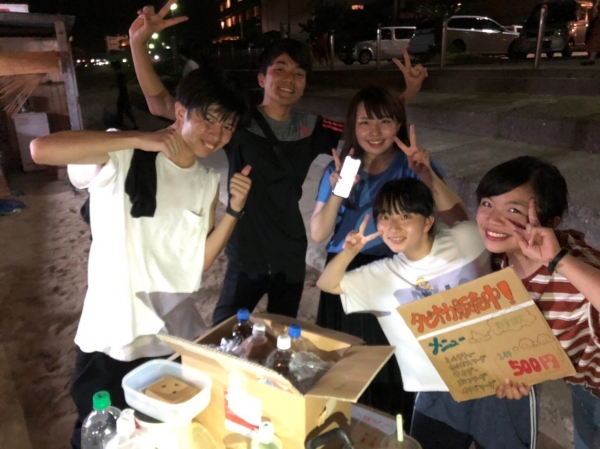 A part of our team members sold Tapioca drinks made in Kyotango.
-
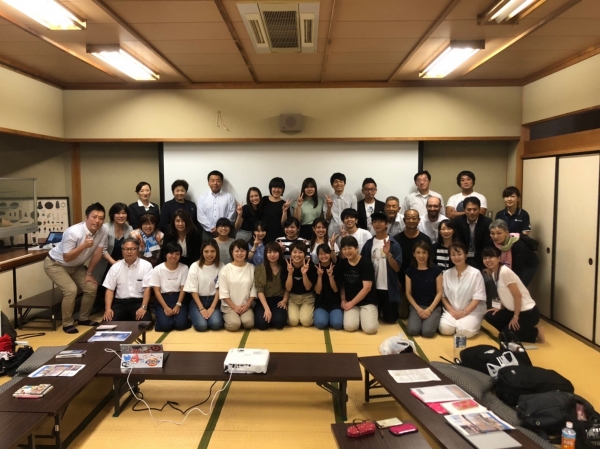 We made presentations in front of locals on the last day in Kyotango.
2019/10/23 10:10:00 ツアーコンダクター研修 in 香港
- 学外活動
- Student Reporter
みなさん、こんにちは。グローバル観光学科二年次生の佐野香織です。今回は、夏季休暇中に行われた「ツアーコンダクター資格取得研修」について報告をしたいと思います。この研修では、「総合旅程管理主任者」の資格取得を目指し、5日間の国内事前研修と、3日間香港での海外実地研修を通して、実際にツアーコンダクターとしての業務を体験しました。基本的には旅行業界で働いている方が受講・資格取得をするものですが、今回は在学中ながら参加させていただきました。
5日間の国内事前研修では、業法・約款、国内実務、海外実務、添乗英語等、添乗の基礎を座学で学びました。そして、3日間にわたる香港での海外実地研修では、近畿日本ツーリストで、実際にツアーコンダクターとしてご活躍されている岡本真実様、現役社員の松下智紀様のご指導のもと、添乗員業務を体験しました。空港や飛行機内での案内や、バス車内でのアナウンス、夕食説明、ホテルのチェックイン等、多岐にわたる業務を学生それぞれが分担し、遂行しました。ツアーに関連する一連の業務の中で、各役割の注意点やチェックすべきポイントを、プロの目線でアドバイスしていただきました。私は夕食、バス車内でのアナウンス、降機から到着ロビーまでの案内を担当しました。どのようにしたらお客様一人一人の心に響くか、分かりやすく正確な情報を伝えられるかをよく考えて取り組みました。
この研修を通して、実務の大変さ、やりがいを身に染みて感じ、旅行業界への関心がますます高まりました。また、異文化理解も深まり、幅広い視野で物事を見て考える力を養うことができたと思います。この経験を生かし、自分が将来就きたい道を引き続き模索していくとともに、今回の研修で感じた自分の得意な部分を伸ばし、不得意な部分を改善して更なるレベルアップを目指していきたいです。
Hello, I am Kaori Sano, a second-year student in the Department of Global Tourism Studies. I am going to report on a training program for qualification of itinerary control manager implemented during summer vacation. In this training program, I got an opportunity to experience duties as a tour conductor through five days of pre-training in Japan and three days of on-the-job training in Hong Kong.
Over the five days of pre-training, I took a lecture of the travel agent contracts, practical work, hospitality English, and the basics of career as a tour conductor. After that, I went to Hong Kong to experience duties as a tour conductor under the direction of Ms. Mami Okamoto who are active as a professional tour conductor and Mr. Tomoki Matsushita, a company member at Kinki Nippon Tourist. Each student played a role of various tasks, such as giving a guide in the airport or on the plane, announcing in the bus, checking in and out and so on.
-
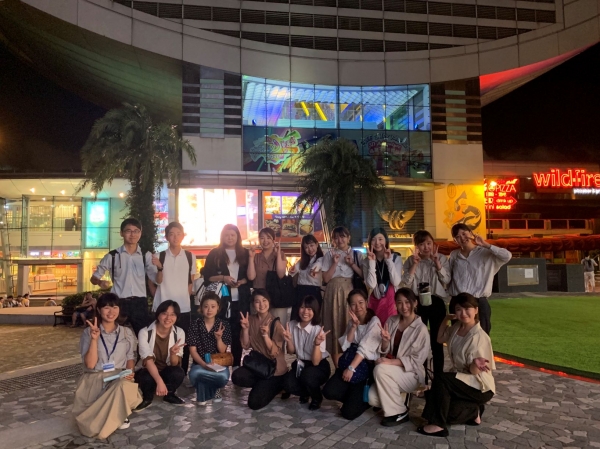 学生添乗員 集合写真
-
 香港の夜景
-
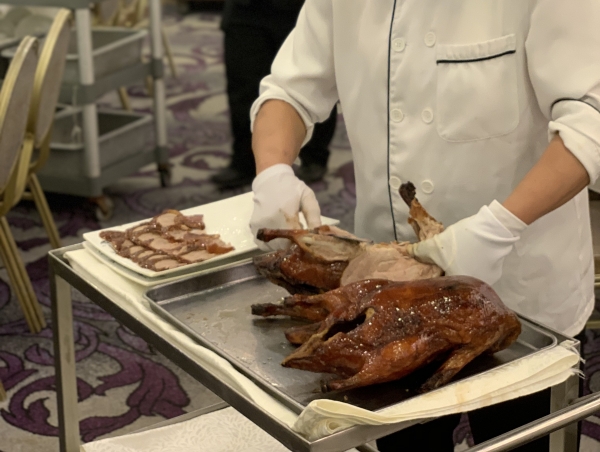 北京ダックの夕食
2019/10/21 23:50:00 Kyoto Seen from the Camera Lenses: Ninnaji Temple Part II
- 観光情報
- Student Reporter
Hello. We are Nanami Shimaoka and Ayumi Uratani, 2nd year students at the Department of Global Tourism Stuides.
Continuing from the last week, we are going to report on the interview that we had with Rev. Gishin Kanazaki who oversees the temple’s property management of Ninnaji Temple. For this time, we asked him about his work at the temple.
1. How did you start working for Ninnaji Temple?
I was born as a son of a master of the branch temple of Ninnaji. This was the reason why I wound up working for Ninnaji Temple. My major was far from what I do now. I was studying architecture when I was in university.
2. What kind of work do you do at Ninnaji Temple?
I am in charge of property management other than cash like buildings and treasures. I also organize events and conduct operations at Ninna-ji Temple. Since the advertisement development focuses on public relations (PR), I always keep in mind the importance of not losing the posture of Ninna-ji as a temple. I always try to reflect my desire not to deviate from my values and conscience to cherish of Ninna-ji Temple during the operations. It is also important for the admission section to listen to the opinions of the people who are communicating with the worshipers and to make improvements on the site.
3. Why did you start to manage, plan and promote PR in the Finance Department?
Ninna-ji Temple has tens of thousands of cultural properties. As a result, the frequency of repairs is high, and as a matter of fact, conservatory repairs are very expensive and may cost much more than the income that comes to the temple. Even though it is a temple, it is important to secure enough financial resources to secure the temple as collateral in order to convey precious cultural assets to the next generations from the perspective of property management. Recently, we have exhibited cultural assets at exhibitions and art museums, and planned light-ups. The purpose of presentation at the exhibitions is not to make money, but to make people know about Ninna-ji Temple, its technology, and culture.
4. What is the specific purpose of the light-up project?
As I mentioned earlier, I wanted to manage the costs of repairing of treasures and buildings, so I started such activity as part of that plan. In this light-up project, the price was set higher than the usual admission fee, clear rules were adopted, and visitors were allowed to take photos in a way that would not affect cultural assets. The theme of this light-up was “inheritance to the next generation”. If various people take pictures and these pictures remain, they will be useful for repairing if the building is damaged due to a disaster, etc. Also, because of the high price setting, the number of people will not increase that much, so visitors can take photos slowly on their own path.
5. Visitors from which country are the most regular?
At present, there are many European visitors. The reason is that there are many people in Europe who are interested in World Heritage. In fact, the data collection of foreign tourists visiting Japan has not been successful, and we are working to attract more tourists.
Although I felt that the temple itself may look different due to the difference between religious denominations, I found that there was no difference in fact, but when I talked to the people who actually work at the temple, I learned that the way of managing and operating a temple is different depending on the temple. Ninna-ji is demonstrating a unique approach as it is planning and operating a luxury shukubo (pilgrim lodging) for 1 million yen per night. Rev. Kanazaki actually said, “I want you to visit various other temples. There are various forms of management and operation, different from Ninna-ji. Each temple is different.” When I heard it, I thought that the perspective when visiting would change.
I wish everyone could come and visit the World Heritage site Omuro Ninnaji. We would like to thank Rev. Kanazaki and Omuro Ninnaji for their cooperation.
-
 Universalization progresses at Ninnaji.
-
 The Light-up Project will start soon!
2019/10/21 23:40:00 カメラから覗いた京都:番外編 仁和寺パートII
- 観光情報
- Student Reporter
こんにちは。グローバル観光学科2年次生の島岡七海と浦谷歩です。
今回は、前回に引き続き御室仁和寺で働いておられる、財務部管財課、拝観課の金崎義真様のインタビュー第二弾です。前回は、私たちが普段、疑問に思っていることに基づいて作成した質問紙に対してのお答えをご紹介しましたが、今回は、実際に仁和寺に訪問し、金崎様が財務部管財課、拝観課にて携わっておられるお仕事に関する話題を中心に紹介します。
1. どのような経緯で仁和寺に勤めているか。
仁和寺を本山とする関連寺院に生まれたのがそもそもの経緯である。大学時代はお寺とはかけ離れた建築を学んでいた。
2. 御室仁和寺での財務部管財課、拝観課で行なう仕事とはどのようなものなのか。
現金以外の財産管理が担当である。建物や宝物などが例として挙げられる。また、仁和寺で行う、イベントの企画、そしてオペレーションも行う。広告展開は、PR(パブリックリレーション)を重要に考えているので、仁和寺のお寺である姿勢を崩さないよう意識している。仁和寺が大事にしている意識や価値観からずれないようにすることをオペレーションには反映できるように際には心がけている。また、拝観課では、実際に参拝者様と関わっている現場の人間の意見を聞き、現場での改善に取り組む事が重要。
3. なぜ財務部で運営管理や企画、PRの仕事までするようになったのか。
仁和寺が所有する文化財は、数万点に及ぶ。結果として修理点数がが多く、事実として、保存修理には費用がとても掛かり、お寺に入ってくる収入よりも、出費額がはるかに多いこともある。お寺であるとはいえ、貴重な文化財を次世代に繋げるため、お寺を担保とするための財源確保は大切であるので、財産管理の視点から、運営の一端を担っている。最近では、展覧会や美術館での文化財の展示を行ったり、ライトアップの企画を行ったりしている。展覧会などでの展示は、収入を目的とするのではなく、展示を通して仁和寺や技術、文化を知っていただけるようにすることが目的である。
4. ライトアップ企画の具体的な目的とは?
先ほども述べたように、宝物や建物の修繕にかかる費用を何とかしたいということから、その一環として始めた。このライトアップ企画では、通常の拝観料よりも高い値段設定をし、明確なルールを作り、文化財に影響を与えない形で撮影してもらえるようにした。このライトアップでは、「次世代への継承」をテーマとした。さまざまな人たちに写真を撮っておいてもらえると、もし、災害などで建物が破損した場合に、写真が残っていれば、修復する際に役に立つ。また、高い値段設定にしたことにより、人数がそこまで多くならないため、ゆっくりと撮影をしていただける。
5. どこの国からのお客様が多いか。
今現状では、ヨーロッパの方が多く参拝されている。ヨーロッパの方が多い理由としては、ヨーロッパの方は、世界遺産に興味のある方が多いからではないかと考える。実際、訪日外国人観光客のデーター収集がうまくいっておらず、これからもっと来ていただけるように取り組んでいる。
私たち自身、お寺というものは、宗派などの違いこそあれども、内実はそこまで違いはないと感じていましたが、実際にお寺に勤めておられる現場の方にお話を伺い、お寺によって、どのようにお寺を管理、運営するかは違ってくることを知りました。仁和寺様は1泊100万円の高級宿坊も企画、運営されているそうで、大変ユニークな取り組みをしておられました。金崎様も実際、「いろんな他のお寺さんを訪問してみてほしい。仁和寺とはまた違った、運営、管理の形がある。お寺ごとで違ってくる。」と仰っておられ、お寺へ訪問する際の視点が変わると思いました。みなさんも、ぜひ、世界遺産の御室仁和寺へ足を運んでみてください。この度は、ご多忙の中、取材にご協力いただきまして誠にありがとうございました。金崎様はじめ、御室仁和寺様のご協力に感謝申しあげます。
-
 ユニバーサル化も進んでいます
-
 今年もライトアップ始まります!
2019/10/10 14:50:00 Kyoto Seen from the Camera Lenses: Ninnaji Temple Part I
- 観光情報
- Student Reporter
Hello. We are Nanami Shimaoka and Ayumi Uratani, 2nd year students at the Department of Global Tourism Stuides.
Today, we are going to report on our visit to Ninnaji Temple, a world heritage site near our university in Ukyo-ku, Kyoto. Ninnaji Temple is known as the head temple of the Omuro School of the Shingon sect of Buddhism. Our blog series of “Kyoto seen through the camera lens” have introduced sight seeing spots in Kyoto from the perspectives of student reporters. However, for this time, thanks to "Tomorrow's Kyoto Cultural Heritage," we were fortunate to be given a chance to interview Rev. Gishin Kanazaki who oversees the temple’s property management. We prepared a set of questions and sent them to Rev. Kanazaki in advance, and he has prepared answers for our questions. Moreover, we were lucky enough to hear very interesting stories from him on the site, which almost transformed our images of a Japanese Buddhist temple.
Today, we are going to report on his prepared replies to our preliminary questions. We made a questionnaire based on our interest in what kind of impressions that the staff of Ninnaji have had on foreign tourists and young Japanese visitors. Here are our questions and the replies from Rev. Kanazaki.
1. What do you find challenging when dealing with foreign tourists?
Language barriers
2. We often hear complaints about foreign tourists’ “bad” manners, but could you tell us about your insight?
(The opinions gathered from the staff)It is true that we observe foreign tourists’ violations of manners frequently. However, we don’t take them as “bad manners” as we see them as a matter of intercultural communication. Rather, the unfavorable manners shown by a handful of Japanese visitors tend to catch our attention. In many cases, foreign visitors are simply not aware of certain cultural rules. So, when we explain what they should and shouldn’t do, we have the impression that most of them correct their mannerisms and show their apologies. For this reason, we need to show some kind gestures by showing guides and introductions to basic cultural manners and ways of worshipping.
3. How do you feel about those who visit the temple for sightseeing?
There is a reality in which the temple serves not only as a place that caters for the religious needs of people but also as one of Kyoto’s tourism resources.
4. How do you think about young Japanese tourists visiting the temple? Particularly, many young people put up photographs on Instagram and other SNS applications, and I believe some of them take a photograph of themselves at the temple. How do you view this kind of tendency?
I don’t think the behavior of spreading information via SNS is bad. If the problem is about people who do not abide by manners and rules associated with photo-shooting or photo-purchasing, we could only grant permission to those who have agreed to abide by the rules and manners. I think it is our side of responsibility to set rules for them.
5. Is there any basic knowledge (such as the temple’s history and Buddhist sects) that young people like us should have when visiting the temple?
The foundation of the temple is the religious doctrine. All the cultural and historical assets such as the canon, building, garden, treasure, historical documents stem from there. That is a symbol of Japanese cultural identity as well as a rich treasury of artifacts that were developed with skills over time and documents that record historical facts.
Although it is said that more and more people have stayed away from religions, we hope that you will notice about a number of religious practices and symbols that exist in your everyday life. If that happens, you will be able to better recognize and pay more respect to the canon and doctrines of the temple by understanding the historical backgrounds and comparing the past with the present. It will also lead us to propagating the religious faith.
As shown above, the questions we prepared in advance focused around the mannerisms of the foreign tourists and young Japanese visitors. However, when we actually met Rev. Kanazaki, he also generously shared his views on the management of the temple Ninnaji. We’ll continue to report on our interview with him next time focusing on his perspective on treasury management.
-
 Immersed in the atmosphere of serenity
-
 Posing in front of the main gate
-
 We also met Rev. Oishi


