


2026/6/24
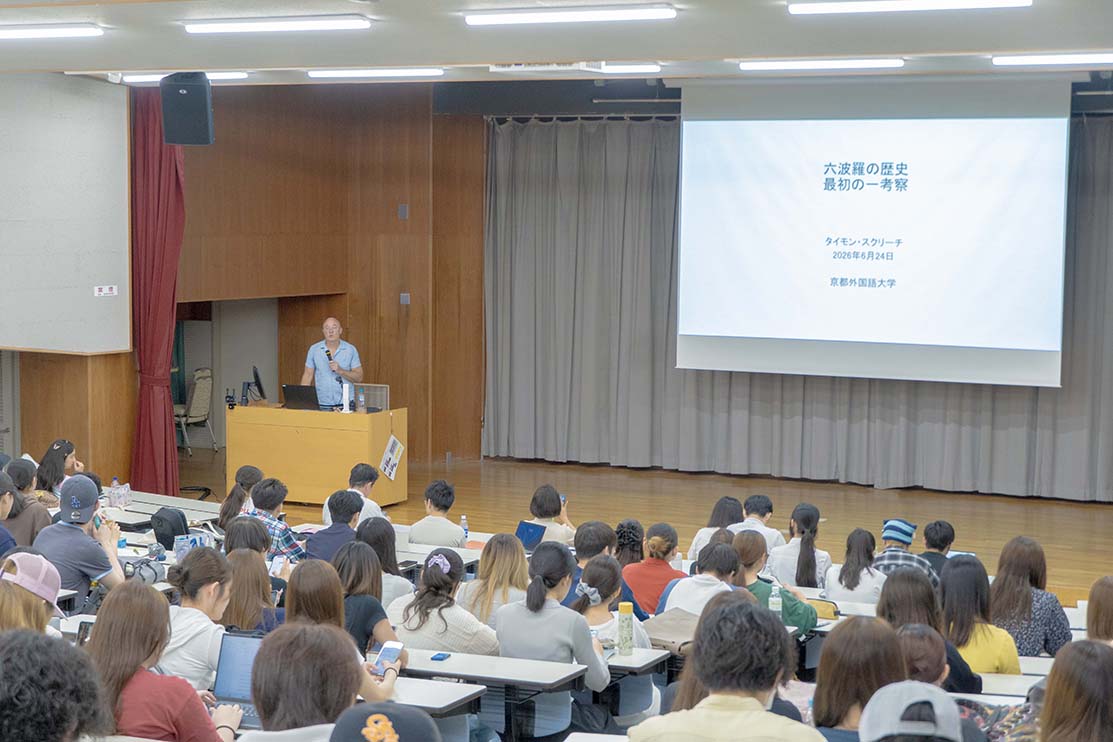
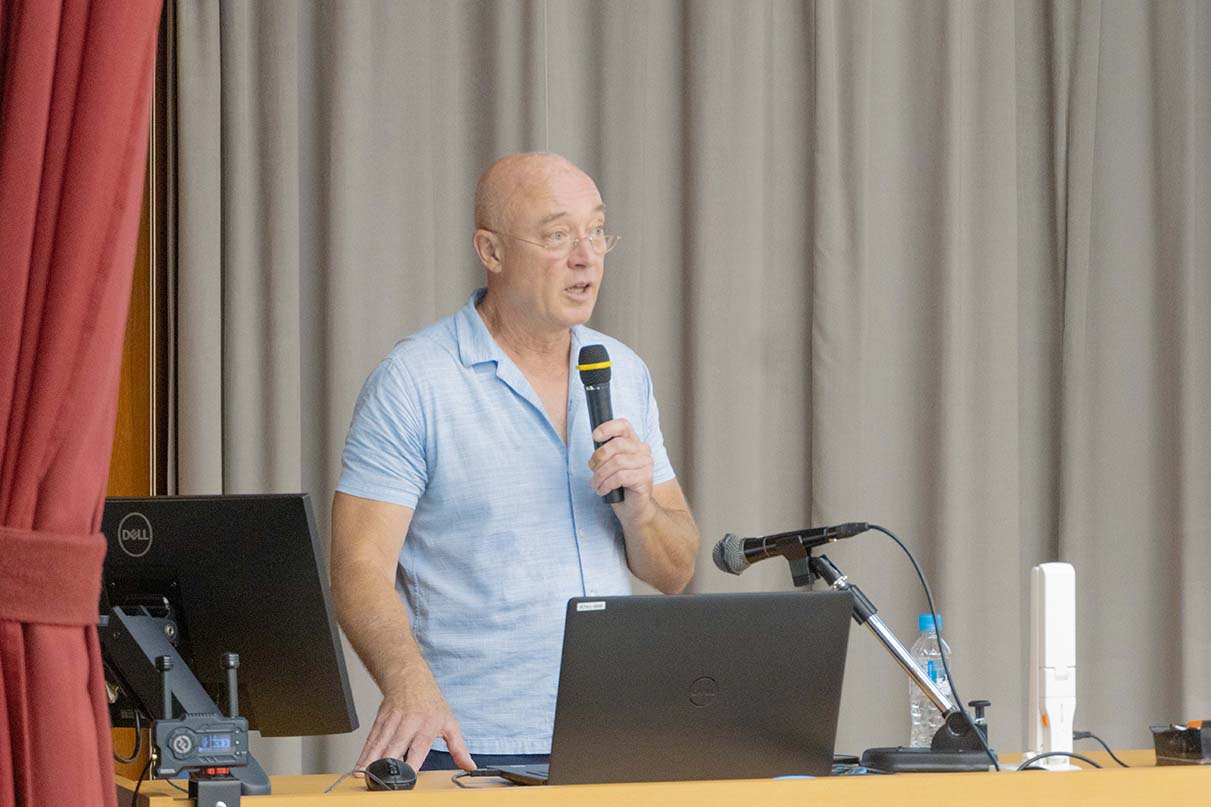
On Tuesday, May 24, International Research Center for Japanese Studies (Nichibunken) Professor and Japanese Art Historian Timon Screech was invited to give a special lecture for the "Kyoto Studies A" general education course taught by Institute for Liberal Arts and Sciences Guest Professor Sousen Kizu and Associate Professor Sono Yamazaki.
During his lecture, Mr. Screech talked about the recent focus of his research, Kyoto's Rokuhara district, from a multifaceted approach incorporating historical geography, classic literature, art and more.
He started by explaining how the Kamogawa River on the east side of Heian-kyo (ancient Kyoto) came to be regarded as the boundary between the capital and "the other world." He then discussed the cremation and burial ground known as Otagi, which appears in the "Kiritsubo" chapter of The Tale of Genji, the historical background of Gojo-dori Street (now known as Matsubara-dori Street), and the art history of the Rokujo Kawara-in villa. To illustrate the concept of the river being the boundary with the "other world," Mr. Screech juxtaposed the smoke rising from salt-making fires at this manor belonging to poet and statesman Minamoto no Toru and the smoke from the cremation grounds on the opposite side of the river. He also introduced the lavish Rokujo-in villa said to have been built on the site by Hikaru Genji, the protagonist of The Tale of Genji.
Furthermore, the professor provided an explanation from an art expert's perspective of the Edo Period (1603–1868) artwork Rokujo-in Zu Byobu (Rokujo-in Folding Screen), an extremely rare piece in Japanese art in that its images connect even if the left and right sections are interchanged.
Finally, he talked about the district name "Rokuhara," which is located near Rokujo, elaborating on the name's roots in Buddhism, its six realms of reincarnation, and the religion's six virtues (perfections). Mr. Screech concluded his lecture by discussing future research plans to further elucidate the meaning behind the shared character in all of the elements, roku (lit. "six), as it pertains to the text of The Tale of Genji and people's lifestyles during the Heian Period (794–1185) in which the tale is set.
During the Q&A session which followed, students asked questions with an international focus, such as "How do people in the UK view Japanese history?," while also inquiring as to what Mr. Screech initially found appealing about Kyoto. Regarding an episode related to Kiyomizu-dera Temple on Gojo-dori Street which had come up in the lecture, Mr. Screech asked students directly, "Have you all been to visit Kiyomizu-dera Temple yourself?" It turned out to be a rewarding discussion session with both sides contributing in meaningful ways.
The professor concluded by telling the students, "Kyoto has an accumulation of history which inspires deep thought, setting it apart from places like Tokyo and Osaka. In addition to its traditions, Kyoto is also a town filled with youthful energy thanks to its large numbers of universities. I encourage all of you to spend time thinking about local history during your lives here."
The visit by this frontline researcher in the fields of Japanese history and culture provided students with a good opportunity to rethink the familiar history and culture of Kyoto from new perspectives.
Page top


