


2026/6/16
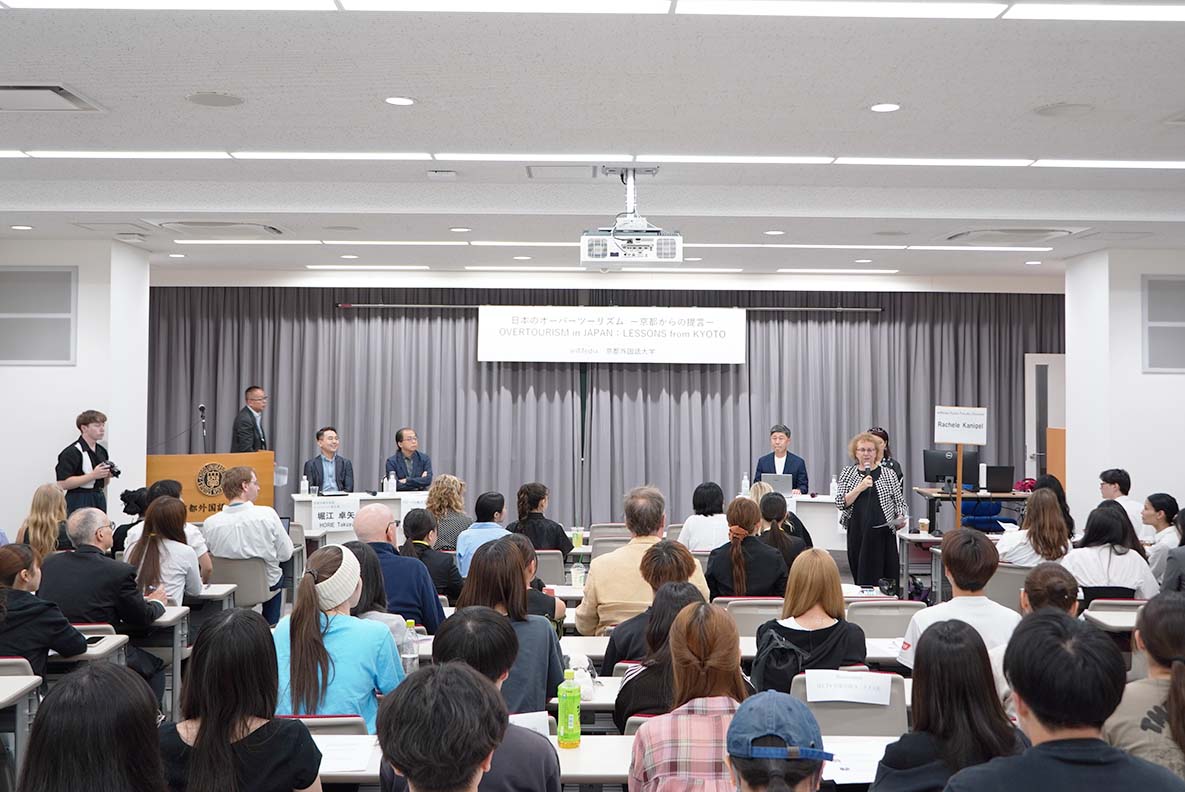
On Monday, June 8, Kyoto University of Foreign Studies (KUFS) hosted a panel discussion based on the themes of sustainable tourism and overtourism problems in the international cultural center of Kyoto, titled "Overtourism in Japan: Lessons Learned in Kyoto."
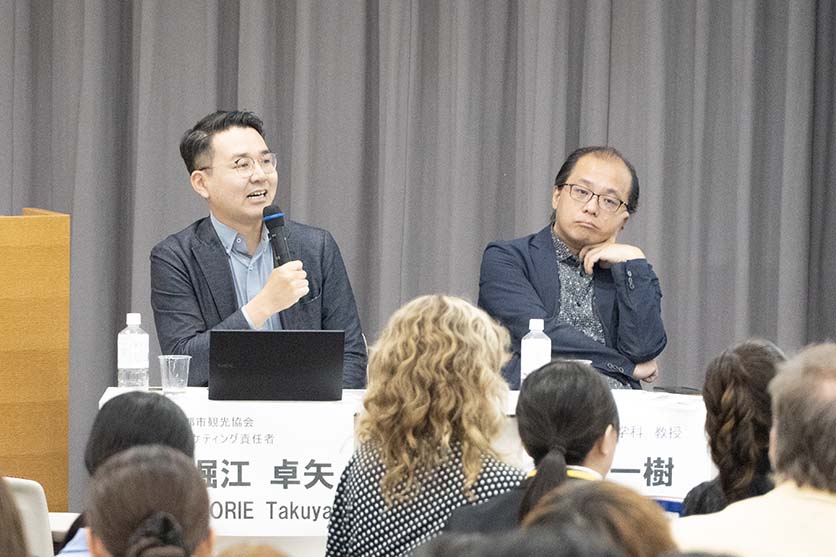
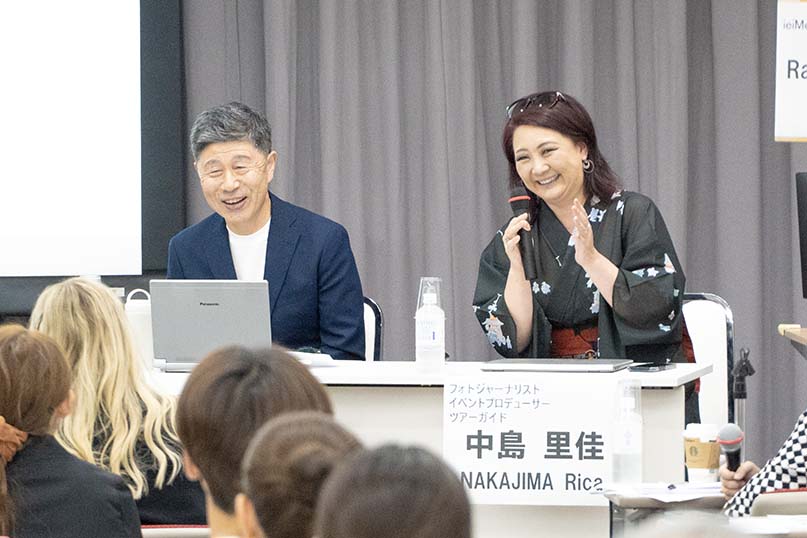
Panelists for the event included Takuya Horie, marketing head for the Kyoto City Tourism Association (DMO KYOTO); Rika Nakajima, a photojournalist and tour guide; and KUFS Department of Global Tourism Professors Kazuki Hara and Toshihiko Goto. Professor Rachele Kanigel from San Francisco State University in the USA, who is currently at KUFS as director for "The Kyoto Project" run by the Institute for Education in International Media (ieiMedia), served as the discussion moderator.
Discussing future developments focused on the example of interpreter-guides and economic benefits, Mr. Horie stated, "The proposed blanket cap on numbers of tourists runs the risk of making existing problems even more convoluted. Instead, it is vital that we have citizens of Kyoto lead the local tourism industry and ensure their own profitability before permitting outside parties to participate, thus ensuring frameworks which deliver tangible benefits."
Mr. Hara talked about the way the structure of social-media-driven society has led to a focus on earning "likes," resulting in problems with poor manners. Discussing the problems and possible solutions, he said, "The essence of Kyoto tourism is the consumption of the 'otherness’ represented by Japanese culture. In this regard, Kyoto, which has its own codes of behavior and aesthetic sensibilities that cannot be understood by foreign tourists, is having its patience tested. Education is essential if tourism is to evolve from a simple act of consumption into an opportunity for understanding others and transforming oneself."
Mr. Goto compared Kyoto with Venice in Italy and Amsterdam in the Netherlands while promoting improved tourist manners and the dispersal of tourists across a wider range of destinations. "Many of the problems caused by international tourism in Kyoto are due to concentration in a few specific areas, such as Gion and Arashiyama,” he said. “Therefore, it's important that we thoroughly promote good tourist manners, disperse tourism times and destinations, and adopt an educational approach that fosters respect for the Kyoto community."
Ms. Nakajima contributed ideas for expanding the potential of Kyoto tourism: "It's not enough to decentralize tourism patterns alone; we must also promote rediscovery of Kyoto's artisanal and traditional crafting cultures, local shopping arcades, and other local appeal. I believe that providing opportunities to meet and talk with Buddhist monks and craftspeople, which are the genuine experiences foreign tourists are after, can lead to greater understanding of and respect for the local community."
During the Q&A portion, students in attendance from ieiMedia expressed opinions and asked questions regarding sustainable tourism, which included views on promoting better tourism etiquette among visitors from abroad, and discussion of differences in perception among senior citizens and young generations residing in Kyoto in regard to the issue of overtourism.
This panel discussion on overtourism, which is a common problem experienced in places around the world, served as a valuable opportunity to search for specific solutions for Kyoto rooted in the local region's situation and needs. The various opinions from panelists, rooted in their specialized know-how, went beyond simple suggestions for reducing excess tourist congestion and explored means of realizing sustainable tourism that fosters mutual respect between tourists and local residents.
Page top


