


2026/6/11
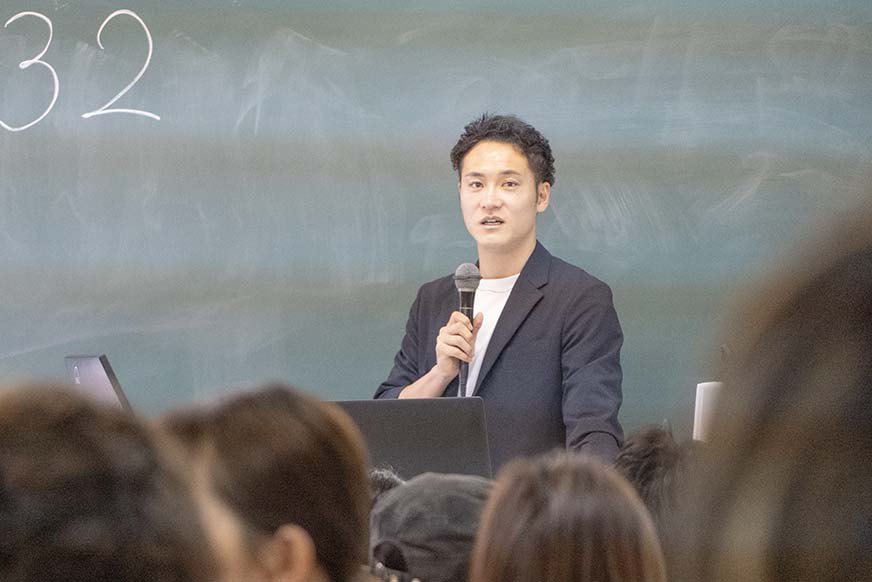
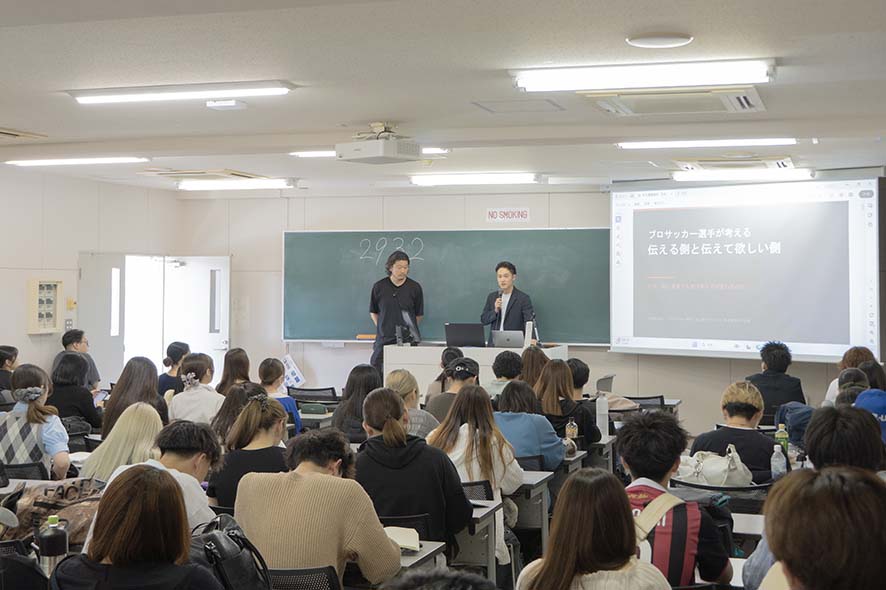
On Wednesday, June 10, pro soccer player Tomoya Koyamatsu visited as a specially invited guest lecturer for the general education course "Improving Japanese Skills C," which focuses on practical education through interviews, writing, editing skills and other such approaches.
Centering on a theme of "perception gaps" between the conveying and receiving sides in interpersonal communication, Mr. Koyamatsu spoke based on his real-life experiences, which include regular interviews with press representatives.
He started his lecture by asking students about something they are likely to encounter in daily life: "Have you ever felt like you communicated something clearly, only to find that the listener did not understand?" He went on to talk about shared qualities of journalists who are easy to communicate with off the field, explaining, "They carefully watch you and your team as they play, and ask questions with specific intent and precision. If someone simply comes up to me and asks something abstract like, 'How was the game today?,' all I can give them is a superficial answer. On the other hand, if the journalist asks something more concrete, such as 'I noticed you changed your positioning in the second half. What did you hope to accomplish by that?,' it's much easier to describe what was happening out on the field, and that leads to more engaging conversation overall." Mr. Koyamatsu emphasized the importance of clear communication in day-to-day relationships and interactions, with students showing great interest as they listened. The athlete also touched on communication through social media today, which enables anyone to serve as a source of information and influence: "It's important to take some time to really imagine the standpoint of the reader or listener. This will empower you as someone who communicates using words."
During the second half of his lecture, Mr. Koyamatsu set aside time for a Q&A session using questions submitted in advance by students. Through his responses, he talked about the regular dribbling routine he had patiently pursued as a child, which became a strong foundation that helped him overcome obstacles after going pro. He also reflected on his high school team, which was generally considered the "worst in the school's history" yet still managed to pull together and finish second in nationals. Reflecting on the difficulties he faced during his first year as a pro player brought about by a major knee injury, he recalled, "I was the one who chose to pursue that path in my sport, so if I failed, all of the responsibility was mine. It's important to find the determination you need and, during that process, figure out the right answer for you." His description of calling upon great willpower to overcome challenges struck a strong chord with the students.
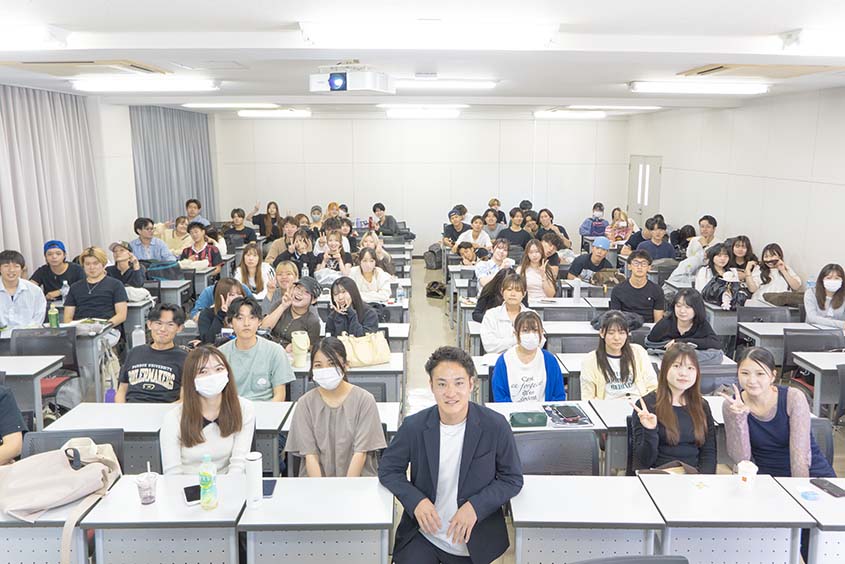
To conclude his lecture, Mr. Koyamatsu provided some stirring words of encouragement to the students, who were preparing to choose their post-graduation career paths: "You should make the things you personally want to do the central focus, and then give it your all while relying on your intuition and gut feeling. If you take a wrong turn along the way, you can always make a course correction. I urge you to take advantage of your youth and try as many things as possible." His powerful words earned thunderous applause throughout the classroom.
Page top


