


教授の声
2026/07/05 14:20:00 Innovation at London Tech Week レポート:イノベーションの最前線
 教授の声
 Amelia Ijiri
As a university lecturer, I spend a lot of time thinking about how we prepare students for life after graduation. At London Tech Week, the education startup pitch session featured speakers addressing challenges that many universities continue to face.
Many companies focused on keeping learning relevant in a rapidly changing world. New technologies continue to reshape industries, and educational institutions are often expected to prepare students for jobs that may look very different by the time they graduate. Presentations emphasized the importance of helping learners continuously develop new skills rather than viewing education as something that ends with a degree.
I also spent time exploring the exhibition floor. At the Notion booth, I watched demonstrations of tools designed to help people organize information, manage projects, and collaborate more effectively. As someone balancing teaching, research, and administrative responsibilities, I could immediately see why these tools have become so popular.
I also enjoyed visiting the international showcases. Estonia highlighted its reputation as one of the world's most digitally advanced countries, while Romania showcased its growing technology sector and software talent. Turkey emphasized entrepreneurship and innovation. These exhibits reinforced the reality that investing in people is just as important as investing in technology.
After returning from London, I continued to generate ideas from London Tech Week and was inspired by Prince William's remarks on using AI and machine learning to address homelessness. He argued that rather than spending resources after someone becomes homeless, governments and charities could use data to identify those at risk and intervene earlier. That idea has already influenced my teaching. This semester, my first year Digital Literacy students will investigate how machine learning can be used to tackle messy, real-world problems, encouraging them to think beyond the technology and focus on meaningful human impact.
-
 Event venue
-
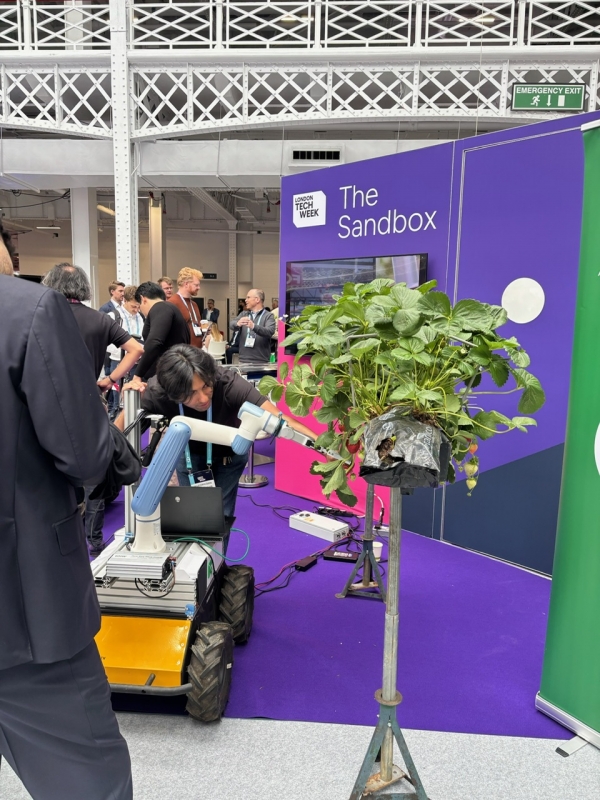 Robot picking strawberries
2025/06/09 22:50:00 Writing with Empathy (WWE)
- 教授の声
- Kevin Ramsden
Unless you are very academically minded, or extremely interested in a particular subject or topic, it can sometimes be very difficult to get to grips with writing for academic purposes when you first start, either in school or at college. Perhaps it is just the process that you find difficult and are put off by the rules that are often applied to this style of discourse. There is also the question of the research that is required to make sure your essay or paper is factually solid and correct. Sure, there is a wealth of information and sources on the internet you can plunder, but now there is also the minefield of what to include from your findings in terms of AI generated content and having to be aware of plagiarism. Actually, I like to balance my own academic writing output with some examples of creative writing. In this way, I can enjoy writing about a topic or theme from another perspective, and even come to learn and understand it better. This is what is known as Writing with Empathy (WWE).
So, what do I mean by writing with empathy? Well, basically it is a more creative approach to writing on a topic or theme, which means producing a piece of writing that is mostly fictional rather than completely factual. For example, if you are studying about the lives of refugee children from a war-torn region, you can do a lot of background reading on their problems through online articles and accounts first, and then consider what you have read and try and put yourself in their shoes (empathy) and write a story based on those experiences.
These days many people are experimenting with “flash fiction”, which is a piece of writing between 300 and 1,000 words only. Believe me, it is surprising how much you can include in such a short word count, and very good practice for getting your point across succinctly and with great precision. Of course, there are also many topics or themes on personal and societal issues for the eager writer to get their teeth into, such as educational issues, environmental issues, gender issues, poverty and homelessness, loneliness, etc. Here is an example short story from my own work, which focuses on how teachers sometimes struggle with motivating their students: Monkey Want Banana.
And here is another. A piece of flash fiction that illustrates how parents have to cope with an “empty nest” when their children leave home. It is all about loss and loneliness really. I’m sure many parents have to deal with this at some point: Counting the days til summer.
There are also some great opportunities to explore WWE further and even win some prizes for your work (sometimes with money!). There are a number of theme-based creative writing competitions run by international organizations and universities annually, and this is a terrific way to build on your writing skills and get your work out into the world.
https://www.greenstories.org.uk/
https://blog.reedsy.com/writing-contests/short-story/
Of course, I am not saying that creative writing should replace academic writing in the university, but rather it can be an enjoyable way to supplement understanding of the topics or themes you study about and even inspire and encourage others to do the same.
Happy writing!
Kevin
-
 Empathy is important.
-
 Some families live in war zones.
-
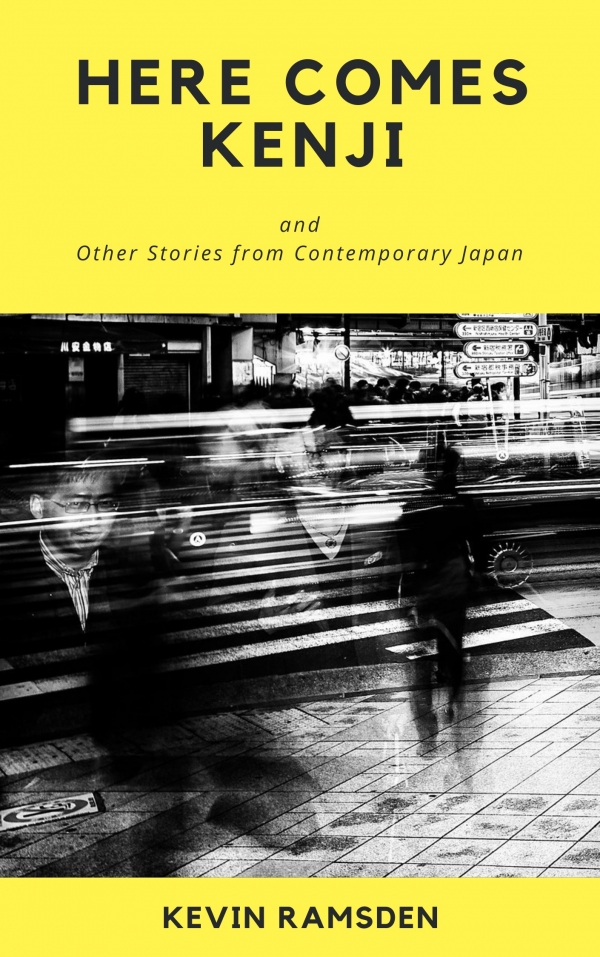 Here Comes Kenji Book Cover.


