


2026/07/05 14:20:00 Innovation at London Tech Week レポート:イノベーションの最前線
 教授の声
 Amelia Ijiri
As a university lecturer, I spend a lot of time thinking about how we prepare students for life after graduation. At London Tech Week, the education startup pitch session featured speakers addressing challenges that many universities continue to face.
Many companies focused on keeping learning relevant in a rapidly changing world. New technologies continue to reshape industries, and educational institutions are often expected to prepare students for jobs that may look very different by the time they graduate. Presentations emphasized the importance of helping learners continuously develop new skills rather than viewing education as something that ends with a degree.
I also spent time exploring the exhibition floor. At the Notion booth, I watched demonstrations of tools designed to help people organize information, manage projects, and collaborate more effectively. As someone balancing teaching, research, and administrative responsibilities, I could immediately see why these tools have become so popular.
I also enjoyed visiting the international showcases. Estonia highlighted its reputation as one of the world's most digitally advanced countries, while Romania showcased its growing technology sector and software talent. Turkey emphasized entrepreneurship and innovation. These exhibits reinforced the reality that investing in people is just as important as investing in technology.
After returning from London, I continued to generate ideas from London Tech Week and was inspired by Prince William's remarks on using AI and machine learning to address homelessness. He argued that rather than spending resources after someone becomes homeless, governments and charities could use data to identify those at risk and intervene earlier. That idea has already influenced my teaching. This semester, my first year Digital Literacy students will investigate how machine learning can be used to tackle messy, real-world problems, encouraging them to think beyond the technology and focus on meaningful human impact.
-
 Event venue
-
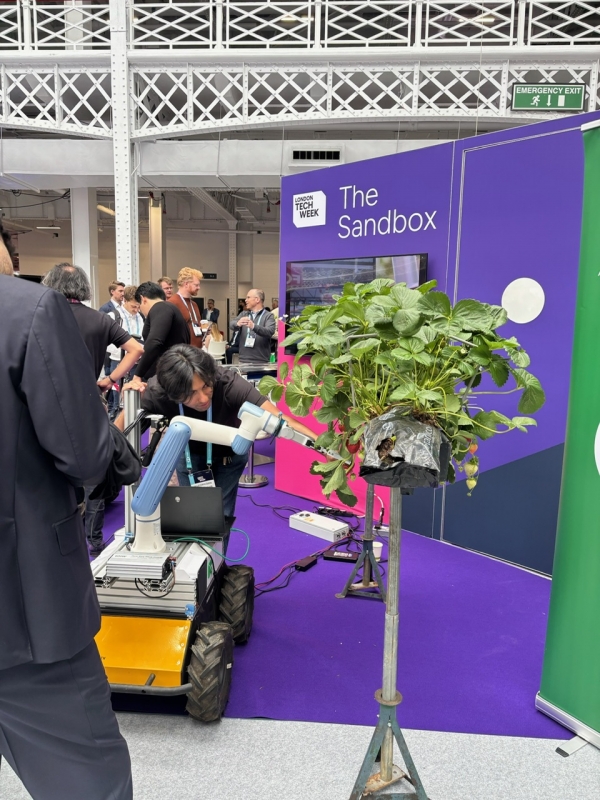 Robot picking strawberries


