


2026/06/23 16:10:00 Sense of Community in Contemporary Japan: A Guest Lecture by Ms. Xiaoling Zhang
 イベント
 Junko Kondo
On June 19th, the Community Engagement Workshop course welcomed Ms. Xiaoling Zhang, field staff at Osugidani Shizen Gakkou (NPO 大杉谷自然学校) in Odai, Mie, for a guest lecture titled "Sense of Community in Contemporary Japan: From a Perspective of Community Rituals and Voluntary Activities." Drawing on her own fieldwork and lived experience in rural Japan, Ms. Zhang led students through a lecture that was equal parts theory, ethnography, and lively discussion.
The lecture opened with the foundational concept of Sense of Community (SOC), defined by McMillan and Chavis as a feeling of belonging, mattering to others, and shared faith that members' needs will be met through commitment to the group. Ms. Zhang walked students through the theory's four core elements — membership, influence, reinforcement, and shared emotional connection — before grounding them in two cultural events she has observed firsthand:
Ise Jingu Okibiki (timber-pulling ceremony) — a 1,300-year-old ritual tied to the rebuilding of Ise Jingu every twenty years, in which local Shinryomin (citizens of the sacred land) pull massive sacred cypress logs by rope. Ms. Zhang highlighted how the ceremony expresses a distinctly Japanese reverence toward nature and the divine.
Obon Odori in Osugi village — a summer festival honoring ancestral spirits that had lapsed for years due to aging and depopulation, but was revived two years ago through community effort. For Ms. Zhang, its revival illustrates how a community born of necessity can also become a community of choice once people choose to keep showing up.
She then extended the discussion to her current work at Osugidani Shizen Gakkou, examining how the NPO builds a sense of community to sustain conservation of the Kumanokodo Iseji, a UNESCO World Heritage pilgrimage route. Through 200km pilgrimage tours and trail maintenance volunteering, Ms. Zhang showed how outsiders — people with no prior tie to the region — can be drawn into a community of necessity and choice at once.
The intellectual high point of the session came when Ms. Zhang posed a question to the class: "Which do you like, or which do you need — Community of Necessity (must), or Community of Choice (will)?"
What followed was a genuinely interactive discussion, with students offering their own experiences and interpretations. One particularly striking response captured the paradox at the heart of the question: in a world where we are now free to choose our communities — fan clubs, hobby groups, online networks — some students argued that we need community of necessity precisely because choice has become so abundant. Without the friction of mutual reliance, they suggested, belonging can become weightless. The discussion was intellectually challenging in the best sense, and students clearly enjoyed thinking out loud together about which kind of community actually sustains them.
The Q&A session was equally rich. Asked for advice on how an international citizen might build trust in a rural Japanese community, Ms. Zhang answered:
"Language is very important — it shows your attitude that you want to learn and commit to the community."
She illustrated this with her own experience learning Thai while living in a rural community in Thailand during her master's studies, and explained that showing genuine curiosity about local tradition and culture was just as important when she joined the Odai community in Japan.
When asked about her personal life principle, Ms. Zhang offered a phrase that resonated widely with students:
"Be a life-learner."
Her own path — born in China, arriving in Japan without language skills, and now fluent in Japanese, English, and Thai after studying across Kyoto, Bangkok, and rural Thailand — gave the principle real weight, and students found her trajectory genuinely inspiring.
What made this session memorable wasn't just the theory of sense of community, but watching it play out in the room itself: students debating necessity versus choice, sharing their own community experiences, and reflecting on what it means to belong somewhere as both insiders and outsiders. For KUFS students — Japanese and international alike — already exploring communities across Japan, Ms. Zhang's lecture offered both a framework and a personal model for how to do that exploration with curiosity and commitment.
-
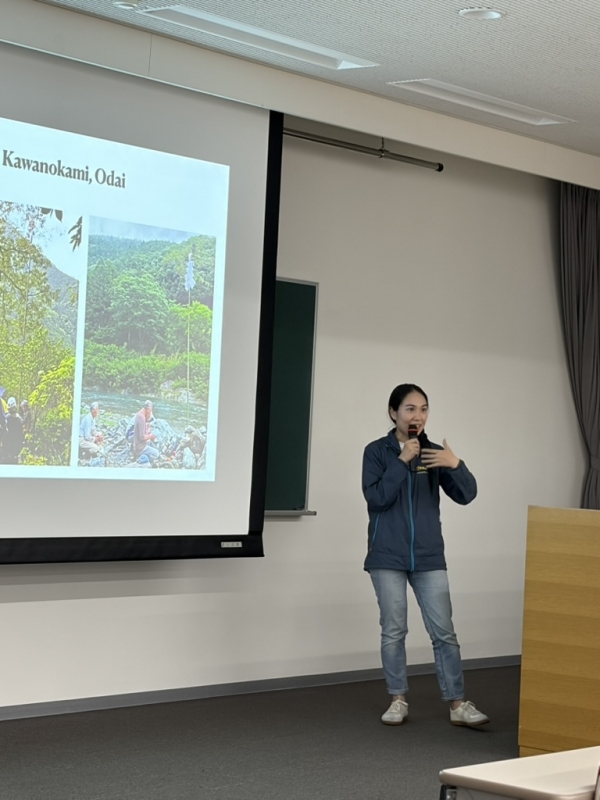 Ms. Zhang introduces beautiful nature in Odai
-
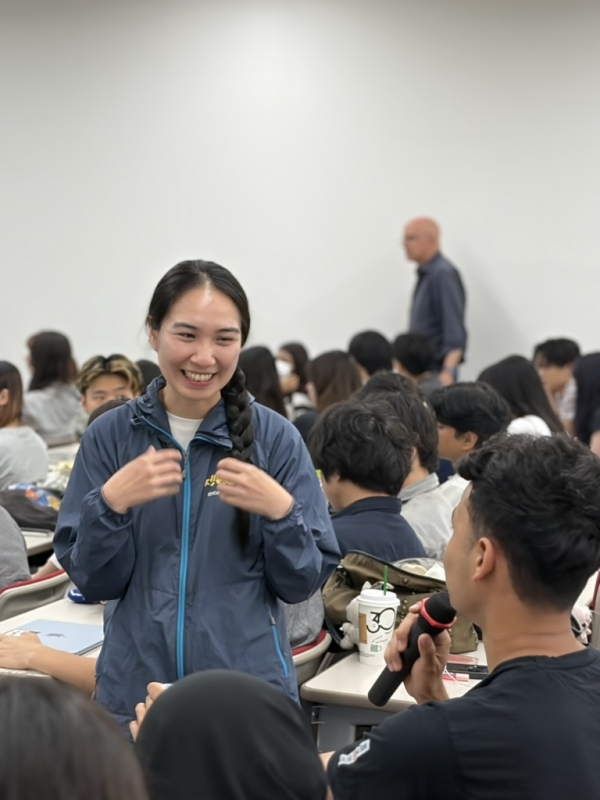 Interactive discussion with students
-
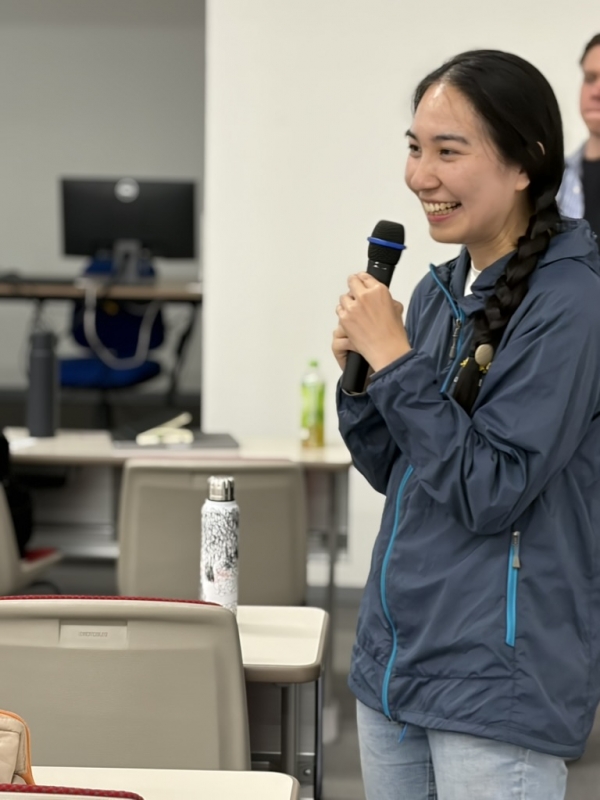 Ms. Zhang wholeheartedly answers questions from students


