2026/06/18 15:50:00 Changemaker Series Welcomes Journalist and Filmmaker David Caprara on Documentary Storytelling and History
 イベント
 Angus McGregor
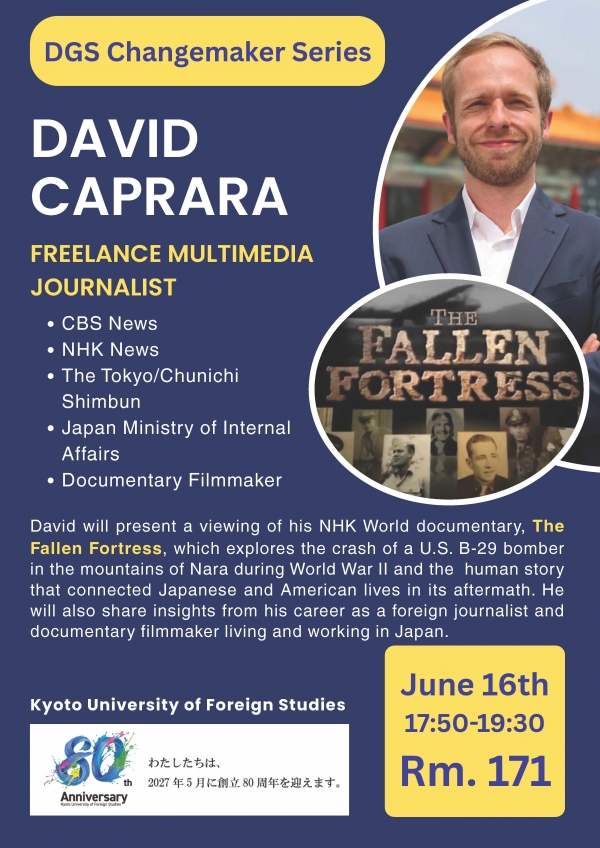
David Caprara, a freelance multimedia journalist and documentary filmmaker, spoke to students in the Department of Global Studies on June 16 as part of the department’s Changemaker Series. Caprara shared his journey to becoming an international journalist based in the Kansai region and discussed how his passion for storytelling led him into documentary filmmaking. He also screened and discussed his 2021 documentary, The Fallen Fortress, which examines the story of an American B-29 bomber that crashed in the mountains of Nara following a bombing raid on Osaka during World War II.
Throughout his career, Caprara has produced news packages and documentaries focusing on culture and politics in Japan and the broader Asia-Pacific region. He shared stories from his early experiences in “bootstrap” journalism, explaining how he launched his career by traveling independently to global hotspots to report on developing events. These experiences led to first-hand reporting on the 2015 Nepal earthquake, protests along the India-Nepal border, and the de facto refugee camps that emerged across Greece during the Syrian Civil War and refugee crisis.
These experiences eventually opened opportunities with established media organizations, including the Tokyo bureau of CBS News, the New York bureaus of NHK and The Tokyo Shimbun, and NHK World, where he worked as an on-camera correspondent.
Caprara has also directed and produced numerous documentaries, including The Honey Hunters of Nepal, which received a Webby Award in 2017, and Horimono: Japan’s Tattoo Pilgrimage, which was screened at international film festivals around the world. His most recent project, The Fallen Fortress, follows the human tragedy surrounding a crashed B-29 bomber and the surviving crew members who parachuted onto Mt. Omine, a Buddhist holy mountain in Nara.
In the film, he interviews local residents who either witnessed the surviving airmen arriving in their villages or grew up hearing stories about the incident. He also speaks with relatives of the American airmen, uncovering new information that offers insight—and in some cases a measure of closure—to families who had long known only that their loved ones were listed as missing in action. Through these personal stories, the documentary explores the lasting human impact of war on both sides of the conflict.
Following the presentation and film screening, DGS students asked questions ranging from the challenges of interviewing people about emotionally difficult subjects to practical advice on conducting relevant and meaningful historical research. Students also noted how effectively the documentary balanced the perspectives of Japanese communities affected by the bombing campaign and the American airmen who became prisoners of war. Without taking sides or assigning blame, Caprara’s film communicates the tragic human cost of war and the enduring impact it has on individuals, families, and communities.
Following the DGS event, Caprara generously offered additional time to meet with visiting journalism students from U.S. universities participating in the ieiMedia study abroad program, an intensive journalism course that travels to international destinations around the world. The ten students and their two faculty members engaged in a more focused discussion on journalism, documentary filmmaking, and international reporting. Drawing on his own career experiences, Caprara offered practical advice to aspiring journalists and storytellers while emphasizing the importance of curiosity, persistence, and human-centered reporting.
Through both sessions, students gained valuable insight into the role of journalism and documentary filmmaking in preserving historical memory and fostering cross-cultural understanding—an objective that aligns closely with the goals of the Department of Global Studies’ Changemaker Series.
-
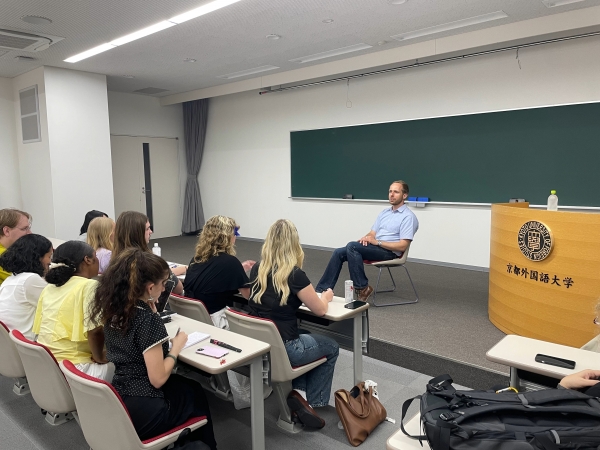 David Caprara discusses storytelling and history
-
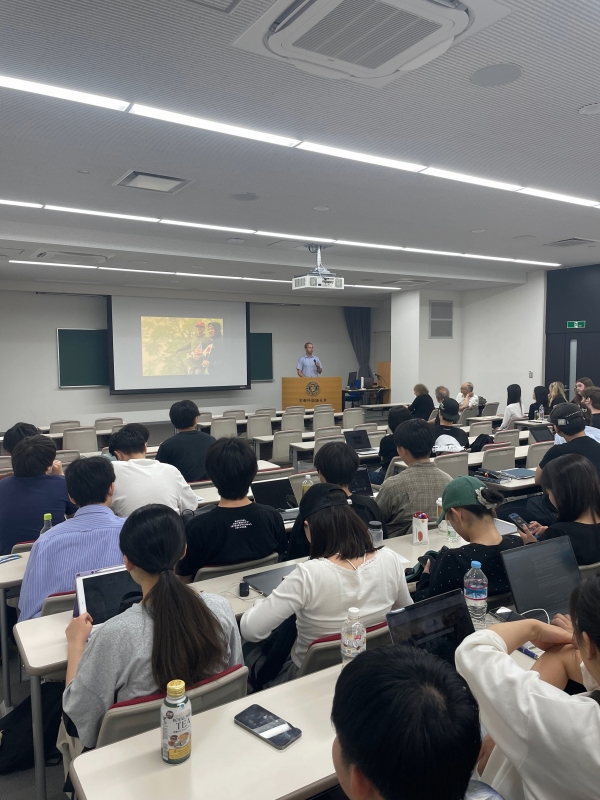 Lively audience Q and A
-