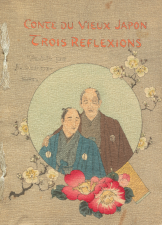
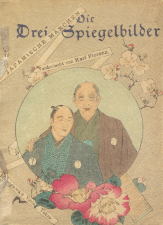
Three Reflections
『三つの顔』
(Mittsu no kao)
英訳:ケイト・ジェイムズ(K. James)
姿が瓜二つで仲の良い父を亡くした息子は心晴れず、一人で京都へ旅に出ました。都の鏡屋で初めて鏡を見て、鏡面に映った自分の顔を亡き父の若い頃の顔と勘違いし、その鏡を買い家に戻りました。夫の留守中に押入にしまってあった鏡を覗いた嫁は、そこに映った自分の姿を他の若い女だと勘違いして、夫が女を隠していると怒り喧嘩になりました。相談を受けた尼がその鏡を手にとってみると、年老いて痩せこけた自分自身の顔が映っているので驚きます。鏡は人の心を映し出すものだと思った尼は、鏡は自分が預かるのでこれまでのことは水に流して、夫婦仲良く暮らすようにと言いました。こうして夫婦は家に帰り、息子は自分が都で買ったのは父(が映る鏡)だったのにと腑<ふ>に落ちないものの、平穏な暮らしのために心にしまいました。
Sunk in grief after having lost his beloved father, whom he was exactly alike, the son made a journey to Kyoto, where he encountered a mirror for the first time, in a shop. Taking his own face in a mirror for the face of his father when young, he bought the mirror and took it back home. He hid it in a closet, and his wife found it while he was away. She took her own face in the mirror for the face of another young woman, she began to quarrel with her husband upon his return, claiming that he was hiding a paramour. The abbess who was visited to be asked to intervene in their quarrel got surprised to see in the same mirror an old skinny face of her own. She thought that the mirror reflected human cognition. Offering to hold it in trust for them, she encouraged the two to let bygones be bygones and live in harmony with each other. The couple agreed and went back home. Although the husband was not completely satisfied with the setlement as the mirror he had bought in Kyoto showed his father, he kept this complaint to himself for the sake of domestic tranquility.